Corn dog
Last updated: 15 Jan 2026
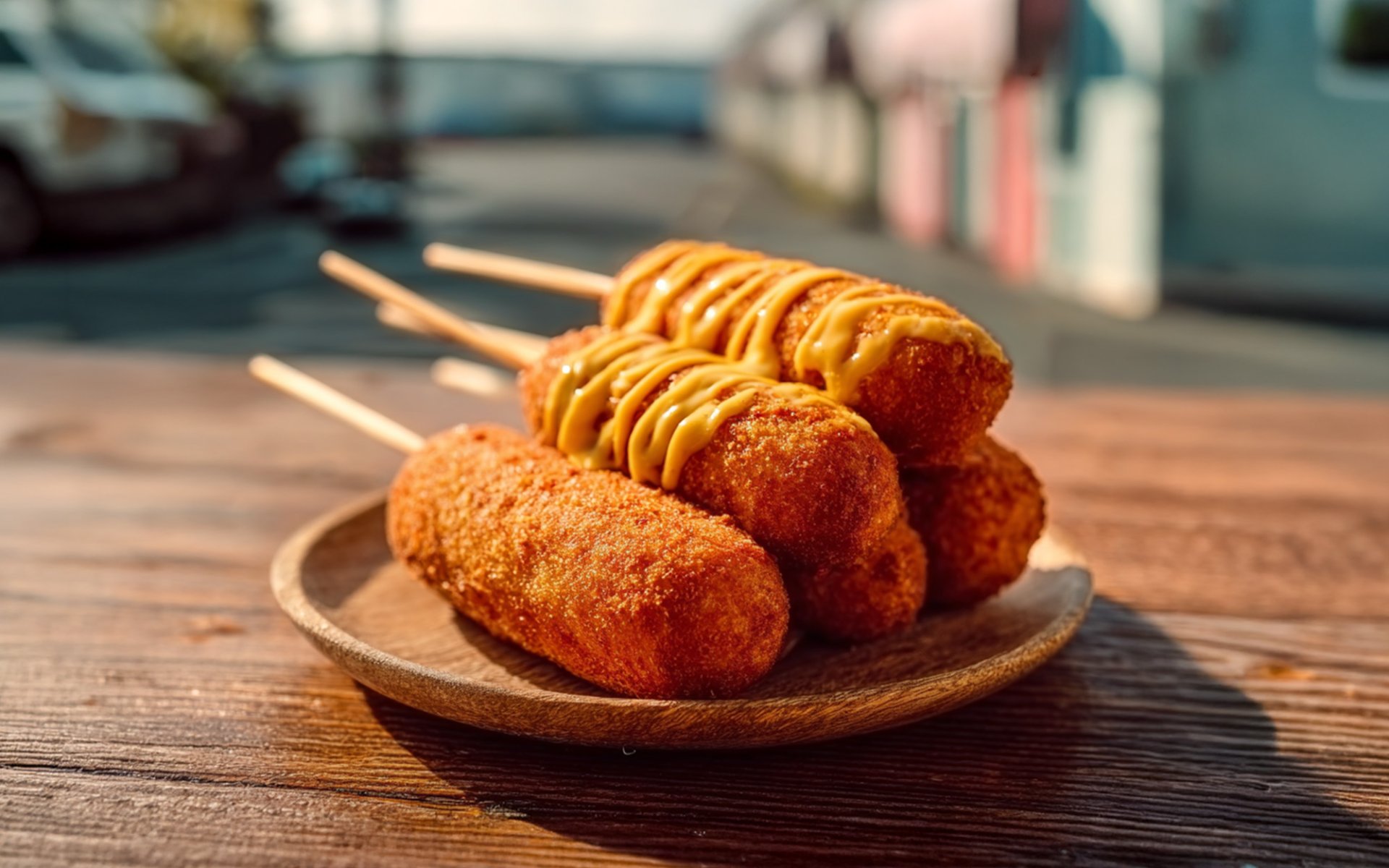
The corn dog is a snack that has become an enduring symbol of American food culture, widely enjoyed at festivals, fairs, and exhibitions across the United States. Its defining characteristic lies in skewering a sausage on a stick, coating it with a thick cornmeal batter, and deep-frying it in hot oil until it turns golden yellow. The result is a crispy exterior with a soft, tender interior.
Debated Origins of the Corn Dog
The exact origins of the corn dog remain a subject of debate among food historians. However, one of the most frequently cited stories attributes its invention to George and Vera Boyington, the owners of Pronto Pup in Portland, Oregon.The Pronto Pup Story and the 1939 Innovation
According to this account, during a holiday in 1939, the couple encountered a problem when the buns they had purchased for hot dogs were damaged by rain. Unable to sell hot dogs in their usual form, they sought an alternative method that did not rely on bread. As a result, they skewered the hot dogs, dipped them into cornmeal batter, and deep-fried them, creating a snack with a crispy exterior and soft interior.The Fletcher Brothers and an Alternative Origin Story
Another widely known origin story credits the development of the corn dog to brothers Neil and Carl Fletcher, former vaudeville performers. Neil Fletcher later recounted that they had come across a bakery on Oak Lawn Avenue that sold hot dogs baked in cornmeal batter and shaped like ears of corn. While the dish was flavorful, its preparation was time-consuming and overly complex.Birth of “Corny Dogs” at the State Fair of Texas
To overcome these limitations, the brothers devised a new approach by skewering hot dogs, coating them evenly with a thick cornmeal batter, and deep-frying them in hot oil until golden and crisp. This method not only significantly reduced cooking time but also made the corn dog easier to hold and eat. The Fletchers first introduced the product at the State Fair of Texas in 1942 under the name “Corny Dogs.”Rapid Popularity at Fairs and Amusement Parks
The snack quickly gained popularity due to its convenience, mess-free consumption, and appealing flavor that resonated with people of all ages. Over time, the corn dog became a staple food at fairs and amusement parks throughout the United States.Post–World War II Growth and Lifestyle Alignment
Following World War II, the popularity of the corn dog continued to rise, aligning perfectly with the postwar American lifestyle that emphasized convenience, speed, and affordability in food consumption.The Rise of Frozen Corn Dogs in American Homes
During the same period, frozen foods began to play an increasingly important role in American households. As a result, corn dogs were developed in frozen form and made available in supermarkets, allowing consumers to heat and enjoy them easily at home.National Corndog Day and Cultural Recognition
The widespread popularity of the corn dog eventually led to the establishment of National Corndog Day, celebrated on the first Saturday of March, coinciding with the NCAA March Madness basketball tournament. This celebration reflects the corn dog’s cultural significance and its status as an iconic symbol of American cuisine.Evolution and Diversification of Corn Dog Varieties
As time passed, the corn dog continued to evolve and diversify to suit changing tastes and consumer preferences. Notable variations include:- Corn Dog Cheese — Made with cheese-filled sausages or cheese layered between the sausage and cornmeal batter, offering a richer and creamier texture.
- Cornbrat — Uses bratwurst instead of traditional hot dogs, delivering a more European-inspired flavor profile.
- Corn Puppies — Mini corn dogs, often served as children’s menu items or in fast-food restaurants. These are typically served without sticks and come in portions of around ten pieces.
Modern Creative Variations
Additional modern variations include Jalapeño and Cheese Corny Dogs, Bird Dogs (made with turkey), Veggie Dogs for vegetarians, Cheezy Pups, and contemporary creations such as “Make Mine Texan,” which is made entirely from beef.Global Spread of the Corn Dog
Although the corn dog originated in the United States, it has since spread to many countries around the world, where it has been adapted to suit local culinary cultures and tastes.Corn Dogs in Canada: “Pogo”
In Canada, corn dogs are commonly known as “Pogo,” a name derived from a frozen corn dog brand produced by Conagra and sold in the country since the 1960s. Canadians typically enjoy Pogo with mustard.Corn Dogs in Japan: American Dog and French Dog
In Japan, the corn dog is known as “アメリカンドッグ” (American Dog), reflecting the belief that it originated in the United States. However, Japanese versions differ from the original, often using pancake batter instead of cornmeal and sometimes substituting pork or beef sausages with fish sausages. In eastern Hokkaido, a regional variation called “フレンチドッグ” (French Dog) is sprinkled with granulated sugar instead of being served with ketchup.Corn Dogs in South Korea: The Rise of Kogos
In South Korea, corn dogs became popular in the 1980s and have since evolved into a distinctive style known as “Kogos.” These versions typically use rice flour, wheat flour, or yeast-based batter rather than traditional cornmeal, and are often coated with toppings such as panko breadcrumbs, diced fried potatoes, or crispy fried ramen noodles. Tags :
Related Content


Tracing the History of "Narutomaki" (ナルト/なると) : A Food Integral to Japanese Culture for Centuries