A Popular Ingredient in Global Cuisine
Last updated: 22 Apr 2026
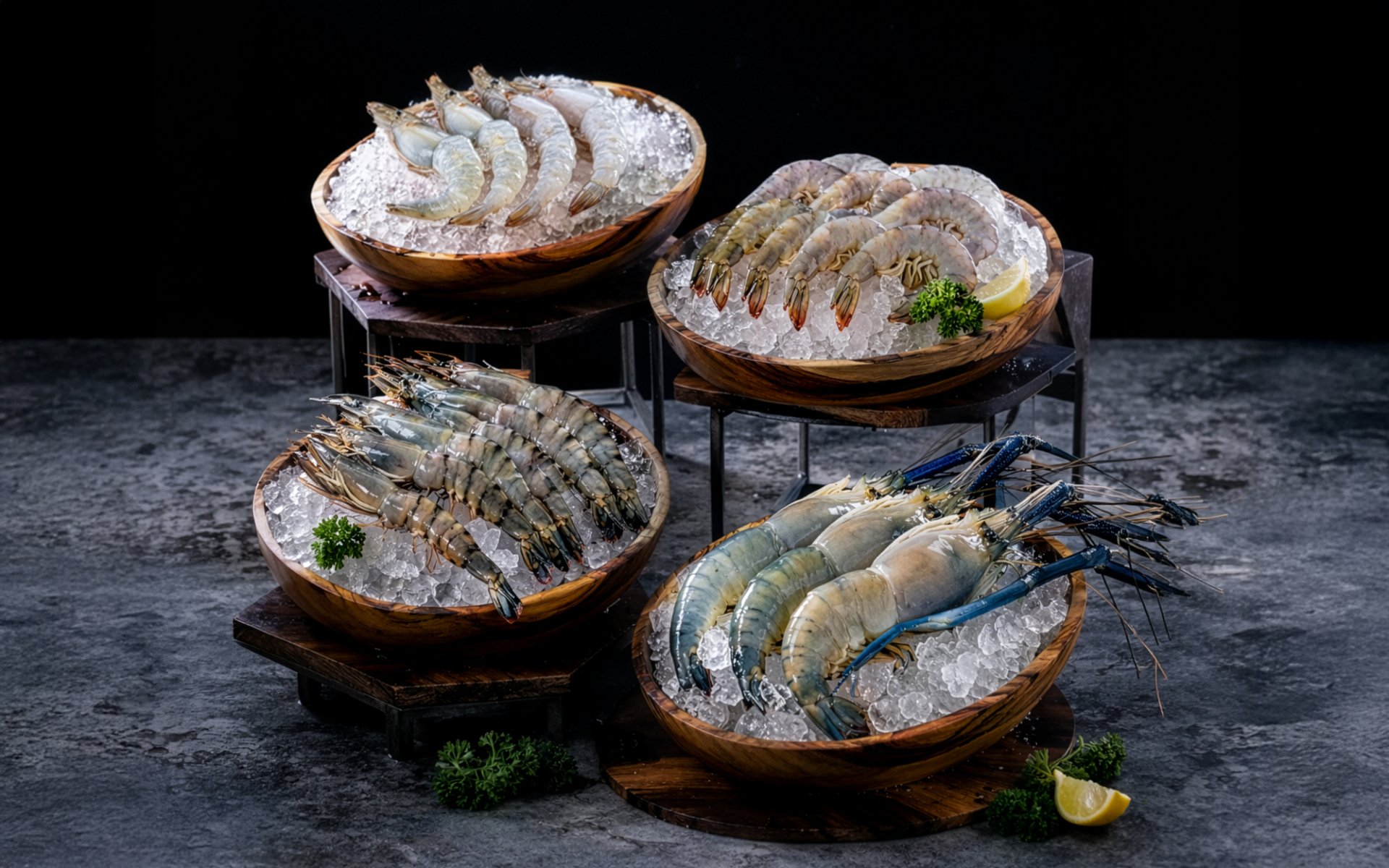
Shrimp is one of the most popular ingredients sourced from both freshwater and marine environments worldwide. It plays an essential role in a wide range of culinary traditions, from Asian and European cuisines to American dishes. With its naturally sweet flavor, versatile texture, and ability to be prepared in numerous ways—whether grilled, stir-fried, boiled, or baked—shrimp has become a staple ingredient across cultures.
Whiteleg Shrimp : Whiteleg shrimp, native to the Pacific Ocean, has a translucent white body, white legs, and a reddish tail. When fully grown, it reaches an average length of approximately 23 cm. Due to its high adaptability, it has become the most widely farmed shrimp species in the world. It can be cultivated in various farming systems, including closed ponds and containment systems.
Whiteleg shrimp has been an important economic species in South America since the 20th century before being introduced to aquaculture in many other countries. It has been widely farmed in Asia since around the year 2000.
Its meat has a mild natural sweetness and a tender texture. It cooks easily and quickly, and its thin shell makes it convenient to prepare. It is suitable for stir-frying, frying, boiling, and grilling. Commonly used in everyday dishes such as salads, fried rice, and various street foods.
Although not among the most globally dominant shrimp species, banana prawns are widely harvested in Australia and are highly popular in Southeast Asia. Major producing countries include Vietnam, Indonesia, the Philippines, Malaysia, Singapore, and Thailand.
In addition to wild capture, banana prawns are also farmed in coastal enclosures. However, closed-pond farming for this species requires more specific conditions.
The meat of banana prawns is firm with fine muscle fibers, giving a slightly crisp texture when chewed. In Australian cuisine, they are commonly used in hot dishes, especially traditional pan-searing and barbecuing. In Southeast Asian cuisine, they are often used in spicy dishes that complement their naturally sweet and delicate flavor, such as sambal prawns from Malaysia, various spicy curries, and Thai dishes like spicy salads (yum), tom yum soup, and shrimp in fish sauce.
This species is large, typically measuring between 25–30 cm in length. It is distinguished by approximately nine dark brown to nearly black stripes across its body, which give rise to the name “tiger prawn.” Its body is reddish-brown, with red legs and long antennae.
Due to its large size, striking appearance, and relatively complex farming methods, giant tiger prawns are more expensive than whiteleg shrimp and banana prawns. Their meat is abundant, firm, and rich in flavor, making them ideal for dishes that highlight the natural taste of shrimp.
They are often used in premium dishes such as Garlic Butter Prawns, where simple ingredients like butter and garlic enhance the shrimp’s flavor, as well as in pasta dishes and a variety of European fine dining cuisines.
They come in a wide range of sizes, from around 13 cm to large specimens weighing up to 1 kilogram. In addition to being consumed as food, their distinctive appearance also makes them popular for ornamental purposes.
This species provides a large amount of firm meat, and a key highlight is its abundant “shrimp fat” (hepatopancreas), which is richer than in most other shrimp species. In Southeast Asia, they are commonly grilled, a method that preserves both the sweetness of the meat and the richness of the fat.
They are typically served with a variety of local accompaniments. In Thailand, shrimp fat from giant freshwater prawns is also sold separately as an ingredient for many dishes.
Importance of Choosing the Right Type of Shrimp
However, there are more than 1,000 species of shrimp in the world, and the “type of shrimp” significantly affects its flavor, texture, and suitability for different cooking methods. Therefore, selecting the right type of shrimp for each dish is a key factor in elevating the overall taste and quality of a meal.Prawn VS Shrimp: Understanding the Terminology
Many people may have encountered the English terms “prawn” and “shrimp” and assume that they refer to two clearly distinct groups. In reality, these terms are used differently depending on cultural context and are not strictly defined in scientific classification.Regional Differences in the Use of Prawn and Shrimp
In the United Kingdom, the term “prawn” is commonly used to refer to shrimp of all kinds. Meanwhile, in the United States and many countries influenced by American media, such as Australia, the term “shrimp” is more widely used. Additionally, in some contexts, the term “prawn” may be used to describe larger shrimp.Popular Shrimp Varieties for Cooking
Whiteleg Shrimp: The Most Widely Farmed Species
Whiteleg Shrimp : Whiteleg shrimp, native to the Pacific Ocean, has a translucent white body, white legs, and a reddish tail. When fully grown, it reaches an average length of approximately 23 cm. Due to its high adaptability, it has become the most widely farmed shrimp species in the world. It can be cultivated in various farming systems, including closed ponds and containment systems.
Whiteleg shrimp has been an important economic species in South America since the 20th century before being introduced to aquaculture in many other countries. It has been widely farmed in Asia since around the year 2000.
Its meat has a mild natural sweetness and a tender texture. It cooks easily and quickly, and its thin shell makes it convenient to prepare. It is suitable for stir-frying, frying, boiling, and grilling. Commonly used in everyday dishes such as salads, fried rice, and various street foods.
Banana Prawn: A Firm and Flavorful Choice in Asia
Banana Prawn : Banana prawns are found in the Indo-Pacific region and have a light brownish-yellow body. There are two main types: white banana prawns with white legs and red banana prawns with red legs and tails. The red variety is typically more expensive due to its larger size.Although not among the most globally dominant shrimp species, banana prawns are widely harvested in Australia and are highly popular in Southeast Asia. Major producing countries include Vietnam, Indonesia, the Philippines, Malaysia, Singapore, and Thailand.
In addition to wild capture, banana prawns are also farmed in coastal enclosures. However, closed-pond farming for this species requires more specific conditions.
The meat of banana prawns is firm with fine muscle fibers, giving a slightly crisp texture when chewed. In Australian cuisine, they are commonly used in hot dishes, especially traditional pan-searing and barbecuing. In Southeast Asian cuisine, they are often used in spicy dishes that complement their naturally sweet and delicate flavor, such as sambal prawns from Malaysia, various spicy curries, and Thai dishes like spicy salads (yum), tom yum soup, and shrimp in fish sauce.
Giant Tiger Prawn: Premium Shrimp with Rich Flavor
Giant Tiger Prawn : Giant tiger prawns are also found throughout the Indo-Pacific region, ranging from the coasts of Africa and the Arabian Peninsula to Southeast Asia, the Pacific Ocean, and northern Australia. They can also be found in brackish waters.This species is large, typically measuring between 25–30 cm in length. It is distinguished by approximately nine dark brown to nearly black stripes across its body, which give rise to the name “tiger prawn.” Its body is reddish-brown, with red legs and long antennae.
Due to its large size, striking appearance, and relatively complex farming methods, giant tiger prawns are more expensive than whiteleg shrimp and banana prawns. Their meat is abundant, firm, and rich in flavor, making them ideal for dishes that highlight the natural taste of shrimp.
They are often used in premium dishes such as Garlic Butter Prawns, where simple ingredients like butter and garlic enhance the shrimp’s flavor, as well as in pasta dishes and a variety of European fine dining cuisines.
Giant Freshwater Prawn: A Unique Freshwater Delicacy
Giant Freshwater Prawn : Giant freshwater prawns are a freshwater species found in tropical and subtropical regions across the Indo-Pacific. They are easily recognized by their long blue or purple-tinted claws, along with a body that ranges from bluish-green to purple.They come in a wide range of sizes, from around 13 cm to large specimens weighing up to 1 kilogram. In addition to being consumed as food, their distinctive appearance also makes them popular for ornamental purposes.
This species provides a large amount of firm meat, and a key highlight is its abundant “shrimp fat” (hepatopancreas), which is richer than in most other shrimp species. In Southeast Asia, they are commonly grilled, a method that preserves both the sweetness of the meat and the richness of the fat.
They are typically served with a variety of local accompaniments. In Thailand, shrimp fat from giant freshwater prawns is also sold separately as an ingredient for many dishes.
Tags :
Related Content


Get to Know Salsa: One of Mexican Cuisines Classic Dishes, Renowned for Its Spicy Kick and Refreshing Flavor