Sugar Alternatives
Last updated: 7 May 2026
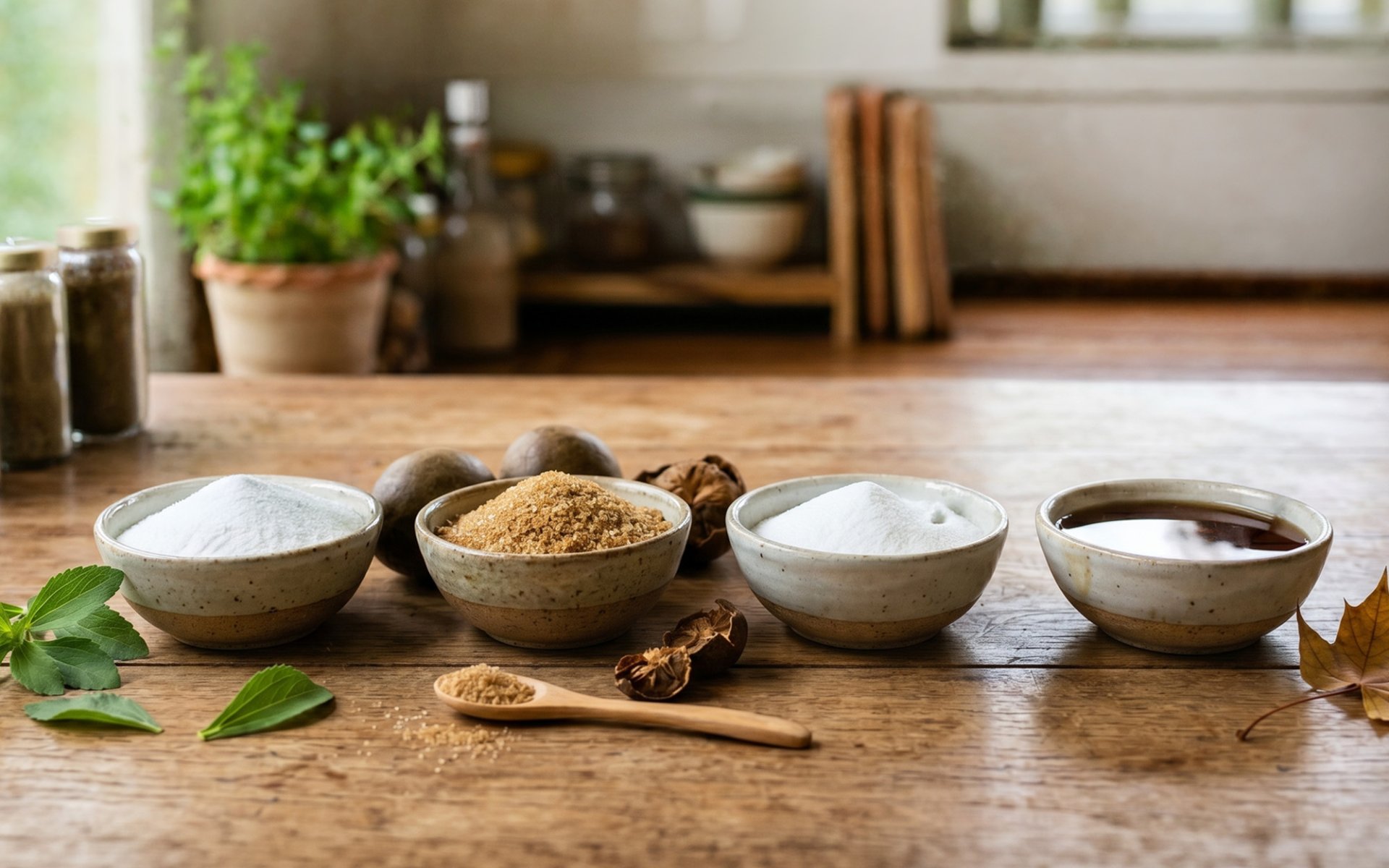
In an era where health care is no longer just a trend but a way of life, “sugar,” once a symbol of wealth and energy, has become a primary culprit associated with many non-communicable diseases. As a result, “Sugar Alternatives,” or sugar substitutes, have come to play an important role in the modern food and nutrition industry.
The journey of sugar substitutes did not originally begin in health-focused research laboratories. Instead, many were discovered through scientific “accidents” and efforts to address resource shortages during wartime.
The world’s first artificial sweetener, saccharin, was accidentally discovered in 1879 by Constantine Fahlberg, a researcher at Johns Hopkins University. While studying coal tar derivatives, he accidentally spilled a substance on his hand and forgot to wash it before eating, later noticing an intensely sweet taste.
Upon investigation, he identified the compound as benzoic sulfimide, which is approximately 300 times sweeter than sugar while providing zero calories. It was later developed into saccharin. This sugar substitute quickly gained popularity, especially during World War I and II when sugar was scarce.
In the mid-20th century, other synthetic sweeteners were discovered, such as aspartame, which was identified in 1965 by James Schlatter, a chemist at G.D. Searle. Like saccharin, it was also discovered by accident while he was developing medication for stomach ulcers.
Aspartame is approximately 200 times sweeter than sugar and has a taste closer to that of sugar. It was approved by the U.S. Food and Drug Administration (FDA) in 1981.
The discovery of aspartame marked a significant turning point in the sugar-free soft drink industry, as it provided a taste more similar to sugar than saccharin.
Over the past two decades, growing consumer concerns about synthetic substances have led to increased demand for natural sweeteners such as stevia and monk fruit. Although these have been used locally for hundreds of years, they have only recently gained international recognition and regulatory approval from authorities such as the U.S. FDA.
Saccharin: 300 times sweeter than sugar, zero calories, commonly used in beverages and diet products.
Aspartame: 180–200 times sweeter than sugar, not suitable for baking due to heat instability.
Sucralose: 600 times sweeter than sugar, heat-stable and suitable for baking.
Acesulfame-K: 200 times sweeter than sugar, often used in combination with other sweeteners.
Stevia: Extracted from Stevia rebaudiana leaves, 200–300 times sweeter than sugar, zero calories.
Monk Fruit: Extracted from monk fruit, 250 times sweeter than sugar, rich in antioxidant mogrosides.
Honey: Contains minerals and antioxidants but still provides sugar and calories.
Coconut Sugar: Has a lower glycemic index (GI) than refined sugar and contains some minerals.
Maple Syrup: Rich in manganese and zinc.
Allulose: A rare sugar found in fruits such as kaffir lime, raisins, and kiwi, providing only about 10% of the calories of sugar.
Xylitol: Similar sweetness to sugar but with fewer calories, derived from birch bark and some fruits.
Erythritol: Provides only 0.2 kcal per gram, with a glycemic index of zero, naturally found in fruits and fermented foods.
Sorbitol: Naturally found in fruits, commonly used in chewing gum and lozenges.
These sugar alternatives can be used as substitutes for sugar in daily life, but certain considerations apply.
In terms of taste, most sweeteners can provide sweetness equal to or greater than sugar. However, some consumers may detect slight bitterness or differences in flavor, particularly with stevia and saccharin. Monk fruit and erythritol are generally considered to have a taste closer to sugar.
In cooking applications, each sweetener has different suitability. Sucralose and sugar alcohols are heat-stable and suitable for baking, while aspartame is not suitable for high-heat cooking. Stevia is commonly used in beverages, yogurt, and desserts.
2. Weight management : Most sugar substitutes provide significantly fewer calories than refined sugar, helping reduce overall daily caloric intake.
3. Antioxidant and anti-inflammatory properties : Monk fruit contains mogrosides, which have strong antioxidant potential.
4. Source of beneficial nutrients : Unrefined natural sweeteners such as honey, coconut sugar, and maple syrup contain minerals and vitamins beneficial to the body, including manganese, zinc, calcium, and potassium, which are removed during the refining process of white sugar.
Sugar alternatives are considered a nutritional innovation that allows consumers to enjoy sweet flavors while reducing the negative effects of excessive sugar consumption. However, they should be used appropriately and with discretion, serving as a “supporting tool” rather than a sole reliance. This should be combined with behavioral adjustments, such as gradually reducing sweetness preference. Such an approach helps maximize health benefits and promotes sustainable long-term well-being.
The journey of sugar substitutes did not originally begin in health-focused research laboratories. Instead, many were discovered through scientific “accidents” and efforts to address resource shortages during wartime.
The world’s first artificial sweetener, saccharin, was accidentally discovered in 1879 by Constantine Fahlberg, a researcher at Johns Hopkins University. While studying coal tar derivatives, he accidentally spilled a substance on his hand and forgot to wash it before eating, later noticing an intensely sweet taste.
Upon investigation, he identified the compound as benzoic sulfimide, which is approximately 300 times sweeter than sugar while providing zero calories. It was later developed into saccharin. This sugar substitute quickly gained popularity, especially during World War I and II when sugar was scarce.
In the mid-20th century, other synthetic sweeteners were discovered, such as aspartame, which was identified in 1965 by James Schlatter, a chemist at G.D. Searle. Like saccharin, it was also discovered by accident while he was developing medication for stomach ulcers.
Aspartame is approximately 200 times sweeter than sugar and has a taste closer to that of sugar. It was approved by the U.S. Food and Drug Administration (FDA) in 1981.
The discovery of aspartame marked a significant turning point in the sugar-free soft drink industry, as it provided a taste more similar to sugar than saccharin.
Over the past two decades, growing consumer concerns about synthetic substances have led to increased demand for natural sweeteners such as stevia and monk fruit. Although these have been used locally for hundreds of years, they have only recently gained international recognition and regulatory approval from authorities such as the U.S. FDA.
Types of Sugar Alternatives
Sugar substitutes can be classified into three main categories:1. Artificial Sweeteners
These are chemically synthesized compounds that are extremely sweet but provide little to no calories, including:Saccharin: 300 times sweeter than sugar, zero calories, commonly used in beverages and diet products.
Aspartame: 180–200 times sweeter than sugar, not suitable for baking due to heat instability.
Sucralose: 600 times sweeter than sugar, heat-stable and suitable for baking.
Acesulfame-K: 200 times sweeter than sugar, often used in combination with other sweeteners.
2. Natural Sweeteners
These are derived from plants or natural sources, including:Stevia: Extracted from Stevia rebaudiana leaves, 200–300 times sweeter than sugar, zero calories.
Monk Fruit: Extracted from monk fruit, 250 times sweeter than sugar, rich in antioxidant mogrosides.
Honey: Contains minerals and antioxidants but still provides sugar and calories.
Coconut Sugar: Has a lower glycemic index (GI) than refined sugar and contains some minerals.
Maple Syrup: Rich in manganese and zinc.
Allulose: A rare sugar found in fruits such as kaffir lime, raisins, and kiwi, providing only about 10% of the calories of sugar.
3. Sugar Alcohols (Polyols)
These compounds have a structure between sugar and alcohol, provide fewer calories than sugar, and have a lower impact on blood glucose levels:Xylitol: Similar sweetness to sugar but with fewer calories, derived from birch bark and some fruits.
Erythritol: Provides only 0.2 kcal per gram, with a glycemic index of zero, naturally found in fruits and fermented foods.
Sorbitol: Naturally found in fruits, commonly used in chewing gum and lozenges.
These sugar alternatives can be used as substitutes for sugar in daily life, but certain considerations apply.
In terms of taste, most sweeteners can provide sweetness equal to or greater than sugar. However, some consumers may detect slight bitterness or differences in flavor, particularly with stevia and saccharin. Monk fruit and erythritol are generally considered to have a taste closer to sugar.
In cooking applications, each sweetener has different suitability. Sucralose and sugar alcohols are heat-stable and suitable for baking, while aspartame is not suitable for high-heat cooking. Stevia is commonly used in beverages, yogurt, and desserts.
Health Benefits of Sugar Alternatives
1. Blood sugar control : Sweeteners such as stevia, monk fruit, and erythritol have a glycemic index of zero or close to zero, meaning they do not cause spikes in blood glucose levels after consumption.2. Weight management : Most sugar substitutes provide significantly fewer calories than refined sugar, helping reduce overall daily caloric intake.
3. Antioxidant and anti-inflammatory properties : Monk fruit contains mogrosides, which have strong antioxidant potential.
4. Source of beneficial nutrients : Unrefined natural sweeteners such as honey, coconut sugar, and maple syrup contain minerals and vitamins beneficial to the body, including manganese, zinc, calcium, and potassium, which are removed during the refining process of white sugar.
Sugar alternatives are considered a nutritional innovation that allows consumers to enjoy sweet flavors while reducing the negative effects of excessive sugar consumption. However, they should be used appropriately and with discretion, serving as a “supporting tool” rather than a sole reliance. This should be combined with behavioral adjustments, such as gradually reducing sweetness preference. Such an approach helps maximize health benefits and promotes sustainable long-term well-being.
Tags :
Related Content



Nicolas Appert: The French Innovator Known as The Father of Canning