Beef Tallow
Last updated: 21 May 2026
What Is Beef Tallow? A Traditional Cooking Fat Used for Centuries
Beef Tallow is not a new ingredient. In fact, it is a form of rendered beef fat that humans have used for hundreds of years, both in cooking and in daily life, long before industrial vegetable oils became widely popular during the 20th century.The Head-to-Tail Philosophy and the Origins of Beef Tallow
In the past, people hunted or raised animals under a philosophy often referred to as “Head-to-Tail” eating — the practice of using every part of the animal as efficiently as possible with minimal waste. As a result, leftover fat was never discarded. Instead, it was slowly rendered down to produce Beef Tallow for cooking and other practical uses.Beef Tallow in Ancient Egyptian and Roman Daily Life
Beyond its culinary role, Beef Tallow was also widely used in households during the Egyptian and Roman eras, especially for making candles. Tallow candles were considered essential household items because they provided an affordable source of light, even though they often carried a distinct fatty aroma compared to more expensive beeswax candles.Why Beef Tallow Became a Staple Cooking Fat in the 1800s
By the 1800s, Beef Tallow had become one of the primary cooking fats across much of the Western world, particularly in Europe and the United States. People commonly used it for frying, roasting, baking, and various forms of cooking because it was energy-dense, shelf-stable, and highly heat resistant. It was also widely used in the production of soap, candles, cosmetics, and numerous everyday products due to its stability and ability to solidify well at room temperature.Beef Tallow and Traditional British Fish and Chips
In the United Kingdom, Beef Tallow was once the traditional frying fat for classic Fish and Chips. Many chefs and restaurants believed that Beef Tallow played a crucial role in defining the authentic character of the dish because it imparted a distinctive aroma, produced a more attractive golden color, and helped fried foods stay crisp longer after cooking.In the United States, McDonald’s and many other fast-food chains also relied on Beef Tallow for frying French fries for decades, especially before the 1990s.
Why Beef Tallow Declined During the Rise of Vegetable Oils
However, as the vegetable oil industry expanded throughout the 20th century, animal fats such as Beef Tallow gradually declined in popularity. At the time, widespread nutritional beliefs associated animal fats with heart disease and high cholesterol levels.How Beef Tallow Is Made from Beef Suet
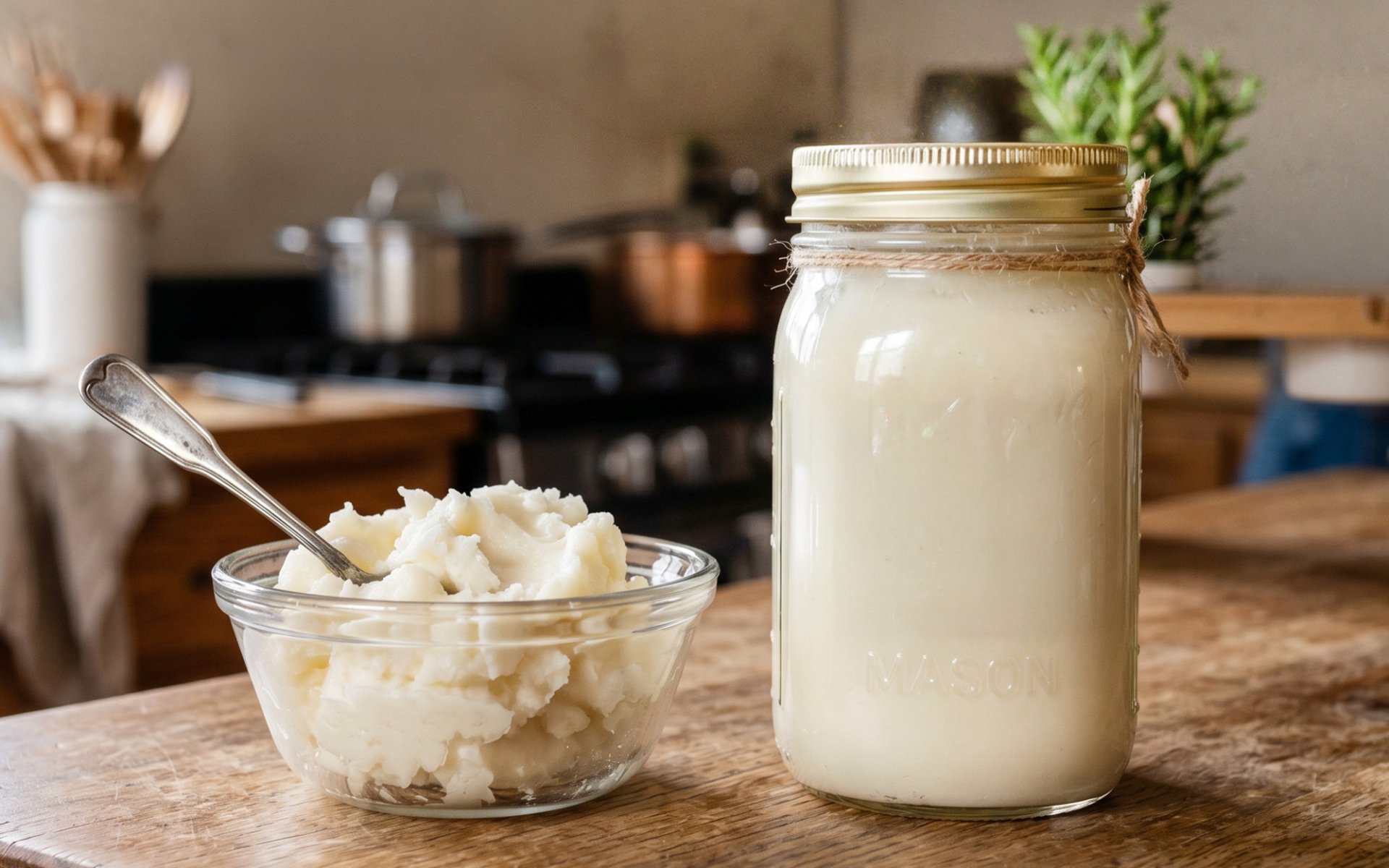
The production of Beef Tallow begins with raw beef fat known as “suet,” which is the hard fat found around the kidneys and internal organs of cattle. This particular fat is preferred because it is relatively pure and contains a high proportion of saturated fatty acids, making it especially suitable for rendering into cooking fat.The fat is first finely chopped or ground, then slowly heated over low temperatures for an extended period until the fat melts into a clear liquid. The remaining connective tissue and impurities are filtered out, and once cooled to room temperature, the rendered fat solidifies into a pale yellowish-white substance with a semi-soft texture similar to butter or lard.
The Key Benefits of Beef Tallow for Cooking
One of Beef Tallow’s key characteristics is its remarkable stability. Because it contains relatively high levels of saturated fats and monounsaturated fats, it withstands heat very well and is less prone to rancidity than some vegetable oils. It also has a long shelf life and generally requires fewer preservatives.Beef Tallow vs Lard: What’s the Difference?
Beef Tallow differs from “Lard,” which is rendered pork fat. Lard tends to have a milder flavor and is commonly used in baking, whereas Beef Tallow carries a subtle beef aroma and flavor that makes it particularly suitable for frying and high-heat cooking.The Return of Beef Tallow in the Whole Foods Movement
In recent years, however, nutritional perspectives have begun to shift. Many consumers are becoming more interested in “Whole Foods” and minimally processed ingredients. This renewed focus has contributed to the resurgence of Beef Tallow among chefs, restaurants, and consumers seeking alternatives to heavily processed industrial oils.Beef Tallow in Modern Skincare Products
Beyond cooking, Beef Tallow has also gained attention in the skincare industry. Some balms and creams incorporate Beef Tallow because certain fatty acids found in it are structurally similar to the natural oils present in human skin. However, further scientific research is still needed to clearly confirm its skincare benefits.Beef Tallow Smoke Point and High-Heat Cooking Applications
Beef Tallow has a relatively high smoke point, typically around 215–250°C, making it ideal for frying and high-temperature cooking. Popular uses include frying French fries, searing steaks, stir-frying, baking pies and pastry doughs, and seasoning cast-iron cookware.Nutritional Composition of Beef Tallow
Nutritionally, Beef Tallow is composed almost entirely of fat, including saturated fats, monounsaturated fats, and small amounts of polyunsaturated fats. Major fatty acids found in Beef Tallow include stearic acid, oleic acid, and palmitic acid.Oleic acid is the same monounsaturated fat commonly found in olive oil, while stearic acid is a saturated fat that some researchers believe may have a less significant effect on cholesterol levels compared to other saturated fats. Beef Tallow also contains small amounts of fat-soluble vitamins such as vitamins A, D, E, and K, although not in quantities high enough to be considered a major dietary source.
Considerations and Moderation When Consuming Beef Tallow
Because Beef Tallow contains relatively high levels of saturated fat, many health organizations still recommend consuming it in moderation, as excessive saturated fat intake may be associated with increased risks of heart disease and elevated LDL cholesterol.At the same time, some modern research suggests that saturated fats may not be universally harmful, and that health effects depend heavily on overall dietary patterns, food quality, and consumption levels. For this reason, many nutrition experts recommend using Beef Tallow in moderation while maintaining a balanced diet that also includes unsaturated fats from fish, nuts, avocados, and olive oil.
Tags :
Related Content