The Evolution of American Barbecue
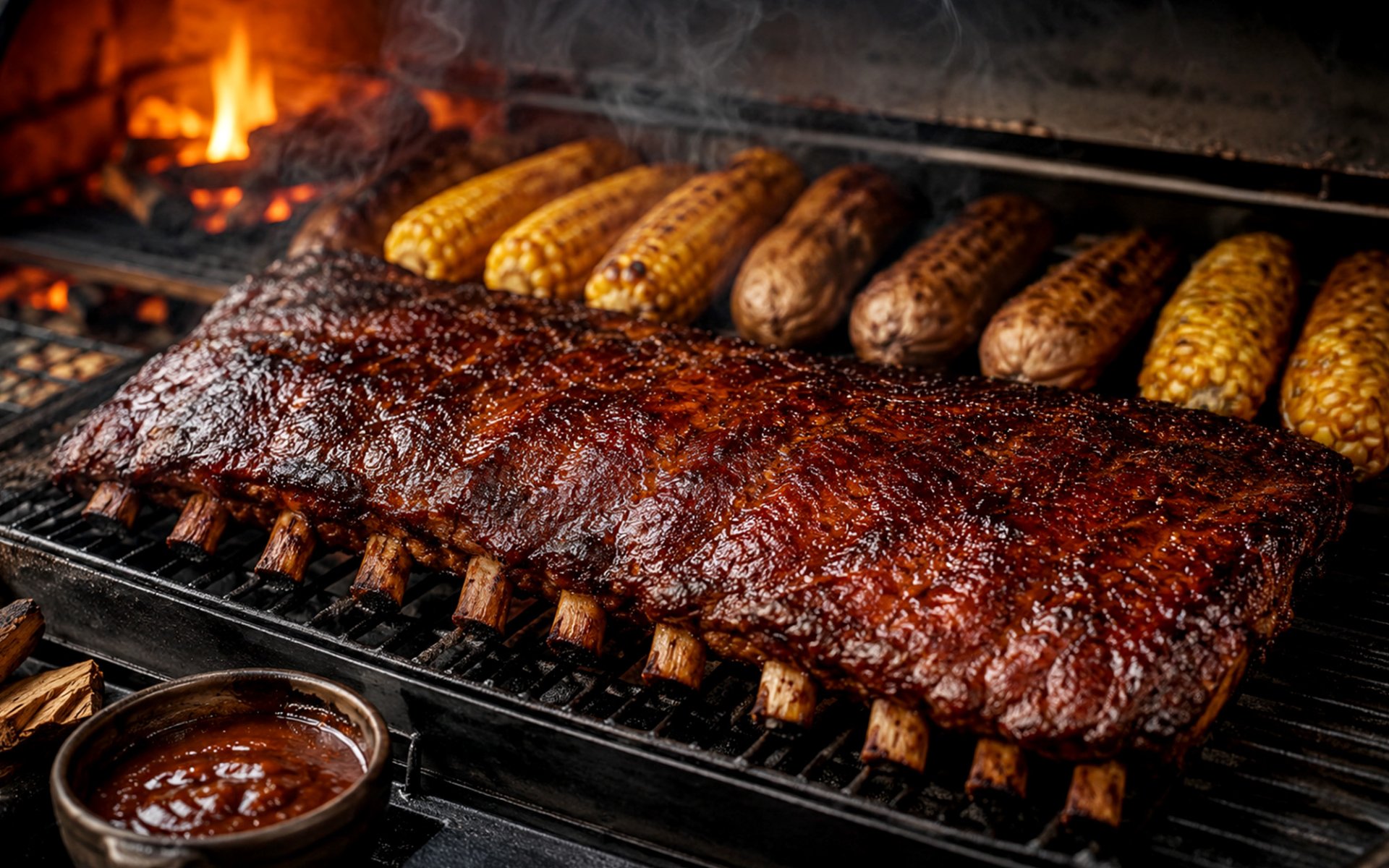
Grilling vs. Barbecue : The Art of "Low and Slow"
Before understanding the history of American BBQ, it is important to distinguish between "grilling" and "barbecue," as they differ in technique, process, and outcome.Grilling refers to cooking food over direct high heat, usually for a short period of time, and is suitable for small or quick-cooking items such as steaks, hamburgers, or sausages.
In contrast, American barbecue is the art of cooking meat using the principle of "Low and Slow"—applying low heat over a long period of time, using indirect heat and natural wood smoke to slowly cook the meat. This process can take anywhere from 4 to 18 hours, or even longer, allowing collagen and connective tissues to break down into gelatin, resulting in tender, juicy meat infused with a distinctive smoky aroma.
This technique is ideal for large cuts or tougher, more fibrous parts of meat such as pork ribs, beef brisket, pork shoulder, or beef ribs. While these cuts may become tough if grilled over high heat, slow smoking transforms them into tender, flavorful dishes.
For this reason, barbecue in American culture is not simply about cooking food over fire, but a culinary discipline and cultural practice that values time, patience, the selection of wood used for smoking, and precise temperature control. These elements form the heart of American BBQ, distinguishing it from ordinary grilling and establishing it as one of the most valued culinary traditions in the United States.
The Indigenous Origins of Barbecue
The culture of barbecue in the United States traces its origins to indigenous peoples of the Caribbean, particularly the Taíno, who cooked meat on wooden frameworks over fire to smoke and preserve it for longer storage. The word "barbecue" is believed to originate from the Taíno term "barbacoa," referring to this wooden structure used for grilling or smoking food.When Spanish explorers led by Christopher Columbus arrived in the Caribbean in the late 15th century, they learned this cooking technique from the indigenous peoples and brought it back to Europe. It later spread to the Americas through European colonization during the 16th–17th centuries.
Although European settlers brought livestock such as pigs and cattle, along with spices and herbs, many food historians agree that African Americans played a crucial role in shaping what became distinctly known as American BBQ.
A Culinary Tradition Born from Resilience
During the era of slavery, enslaved Africans were often assigned to prepare food for gatherings and celebrations. Slave owners typically kept the best cuts of meat for themselves, leaving tougher or less desirable parts—such as ribs, shoulders, or organ meats—to enslaved cooks.From these limitations, they developed slow-cooking techniques, long smoking processes using hardwood, and the creative use of spices and sauces to transform tough meat into tender, flavorful dishes.
The earliest written record of barbecue in the United States appears in the travel accounts of John Lederer, a German explorer who documented his expedition in 1672 in the Blue Ridge Mountains of Virginia and the Piedmont region of the Carolinas. His writings provide evidence that low-heat, smoke-based cooking had already become part of life in colonial America.
During the colonial era and early years of the United States, barbecue often appeared in celebrations and public ceremonies. One notable example occurred on September 18, 1793, when George Washington attended a beef barbecue held for the laying of the cornerstone of the United States Capitol. This event illustrates how barbecue had already become part of American social and ceremonial traditions.
The Major Regional Styles of American Barbecue
After the abolition of slavery, many African Americans migrated from the southern states to other regions of the country, bringing their barbecue knowledge and traditions with them. This movement contributed to the diversification of barbecue styles across the United States, leading to distinct regional identities such as:
Carolina Barbecue : One of the oldest barbecue styles in the United States, Carolina barbecue is known for using pork as the primary meat. Eastern Carolina style typically features whole-hog cooking with a vinegar-based sauce that delivers a sharp, tangy flavor. Western Carolina, or Lexington-style, focuses on pork shoulder with a tomato-and-vinegar-based sauce that balances sweet and sour notes.
Memphis Barbecue : Originating from Tennessee, Memphis barbecue is famous for dry rub seasoning applied before smoking, as well as the use of tomato-based sauces. Pork ribs are especially popular, offered either “dry” (without sauce) or “wet” (brushed with sauce during or after cooking).
Kansas City Barbecue : This style developed from a mix of African American culinary traditions and the livestock industry of the late 19th century. It features a wide variety of meats, including beef, pork, and lamb, typically served with a thick, sweet tomato-based sauce.
Texas Barbecue : Texas barbecue is highly regional. Central Texas style, influenced by German and Czech butchers, emphasizes beef—especially brisket—seasoned simply with salt and pepper to highlight the natural flavor of the meat and smoke. West Texas favors “cowboy barbecue,” often using goat or lamb cooked over mesquite wood for its distinctive smoky aroma. South Texas is known for barbacoa, traditionally slow-cooking whole cow heads until tender and juicy.
Other regional variations also exist, such as Alabama barbecue, known for its “Alabama White Sauce” made from mayonnaise, vinegar, and black pepper, and South Carolina barbecue, distinguished by its mustard-based sauce influenced by German and French immigrants.