Cherries Jubilee
The Art of Flambé and Tableside Service
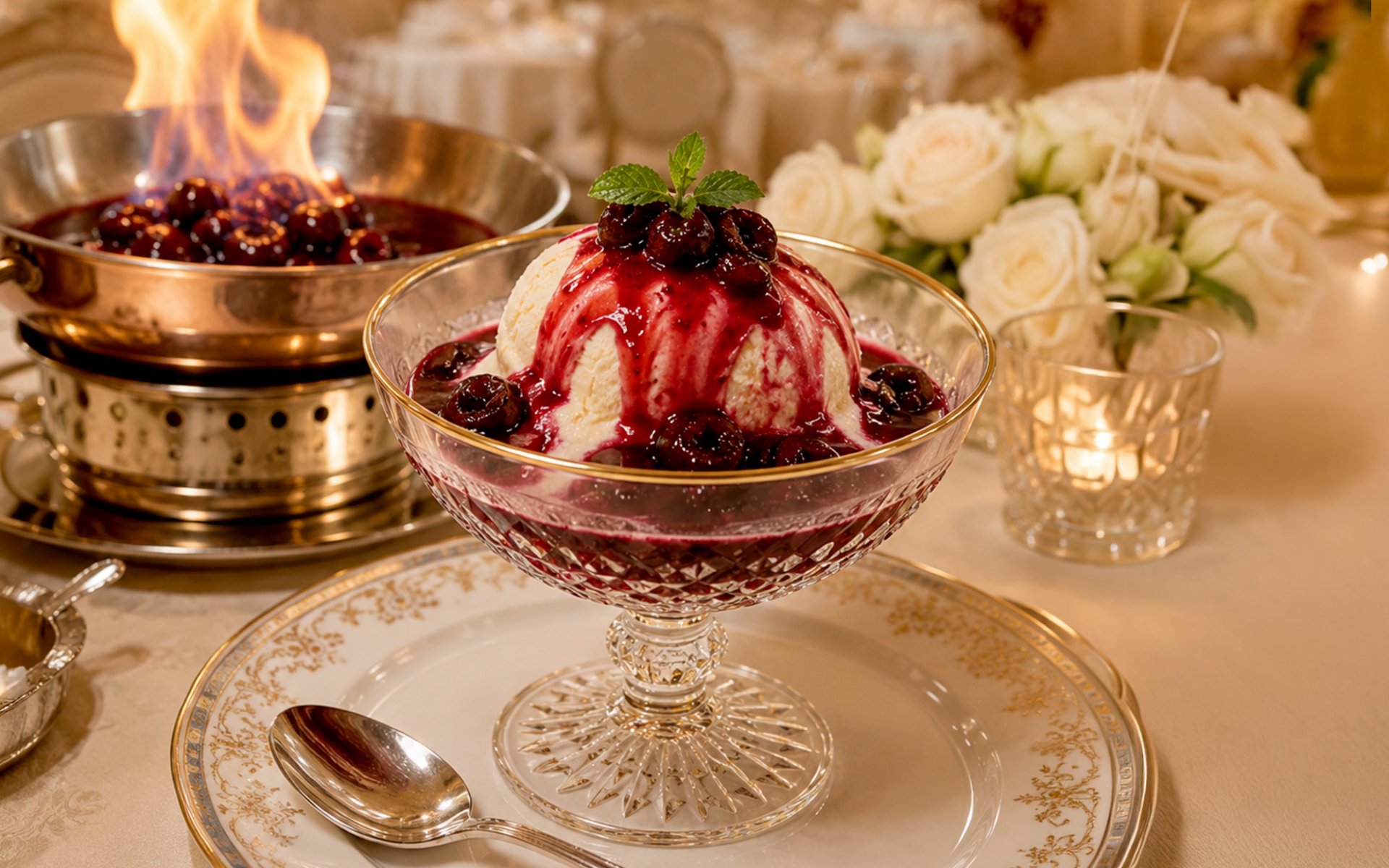
The flambé technique is far more than a theatrical flourish. In addition to creating an unforgettable visual presentation, the flames evaporate part of the alcohol while allowing the heat to intensify and harmonize the aromas of the cherries, butter, sugar, and brandy. The result is a dessert with exceptional fragrance and remarkable depth of flavor.Serving Cherries Jubilee while the blue flames are still dancing also reflects the tradition of tableside service, in which dishes are prepared directly in front of guests. This style of presentation became one of the defining characteristics of Europe's finest restaurants during the late nineteenth century, combining culinary craftsmanship with the art of hospitality.
A Royal Tribute: Queen Victoria's Diamond Jubilee
The story of Cherries Jubilee began during the late Victorian era, when the British Empire was at the height of its global influence. The dessert is closely associated with one of the most significant royal celebrations in British history—the Diamond Jubilee of Queen Victoria in 1897, commemorating the sixtieth anniversary of her accession to the throne.The Diamond Jubilee was celebrated with extraordinary grandeur throughout London and across the British Empire. Royal guests from European courts, along with political leaders and representatives from Britain's colonies around the world, gathered to honor the Queen. The event has since been remembered as one of the most magnificent royal celebrations ever held in the United Kingdom.
Auguste Escoffier: "The King of Chefs"
Queen Victoria was well known for her fondness for berries, especially cherries. To commemorate this historic occasion, Auguste Escoffier, the legendary French chef often referred to as "The King of Chefs and the Chef of Kings," was entrusted with creating a dessert worthy of the celebration. Escoffier had earned this title through his service to kings, queens, royalty, and distinguished figures across Europe.
A Culinary Pioneer: Escoffier revolutionized kitchen management by developing the Brigade de Cuisine system, a structured hierarchy of kitchen roles that remains the global standard in professional kitchens today. He also authored Le Guide Culinaire, one of the most influential French culinary textbooks ever published.
The Birth of Luxury Hospitality: During this period, Escoffier worked closely with the renowned hotelier César Ritz. Together, they transformed luxury hospitality by elevating the standards of fine dining and hotel service at prestigious establishments such as The Savoy Hotel and later The Carlton Hotel in London.
Celebrity Tributes: Beyond his innovations, Escoffier was celebrated for creating dishes in honor of distinguished individuals, such as the famous Peach Melba dedicated to Australian opera singer Nellie Melba.
With Queen Victoria's Diamond Jubilee approaching, Escoffier created a new dessert in tribute to the monarch. He selected cherries—one of the Queen's favorite fruits—as the centerpiece and combined them with refined French culinary techniques to produce a dessert that embodied elegance, celebration, and royal grandeur. Thus, Cherries Jubilee was born. During the Jubilee banquet, it was dramatically prepared using the flambé technique in the presence of Queen Victoria and her distinguished guests. The brilliant blue flames captivated everyone in attendance, turning the dessert into both a culinary masterpiece and a memorable spectacle.
The Evolution of the Recipe: Enter Vanilla Ice Cream
Interestingly, Escoffier's original version of Cherries Jubilee was much simpler than the dessert we know today. Fresh cherries were gently simmered in a light syrup before being transferred to a heatproof serving dish. Brandy or Kirsch was then poured over the fruit and ignited tableside. Notably, the original recipe did not include vanilla ice cream.
In the early twentieth century, Escoffier refined the recipe by introducing vanilla ice cream, creating a striking contrast between the warm, freshly flambéed cherry sauce and the cold, creamy dessert beneath it.
This interplay of temperatures added an entirely new sensory dimension:
The cool ice cream balanced the sweetness of the syrup and the aromatic richness of the brandy.
Its gradual melting into the warm sauce created a smoother, more luxurious texture and a harmonious flavor profile.
Thanks to this refinement, Cherries Jubilee evolved from a dessert reserved for royal banquets into the classic presentation now recognized throughout the culinary world.
An Enduring Symbol of Fine Dining in America
Following the era of Auguste Escoffier, Cherries Jubilee crossed the Atlantic and gained widespread popularity in the United States. It reached the height of its popularity during the 1950s and 1960s, an era when Continental cuisine—European-inspired fine dining rooted in French culinary traditions—flourished across America.
At that time, many prestigious restaurants continued to embrace French service (tableside service). Classics such as Steak Diane, Crêpes Suzette, and Cherries Jubilee became signature offerings found in nearly every upscale restaurant. Ordering these dishes represented more than simply enjoying an exceptional meal; it reflected sophistication, refined taste, and the glamorous culture of Western fine dining.
In the United States, Cherries Jubilee became so beloved that September 24 is celebrated each year as National Cherries Jubilee Day, honoring this historically significant dessert. The annual observance serves as a reminder that Cherries Jubilee is far more than a delicious sweet—it is a treasured part of culinary heritage that has been admired and enjoyed for well over a century.