Ploughman's Lunch
Last updated: 21 Jul 2026
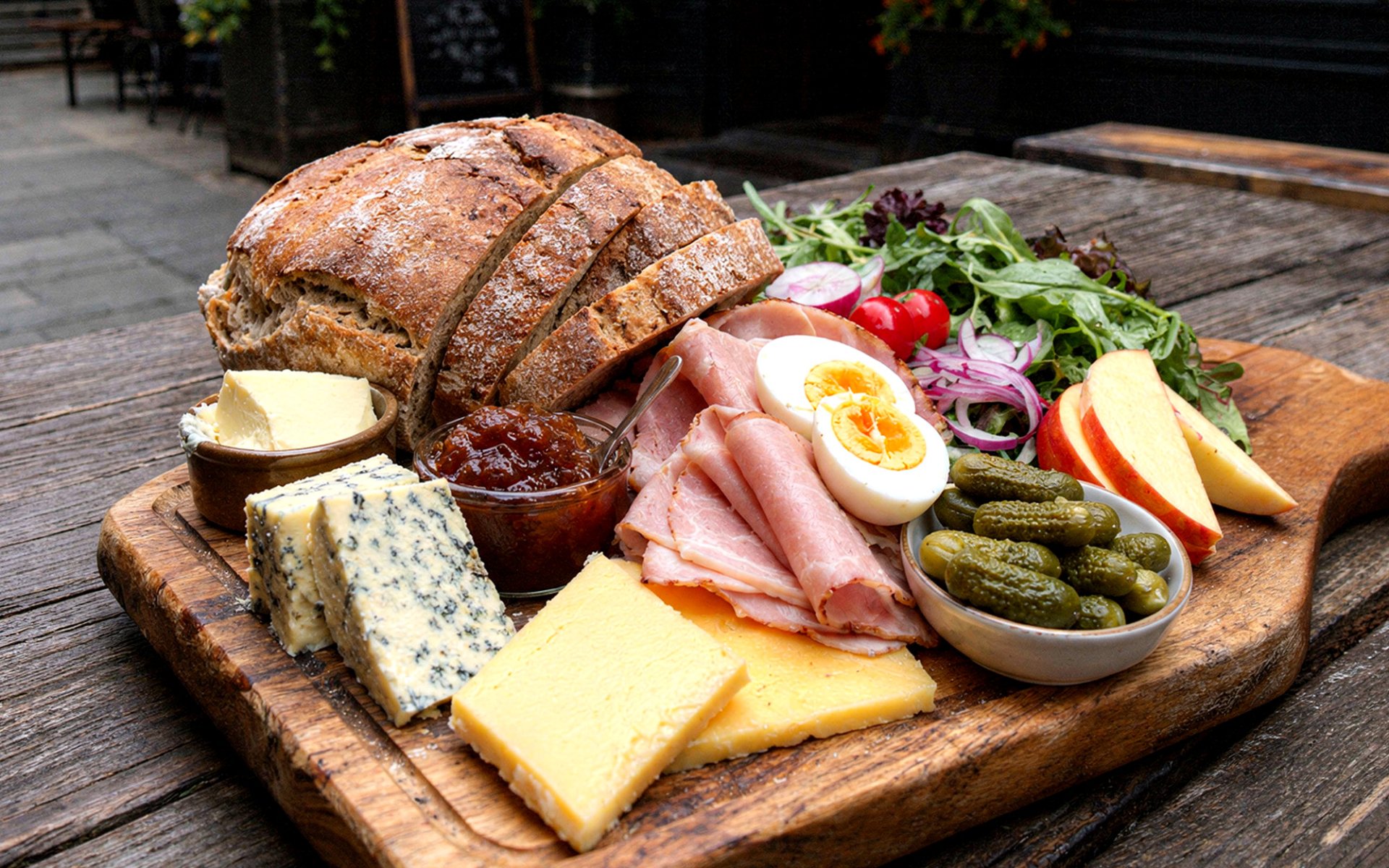
Ploughman's Lunch is a traditional British pub lunch with roots in the simple, hearty meals once eaten by agricultural workers. Typically, it consists of foods that require little or no cooking, including crusty bread, English cheeses such as Cheddar, and assorted pickles. Depending on the region or establishment, it may also include cold ham, boiled eggs, apples, fresh vegetables, or other accompaniments.
Although the term "Ploughman's Lunch" did not appear until the 20th century, the concept of this meal dates back many centuries, from the Middle Ages through the Industrial Revolution.
Roots in the Medieval Countryside
Historically, agricultural laborers—or ploughmen—worked outdoors from dawn until dusk. They needed meals that were filling, portable, inexpensive, and capable of lasting throughout the day. Bread served as their primary source of carbohydrates, while cheese provided protein and fat.
These meals were often accompanied by onions, which added flavor and nutritional value. The preferred beverage was small ale, a low-alcohol beer that was considered safer than drinking water, as many water sources during the medieval period were contaminated and unsuitable for consumption.
Likewise, numerous 19th-century sources note that the typical countryside laborer's lunch consisted of bread, cheese, and onions.
Despite the long tradition of these simple meals, they were not known as Ploughman's Lunch at the time. They were simply practical midday meals rather than named menu items served in pubs or restaurants. The modern term Ploughman's Lunch is therefore a relatively recent invention, contrary to the common misconception that it originated in the Middle Ages.
At the time, Britain was rebuilding its post-war economy. The dairy industry sought to stimulate demand for British cheese, while pubs—already central gathering places in British society—were seen as ideal venues for promoting a simple lunch built around bread, cheese, and pickles. The name Ploughman's Lunch was deliberately chosen to evoke images of the English countryside and the nation's agricultural heritage.
Following the Cheese Bureau's successful campaign, the popularity of the dish grew rapidly throughout the 1960s. When the Milk Marketing Board assumed responsibility for promoting British dairy products, it expanded the campaign nationwide.
Thousands of promotional signs were distributed to pubs across the United Kingdom advertising "Traditional Ploughman's Lunch." The word "Traditional" was intentionally used to reinforce the idea that the meal represented an authentic part of Britain's culinary heritage—even though the name itself had only recently been coined.
Over time, many pubs developed their own variations by adding sliced ham, pork pie, boiled eggs, pâté, fresh fruit, or pickled onions. These additions allowed individual establishments to create distinctive versions while preserving the meal's rustic character. Gradually, Ploughman's Lunch evolved from a simple countryside lunch into one of the defining dishes of British pub cuisine.
However, the story did not end there. Beginning in the 1990s, the rise of the gastropub—a new generation of pubs emphasizing high-quality food and carefully sourced ingredients—brought renewed interest to this classic dish.
In the gastropub era, Ploughman's Lunch was elevated from a humble lunch into a premium dining experience. Artisan bread, locally produced cheeses, homemade chutneys and pickles, seasonal fruits, pork pies, and carefully selected cured meats became common components of the dish. This modern interpretation celebrates regional ingredients, traditional craftsmanship, and contemporary British gastronomy while honoring the meal's rural origins.
The cultural significance of Ploughman's Lunch extends beyond the world of food:
This demonstrates that the core concept behind Ploughman's Lunch continues to resonate with modern eating habits, proving that a meal rooted in Britain's agricultural past remains relevant more than half a century after it became a national icon.
2. Website Title (SEO Optimized)
Although the term "Ploughman's Lunch" did not appear until the 20th century, the concept of this meal dates back many centuries, from the Middle Ages through the Industrial Revolution.
Roots in the Medieval Countryside
Historically, agricultural laborers—or ploughmen—worked outdoors from dawn until dusk. They needed meals that were filling, portable, inexpensive, and capable of lasting throughout the day. Bread served as their primary source of carbohydrates, while cheese provided protein and fat.
These meals were often accompanied by onions, which added flavor and nutritional value. The preferred beverage was small ale, a low-alcohol beer that was considered safer than drinking water, as many water sources during the medieval period were contaminated and unsuitable for consumption.
Historical literature contains several references to meals of this nature:
The 14th-century poem Pierce the Ploughman's Crede describes the difficult lives of rural workers sustained by bread and cheese.Likewise, numerous 19th-century sources note that the typical countryside laborer's lunch consisted of bread, cheese, and onions.
Despite the long tradition of these simple meals, they were not known as Ploughman's Lunch at the time. They were simply practical midday meals rather than named menu items served in pubs or restaurants. The modern term Ploughman's Lunch is therefore a relatively recent invention, contrary to the common misconception that it originated in the Middle Ages.
A 1950s Marketing Invention
The transformation of Ploughman's Lunch into an officially named dish is generally traced to the 1950s, when the Cheese Bureau, together with the advertising agency J. Walter Thompson, launched a nationwide campaign to encourage domestic cheese consumption after cheese rationing ended following World War II.At the time, Britain was rebuilding its post-war economy. The dairy industry sought to stimulate demand for British cheese, while pubs—already central gathering places in British society—were seen as ideal venues for promoting a simple lunch built around bread, cheese, and pickles. The name Ploughman's Lunch was deliberately chosen to evoke images of the English countryside and the nation's agricultural heritage.
Following the Cheese Bureau's successful campaign, the popularity of the dish grew rapidly throughout the 1960s. When the Milk Marketing Board assumed responsibility for promoting British dairy products, it expanded the campaign nationwide.
Thousands of promotional signs were distributed to pubs across the United Kingdom advertising "Traditional Ploughman's Lunch." The word "Traditional" was intentionally used to reinforce the idea that the meal represented an authentic part of Britain's culinary heritage—even though the name itself had only recently been coined.
Why Did the Campaign Succeed?
Several factors contributed to the campaign's success:- Post-War Nostalgia: It appealed to the post-war sense of nostalgia, as many Britons longed for the simplicity of rural life amid rapid industrialization and social change. The meal also reinforced the image of traditional British cuisine as honest, wholesome, and locally rooted.
- Pub Practicality: Practicality also played an important role. Many traditional British pubs lacked fully equipped kitchens or professional chefs capable of preparing hot meals. Since a Ploughman's Lunch required only arranging bread, cheese, and accompaniments on a plate, it was inexpensive, easy to prepare, and required virtually no cooking facilities.
Over time, many pubs developed their own variations by adding sliced ham, pork pie, boiled eggs, pâté, fresh fruit, or pickled onions. These additions allowed individual establishments to create distinctive versions while preserving the meal's rustic character. Gradually, Ploughman's Lunch evolved from a simple countryside lunch into one of the defining dishes of British pub cuisine.
The Gastropub Revival and Pop Culture Relevance
After reaching its peak during the 1960s and 1970s, the popularity of Ploughman's Lunch gradually declined as international cuisines and modern dining trends became increasingly influential in British pubs and restaurants.However, the story did not end there. Beginning in the 1990s, the rise of the gastropub—a new generation of pubs emphasizing high-quality food and carefully sourced ingredients—brought renewed interest to this classic dish.
In the gastropub era, Ploughman's Lunch was elevated from a humble lunch into a premium dining experience. Artisan bread, locally produced cheeses, homemade chutneys and pickles, seasonal fruits, pork pies, and carefully selected cured meats became common components of the dish. This modern interpretation celebrates regional ingredients, traditional craftsmanship, and contemporary British gastronomy while honoring the meal's rural origins.
The cultural significance of Ploughman's Lunch extends beyond the world of food:
- In Film: One notable example is the 1983 British film The Ploughman's Lunch, written by Ian McEwan. Rather than focusing on food, the film uses the meal as a metaphor for how history is created, selected, and reinterpreted according to the political and social context of different eras.
- Modern Food Trends: More recently, Ploughman's Lunch has also found new relevance in contemporary food culture. In 2023, Bon Appétit magazine compared the viral "Girl Dinner" trend on TikTok to Ploughman's Lunch.
This demonstrates that the core concept behind Ploughman's Lunch continues to resonate with modern eating habits, proving that a meal rooted in Britain's agricultural past remains relevant more than half a century after it became a national icon.
2. Website Title (SEO Optimized)
Tags :
Related Content


Tracing the History of Yule Log (Bûche de Noël): The Traditional Christmas Dessert of France