Hime Makura
Last updated: 6 Aug 2026
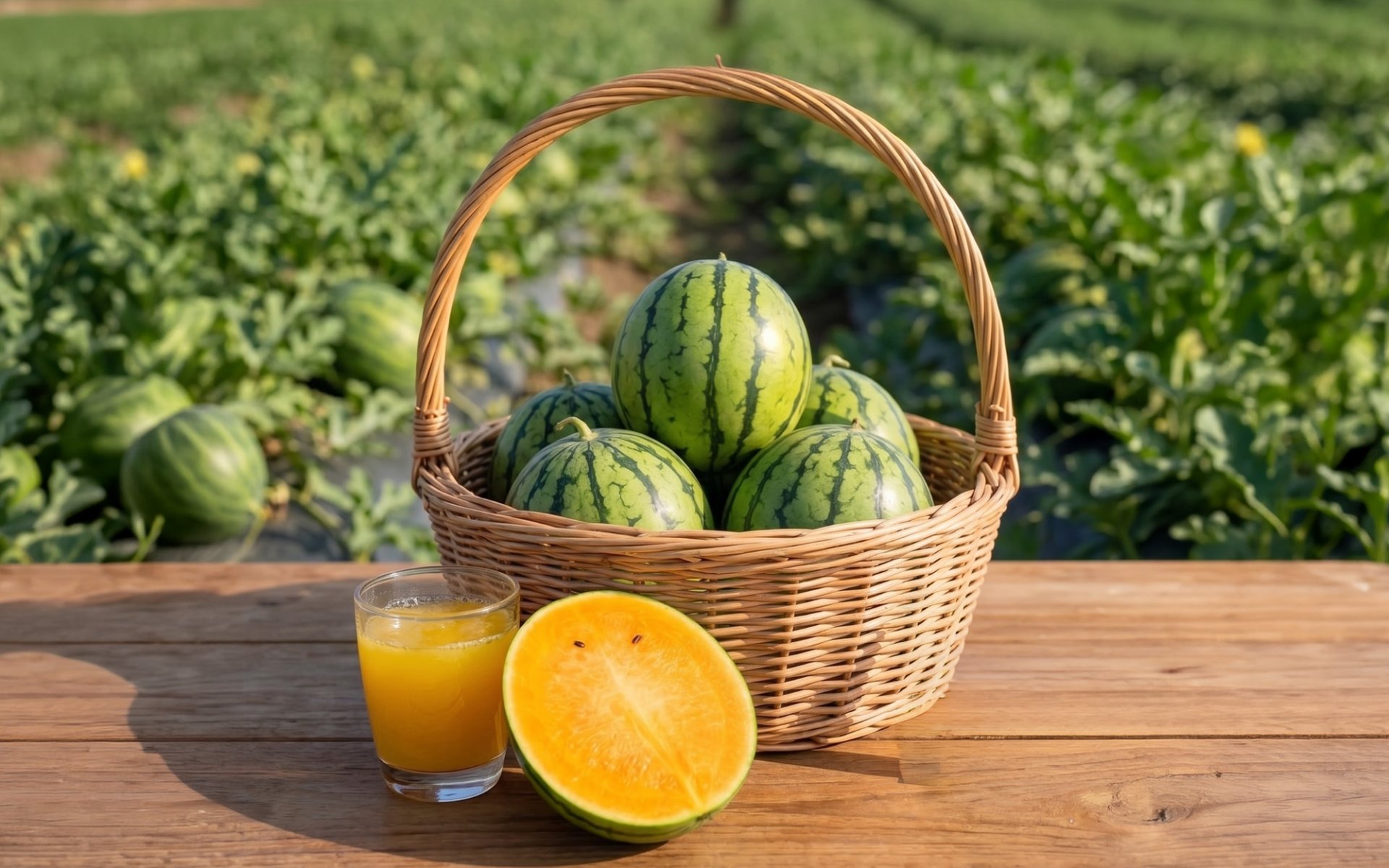
Hime Makura is a premium mini watermelon cultivar developed in Japan to meet the needs of today's consumers, who seek fruit that is compact, convenient to enjoy, and perfectly suited to modern lifestyles—without compromising the exceptional quality and flavor traditionally associated with larger watermelons.
One of Hime Makura's most distinctive characteristics is its elegant oval shape, resembling a small rugby ball or pillow. Its deep green rind features bold, well-defined stripes and, despite measuring only 4–5 millimeters in thickness, is remarkably strong and durable. This combination of thinness and resilience helps minimize damage during transportation and distribution while maximizing the edible portion of the fruit.
Inside, Hime Makura offers a firm, crisp, and exceptionally juicy texture that rivals that of full-sized premium watermelons. It consistently achieves a sweetness level of approximately 12–13° Brix, a benchmark widely recognized in Japan as the standard for premium-quality watermelon.
Watermelons were introduced to Japan during the Edo period (1603–1868). However, the earliest varieties grown in the country were quite different from the premium cultivars enjoyed today. They typically produced large fruits with relatively pale flesh, abundant seeds, and a flavor that was considerably less sweet than modern varieties.
These long-term breeding efforts laid the foundation for Japan's remarkable culture of watermelon innovation. Seed companies and researchers continually pursued new cultivars that excelled not only in flavor and appearance but also in practicality, giving rise to many of the premium watermelon varieties for which Japan is renowned today.
This demographic transformation significantly influenced consumer preferences. Large watermelons weighing 7 to 10 kilograms, once ideal for sharing among extended families, became increasingly impractical for modern households. They were cumbersome to carry, often too large to finish before spoilage, contributing to unnecessary food waste, and difficult to store in the relatively compact refrigerators and limited living spaces that characterize urban homes throughout Japan.
Recognizing these changing needs, Japanese breeders began developing a watermelon that would deliver the same premium eating experience as traditional large varieties while offering greater convenience for contemporary lifestyles. This vision ultimately paved the way for the creation of Hime Makura—a premium mini watermelon that perfectly balances exceptional sweetness, refined texture, elegant appearance, and everyday practicality.
Recognizing these changing consumer needs, Japanese plant breeders set out to develop a smaller watermelon that could deliver the same exceptional quality and flavor as traditional full-sized varieties while offering greater convenience for transportation, storage, and everyday consumption. Their goal was to create a fruit perfectly suited to modern lifestyles without compromising premium standards. Among the many cultivars developed through these efforts, Hime Makura emerged as one of the most successful and widely recognized.
Historically, women of Japan's aristocratic class slept on small wooden neck rests known as Takamakura (高枕). These elevated pillows were designed to support the neck while preserving elaborate traditional hairstyles known as Nihongami (日本髪) during sleep. Because the fruit of Hime Makura closely resembles these elegant cylindrical pillows, the cultivar was given a name that can be interpreted as "The Princess's Pillow," evoking both its graceful appearance and its refined, premium image.
The name also reflects a distinctive characteristic of Japanese agricultural branding, where fruits and vegetables are often named in ways that connect their physical appearance with elements of the nation's culture, history, and everyday life. Such names create memorable identities while reinforcing the reputation of Japanese produce as products of exceptional quality and craftsmanship.
In terms of eating quality, Hime Makura offers an experience comparable to that of premium full-sized watermelons. Its flesh is firm, crisp, and exceptionally juicy, possessing the characteristic texture that Japanese consumers describe as "Shari-kan" (シャリ感)—a refreshing, crisp bite that is considered one of the most desirable qualities in a premium watermelon. The fruit consistently achieves a sweetness level of 12–13° Brix, and under ideal growing conditions, it can reach 14° Brix, delivering an even richer and more satisfying flavor.
## Expanding the Lineage: Specialized Hime Makura Cultivars
As Hime Makura's popularity continued to grow, Marutane Seed, the original developer, together with other Japanese seed companies, expanded the breeding program to produce specialized cultivars suited to different growing seasons and market demands. These include:
The development of these specialized cultivars reflects the remarkable expertise of Japanese plant breeders in adapting crops to diverse growing environments while maintaining consistently high standards of quality. By preserving the fruit's signature sweetness, crisp texture, and exceptional eating experience throughout different production seasons, these breeding innovations have firmly established Hime Makura as one of Japan's most celebrated premium watermelon cultivars.
One of Hime Makura's most distinctive characteristics is its elegant oval shape, resembling a small rugby ball or pillow. Its deep green rind features bold, well-defined stripes and, despite measuring only 4–5 millimeters in thickness, is remarkably strong and durable. This combination of thinness and resilience helps minimize damage during transportation and distribution while maximizing the edible portion of the fruit.
Inside, Hime Makura offers a firm, crisp, and exceptionally juicy texture that rivals that of full-sized premium watermelons. It consistently achieves a sweetness level of approximately 12–13° Brix, a benchmark widely recognized in Japan as the standard for premium-quality watermelon.
A Brief History: The Global Journey of the Watermelon
Although Hime Makura is a modern Japanese innovation, the history of the watermelon itself stretches back thousands of years. Archaeological evidence indicates that watermelons were first cultivated in ancient Africa more than 4,000 years ago, with early cultivation documented during the era of ancient Egypt. Over time, the fruit spread throughout the Middle East before reaching China and other parts of Asia via ancient trade routes, eventually becoming a beloved fruit across numerous cultures around the world.Watermelons were introduced to Japan during the Edo period (1603–1868). However, the earliest varieties grown in the country were quite different from the premium cultivars enjoyed today. They typically produced large fruits with relatively pale flesh, abundant seeds, and a flavor that was considerably less sweet than modern varieties.
The Meiji Era: A New Chapter in Agricultural Innovation
A new chapter began during the Meiji era (1868–1912), when Japan actively embraced agricultural knowledge and technologies from the West. Government agencies and agricultural research institutions imported watermelon seeds from the United States and Europe, experimenting with crossbreeding them alongside Japanese local varieties. Their objective was to develop cultivars with sweeter flavor, firmer and crisper flesh, more vibrant coloration, improved disease resistance, and better adaptability to Japan's diverse growing conditions.These long-term breeding efforts laid the foundation for Japan's remarkable culture of watermelon innovation. Seed companies and researchers continually pursued new cultivars that excelled not only in flavor and appearance but also in practicality, giving rise to many of the premium watermelon varieties for which Japan is renowned today.
Adapting to the Heisei Era: The Shift in Modern Demographics
During the Heisei era (1989–2019), Japanese plant breeders and seed companies recognized a profound shift in the country's demographics and consumer lifestyles. Traditional multi-generational households gradually gave way to smaller nuclear families, while the number of single-person households and elderly couples living alone continued to rise.This demographic transformation significantly influenced consumer preferences. Large watermelons weighing 7 to 10 kilograms, once ideal for sharing among extended families, became increasingly impractical for modern households. They were cumbersome to carry, often too large to finish before spoilage, contributing to unnecessary food waste, and difficult to store in the relatively compact refrigerators and limited living spaces that characterize urban homes throughout Japan.
Recognizing these changing needs, Japanese breeders began developing a watermelon that would deliver the same premium eating experience as traditional large varieties while offering greater convenience for contemporary lifestyles. This vision ultimately paved the way for the creation of Hime Makura—a premium mini watermelon that perfectly balances exceptional sweetness, refined texture, elegant appearance, and everyday practicality.
Recognizing these changing consumer needs, Japanese plant breeders set out to develop a smaller watermelon that could deliver the same exceptional quality and flavor as traditional full-sized varieties while offering greater convenience for transportation, storage, and everyday consumption. Their goal was to create a fruit perfectly suited to modern lifestyles without compromising premium standards. Among the many cultivars developed through these efforts, Hime Makura emerged as one of the most successful and widely recognized.
“The Princess's Pillow”: The Meaning Behind the Name
The name Hime Makura (姫まくら) is derived from two Japanese words: Hime (姫), meaning princess or noble lady, and Makura (まくら), meaning pillow. According to the cultivar's developer, the name was inspired by the fruit's distinctive elongated shape, which resembles a traditional Japanese pillow.Historically, women of Japan's aristocratic class slept on small wooden neck rests known as Takamakura (高枕). These elevated pillows were designed to support the neck while preserving elaborate traditional hairstyles known as Nihongami (日本髪) during sleep. Because the fruit of Hime Makura closely resembles these elegant cylindrical pillows, the cultivar was given a name that can be interpreted as "The Princess's Pillow," evoking both its graceful appearance and its refined, premium image.
The name also reflects a distinctive characteristic of Japanese agricultural branding, where fruits and vegetables are often named in ways that connect their physical appearance with elements of the nation's culture, history, and everyday life. Such names create memorable identities while reinforcing the reputation of Japanese produce as products of exceptional quality and craftsmanship.
Shari-kan Texture and Striking Appearance
One of the defining features that distinguishes Hime Makura from other mini watermelons available in Japan is its unique shape. While most mini watermelons are nearly spherical, Hime Makura was selectively bred to produce an elegant elongated oval resembling a rugby ball—a form rarely seen among conventional mini cultivars. Its deep green rind is accentuated by bold, contrasting stripes, giving the fruit a striking appearance. Despite being only 4–5 millimeters thick, the rind is remarkably strong and resilient, significantly reducing the risk of cracking during cultivation, transportation, and retail distribution.In terms of eating quality, Hime Makura offers an experience comparable to that of premium full-sized watermelons. Its flesh is firm, crisp, and exceptionally juicy, possessing the characteristic texture that Japanese consumers describe as "Shari-kan" (シャリ感)—a refreshing, crisp bite that is considered one of the most desirable qualities in a premium watermelon. The fruit consistently achieves a sweetness level of 12–13° Brix, and under ideal growing conditions, it can reach 14° Brix, delivering an even richer and more satisfying flavor.
## Expanding the Lineage: Specialized Hime Makura Cultivars
As Hime Makura's popularity continued to grow, Marutane Seed, the original developer, together with other Japanese seed companies, expanded the breeding program to produce specialized cultivars suited to different growing seasons and market demands. These include:
Haru no Hime Makura (春の姫まくら) – "Spring Hime Makura"
Developed specifically for cooler growing conditions, this cultivar demonstrates excellent flowering and fruit-setting ability even under lower temperatures and limited sunlight. It is particularly well suited for greenhouse cultivation and plastic tunnel production during the early growing season.Natsu no Hime Makura (夏の姫まくら) – "Summer Hime Makura"
Bred for Japan's intense midsummer heat, this variety maintains its signature firm, crisp texture and premium eating quality even during the hottest months of July and August, when many conventional mini watermelons tend to soften and lose their desirable texture.Hime Makura Gold (姫まくらゴールド)
This distinctive selection features vibrant golden-yellow flesh instead of the traditional red interior. It offers a delicately sweet flavor with a uniquely fragrant aroma and generally reaches harvest slightly earlier than the standard Hime Makura cultivar.The development of these specialized cultivars reflects the remarkable expertise of Japanese plant breeders in adapting crops to diverse growing environments while maintaining consistently high standards of quality. By preserving the fruit's signature sweetness, crisp texture, and exceptional eating experience throughout different production seasons, these breeding innovations have firmly established Hime Makura as one of Japan's most celebrated premium watermelon cultivars.
Tags :
Related Content