Salmorejo
Last updated: 7 Aug 2026
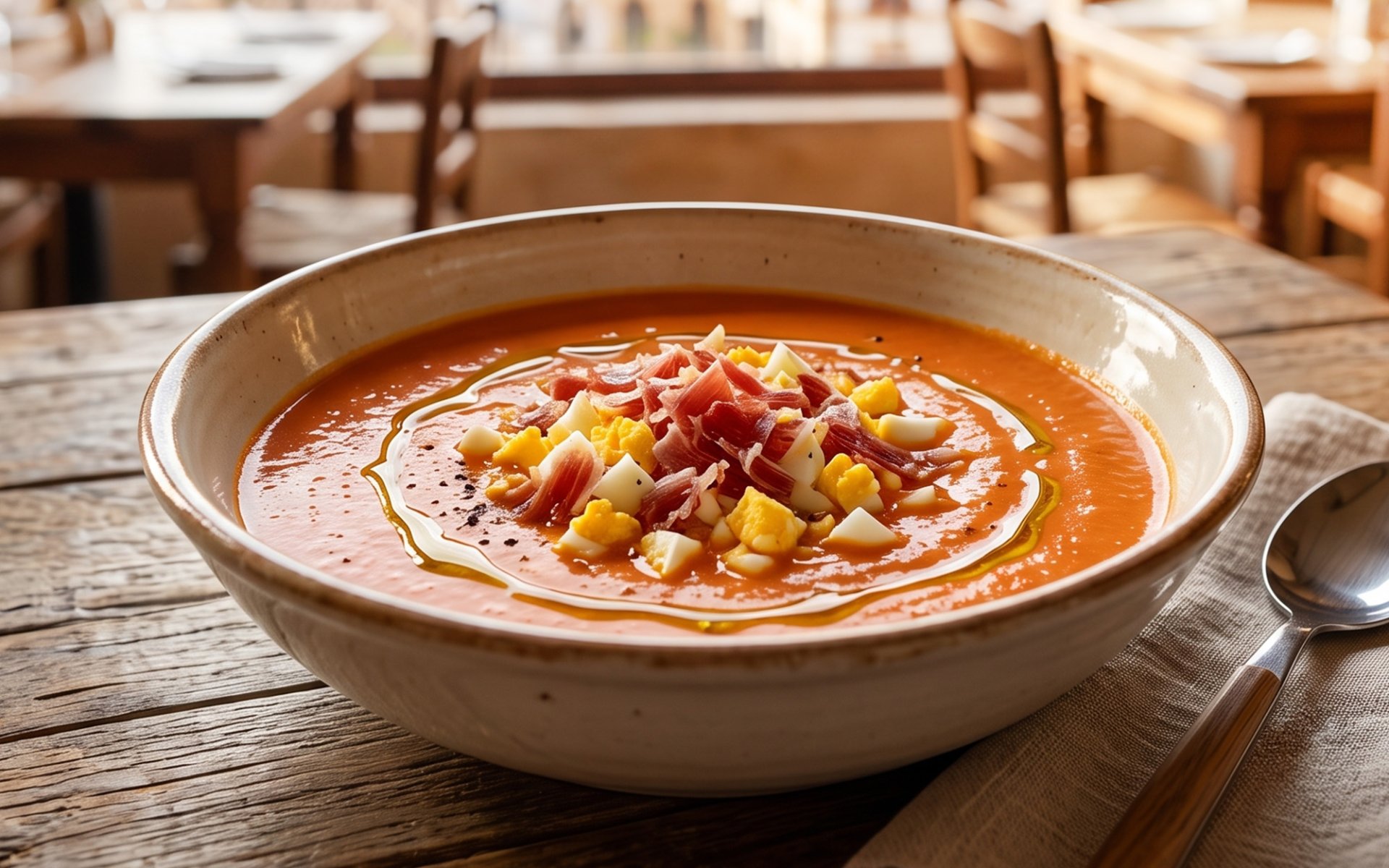
Salmorejo is a traditional Spanish chilled tomato soup originating from the city of Córdoba in Andalusia. Characterized by its simplicity and rich Mediterranean flavors, this iconic dish is made with just a few essential ingredients: ripe tomatoes, bread, extra virgin olive oil, garlic, and salt. These ingredients are blended together until they reach a thick, smooth, and velvety texture. Traditionally served chilled, Salmorejo is often garnished with finely chopped hard-boiled eggs and small pieces of Jamón Serrano or Jamón Ibérico, adding layers of flavor and texture to this refreshing summer dish.
Although Salmorejo in its modern form only emerged after tomatoes were introduced to Europe, the fundamental concept behind the dish — combining bread with other ingredients and grinding them into a thick, smooth mixture — can be traced back to ancient Roman times.
Many food historians believe that Salmorejo is closely related to Moretum, an ancient Roman preparation made from soaked bread, garlic, vinegar, and herbs, which were crushed together in a stone mortar to create a dense paste traditionally eaten with bread. This early recipe is considered one of the culinary ancestors of Salmorejo. Centuries later, the arrival of tomatoes from the Americas after the 16th century transformed this humble bread-based preparation into the deep red chilled soup that has become a culinary symbol of Córdoba.
During this period, the tradition of grinding bread with various ingredients evolved into a local dish known as Mazamorra Cordobesa. This preparation consisted of stale bread, garlic, olive oil, almonds, vinegar, and salt. Unlike modern Salmorejo, Mazamorra had a white, creamy appearance due to the use of almonds rather than tomatoes. It was also traditionally served cold, leading many historians to consider it one of the closest culinary predecessors of Salmorejo.
When tomatoes became widely cultivated and consumed in Andalusia, local communities began incorporating them into existing bread-based soups and purées. Ripe tomatoes were blended with bread, olive oil, garlic, and salt, creating a thick orange-red soup with a refreshing acidity and natural sweetness.
This transformation marked a significant turning point in the history of Salmorejo. Tomatoes did more than simply add color; they introduced a natural balance of sweetness and acidity that complemented the richness of bread and the fruity aroma of olive oil. Together, these elements created the distinctive flavor profile and creamy texture that define Salmorejo today.
Rather than referring to the chilled tomato-based soup we know today, the word described a type of sauce or seasoning mixture used in the preparation of meat stews, particularly dishes made with rabbit. This suggests that the name “Salmorejo” has a history that predates the modern dish itself, with its meaning evolving alongside the culinary traditions of Andalusia.
The transformation of the term reflects the broader evolution of Spanish cuisine, where traditional names and recipes often changed over centuries as new ingredients, techniques, and cultural influences became integrated into regional food traditions.
Farmers prepared Salmorejo using everyday ingredients that were readily available: leftover bread from previous meals, ripe tomatoes from their gardens, garlic, olive oil, and salt. These ingredients were crushed together into a thick mixture that provided both energy and nourishment.
Bread served as a source of carbohydrates, helping to make the dish filling and satisfying, while olive oil — one of Andalusia’s most important agricultural products — provided essential fats and enhanced both the texture and flavor. As a result, Salmorejo perfectly reflected the principles of traditional rural cooking: nutritious, economical, and deeply connected to local resources.
For generations, Salmorejo represented the philosophy of making the most of what was available. Similar to other dishes born from necessity, it demonstrated how simple ingredients could be transformed into something deeply flavorful through careful preparation and respect for quality produce.
Today, the most common toppings include finely chopped hard-boiled eggs and small pieces of Jamón Serrano or Jamón Ibérico, whose salty and savory notes create a beautiful contrast with the creamy sweetness of the tomato base.
These additions transformed Salmorejo from a basic rural dish into a refined expression of Andalusian cuisine while still preserving its essential character: simplicity, freshness, and respect for local ingredients.
Gazpacho is traditionally a lighter and more liquid chilled soup made with tomatoes, peppers, cucumbers, onions, garlic, olive oil, vinegar, and water. It is designed as a refreshing beverage-like soup, especially suited to the hot climate of Andalusia.
Salmorejo, on the other hand, has a much thicker and creamier consistency because it contains a significantly larger proportion of bread. The bread acts as a natural thickener, creating a smooth and luxurious texture that distinguishes Salmorejo from other cold soups.
While Gazpacho emphasizes freshness and hydration, Salmorejo highlights richness, balance, and the transformation of simple ingredients into a more substantial dish. Both represent the ingenuity of Andalusian cuisine, but each tells a different story about regional traditions and culinary evolution.
Although Salmorejo in its modern form only emerged after tomatoes were introduced to Europe, the fundamental concept behind the dish — combining bread with other ingredients and grinding them into a thick, smooth mixture — can be traced back to ancient Roman times.
Many food historians believe that Salmorejo is closely related to Moretum, an ancient Roman preparation made from soaked bread, garlic, vinegar, and herbs, which were crushed together in a stone mortar to create a dense paste traditionally eaten with bread. This early recipe is considered one of the culinary ancestors of Salmorejo. Centuries later, the arrival of tomatoes from the Americas after the 16th century transformed this humble bread-based preparation into the deep red chilled soup that has become a culinary symbol of Córdoba.
Ancient Roots : From Roman Moretum to Andalusian Cuisine
Between the 8th and 13th centuries, much of the Iberian Peninsula was under Muslim rule, a period known as Al-Andalus. During this era, Córdoba became one of the most important centers of civilization in Europe, renowned for its advances in science, medicine, architecture, agriculture, and gastronomy.During this period, the tradition of grinding bread with various ingredients evolved into a local dish known as Mazamorra Cordobesa. This preparation consisted of stale bread, garlic, olive oil, almonds, vinegar, and salt. Unlike modern Salmorejo, Mazamorra had a white, creamy appearance due to the use of almonds rather than tomatoes. It was also traditionally served cold, leading many historians to consider it one of the closest culinary predecessors of Salmorejo.
When tomatoes became widely cultivated and consumed in Andalusia, local communities began incorporating them into existing bread-based soups and purées. Ripe tomatoes were blended with bread, olive oil, garlic, and salt, creating a thick orange-red soup with a refreshing acidity and natural sweetness.
This transformation marked a significant turning point in the history of Salmorejo. Tomatoes did more than simply add color; they introduced a natural balance of sweetness and acidity that complemented the richness of bread and the fruity aroma of olive oil. Together, these elements created the distinctive flavor profile and creamy texture that define Salmorejo today.
The Evolution of the Name “Salmorejo”
The word “Salmorejo” first appeared in written records in the dictionary of the Real Academia Española (RAE) in 1737. However, the meaning of the term at that time was very different from its modern interpretation.Rather than referring to the chilled tomato-based soup we know today, the word described a type of sauce or seasoning mixture used in the preparation of meat stews, particularly dishes made with rabbit. This suggests that the name “Salmorejo” has a history that predates the modern dish itself, with its meaning evolving alongside the culinary traditions of Andalusia.
The transformation of the term reflects the broader evolution of Spanish cuisine, where traditional names and recipes often changed over centuries as new ingredients, techniques, and cultural influences became integrated into regional food traditions.
A Dish Born from the Life of Andalusian Farmers
During the period when Salmorejo developed into a form closer to the modern version, it remained primarily a humble dish of farmers and rural workers in Andalusia. Its simplicity, affordability, and reliance on locally available ingredients made it particularly suitable for people working outdoors under the intense heat of the southern Spanish climate.Farmers prepared Salmorejo using everyday ingredients that were readily available: leftover bread from previous meals, ripe tomatoes from their gardens, garlic, olive oil, and salt. These ingredients were crushed together into a thick mixture that provided both energy and nourishment.
Bread served as a source of carbohydrates, helping to make the dish filling and satisfying, while olive oil — one of Andalusia’s most important agricultural products — provided essential fats and enhanced both the texture and flavor. As a result, Salmorejo perfectly reflected the principles of traditional rural cooking: nutritious, economical, and deeply connected to local resources.
For generations, Salmorejo represented the philosophy of making the most of what was available. Similar to other dishes born from necessity, it demonstrated how simple ingredients could be transformed into something deeply flavorful through careful preparation and respect for quality produce.
From Rural Food to a Culinary Symbol of Córdoba
Although Salmorejo began as a simple meal for farmers and laborers, it gradually gained recognition as a defining dish of Córdoba’s culinary identity. Over time, additional garnishes were introduced to enhance its flavor, texture, and nutritional value.Today, the most common toppings include finely chopped hard-boiled eggs and small pieces of Jamón Serrano or Jamón Ibérico, whose salty and savory notes create a beautiful contrast with the creamy sweetness of the tomato base.
These additions transformed Salmorejo from a basic rural dish into a refined expression of Andalusian cuisine while still preserving its essential character: simplicity, freshness, and respect for local ingredients.
Salmorejo vs. Gazpacho : Similar Origins, Different Identities
Many people unfamiliar with Spanish cuisine often assume that Salmorejo is simply another version of Gazpacho. However, despite sharing similar origins and ingredients, the two dishes are distinctly different in terms of composition, preparation, and texture.Gazpacho is traditionally a lighter and more liquid chilled soup made with tomatoes, peppers, cucumbers, onions, garlic, olive oil, vinegar, and water. It is designed as a refreshing beverage-like soup, especially suited to the hot climate of Andalusia.
Salmorejo, on the other hand, has a much thicker and creamier consistency because it contains a significantly larger proportion of bread. The bread acts as a natural thickener, creating a smooth and luxurious texture that distinguishes Salmorejo from other cold soups.
While Gazpacho emphasizes freshness and hydration, Salmorejo highlights richness, balance, and the transformation of simple ingredients into a more substantial dish. Both represent the ingenuity of Andalusian cuisine, but each tells a different story about regional traditions and culinary evolution.
Tags :
Related Content