Dressed Crab
Last updated: 18 Aug 2026
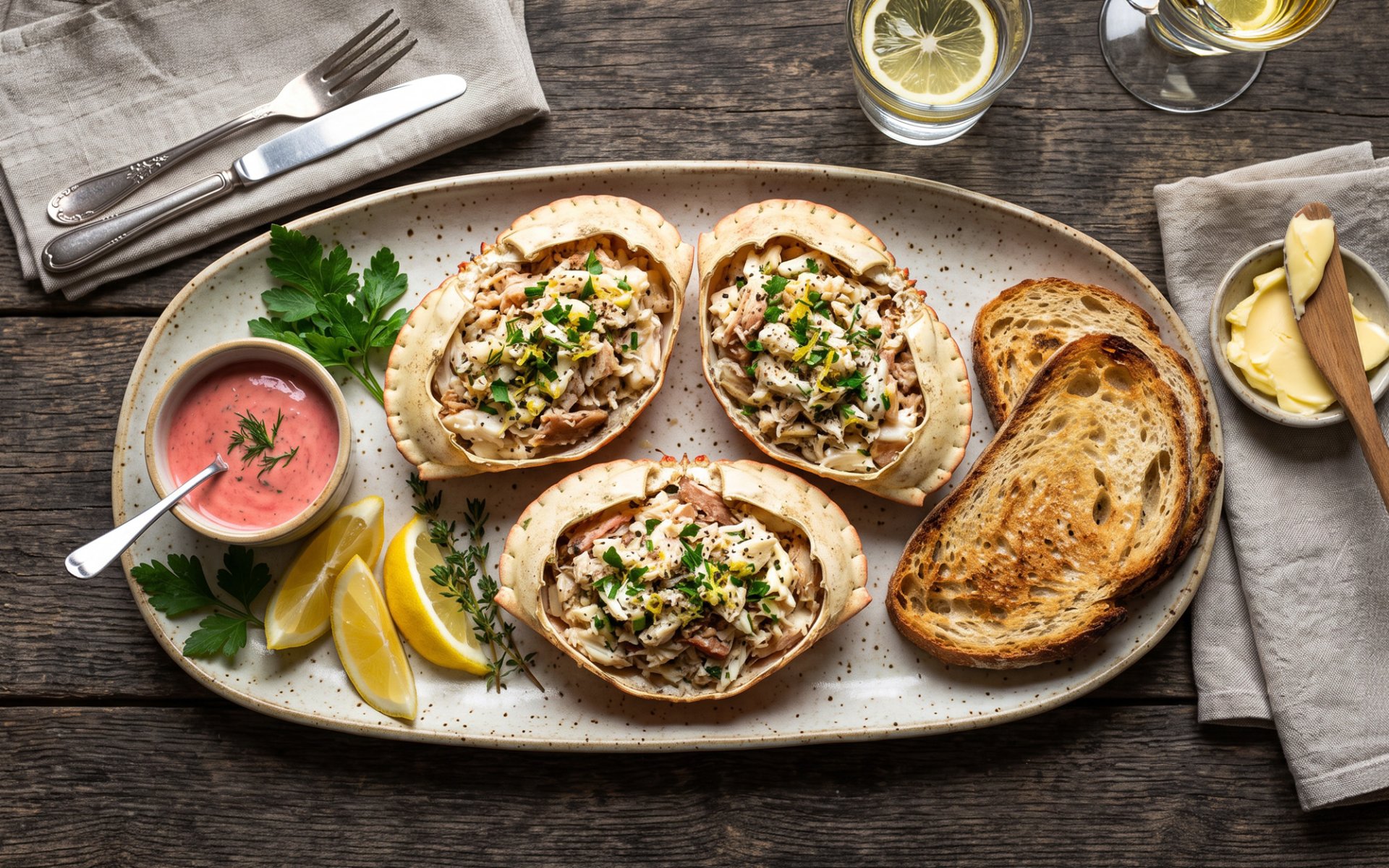
Dressed Crab is a traditional British seafood dish in which crab is the main ingredient. The crab is boiled until cooked, after which the meat is removed from the shell, seasoned, and then carefully arranged back inside the original shell for an attractive presentation. It is generally served chilled, helping to preserve the freshness and natural sweetness of the crab meat. It is commonly accompanied by bread and butter, fresh lemon, or Marie Rose sauce.
However, during the Middle Ages, the consumption of crab remained strongly dependent on location. It was primarily enjoyed by communities situated near fishing grounds or along the coast, as crab meat deteriorates rapidly once the crab dies.
As Britain’s transportation networks and maritime trade developed, seafood began to be transported from coastal communities to towns and inland regions in increasing quantities. These improvements in transportation allowed seafood to reach consumers living farther from the coast and contributed to the gradual spread of crab-eating traditions, including Dressed Crab, throughout different parts of England.
The book contains a recipe titled “TO DRESS A CRAB” in its section on seafood. The appearance of this recipe in such a widely circulated cookbook demonstrates that removing crab meat from the shell, seasoning or combining it with other ingredients, and then returning it to the original shell for serving was already a recognised practice in English kitchens by at least the mid-18th century. It may therefore be regarded as an important historical reference for understanding the foundations of the Dressed Crab style that has continued to the present day.
Although the ingredients and preparation methods described by Hannah Glasse differ from those used in modern Dressed Crab, the fundamental concept remains similar: the crab meat is removed from the shell, prepared or mixed with other ingredients, and then placed back inside the original shell for serving. This approach represents an important stage in the historical development of Dressed Crab, linking an 18th-century English cookbook tradition with the seafood dish known today.
Marie Rose is a pale pink sauce based primarily on mayonnaise and tomato. The commonly recognised version contains tomato sauce or tomatoes, lemon juice, Worcestershire sauce, and black pepper. The sauce became widely popular in Britain during the 1960s.
The introduction of Marie Rose sauce added another dimension of flavour to Dressed Crab. Its sweet-and-tangy character and creamy richness complement the natural sweetness of crab meat, eventually becoming an element that many consumers associate with eating crab and seafood in a contemporary British style.
At the same time, Dressed Crab has increasingly been presented in more contemporary ways, such as being served alongside fresh salads, herb sauces, or different varieties of bread. Nevertheless, its essential character remains unchanged: showcasing the flavour of fresh crab while making thoughtful use of the entire animal.
Today, Dressed Crab can still be found in seafood restaurants and eateries throughout Britain, particularly in coastal towns and communities where crab fishing and seafood traditions have been maintained for generations.
White and Brown Meat: A Perfect Symphony of Flavours
Dressed Crab generally consists of two types of crab meat. The first is white crab meat, which comes mainly from the claws and legs. It has a firm yet tender texture, a delicate sweetness, and the fresh, natural aroma of crab. The second is brown crab meat, which comes from the body and includes the crab’s liver, known as the tomalley. It has a softer texture, a richer and more intense flavour, with a pronounced savoury taste of the sea.From Coastal Communities to Inland Popularity
Crab has been consumed by people across the British Isles for centuries. Archaeological evidence from both prehistoric settlements and the period when the Roman Empire exerted influence over Britain has revealed crab shells, seashells, and the remains of various marine animals among settlement sites, particularly in coastal communities.However, during the Middle Ages, the consumption of crab remained strongly dependent on location. It was primarily enjoyed by communities situated near fishing grounds or along the coast, as crab meat deteriorates rapidly once the crab dies.
As Britain’s transportation networks and maritime trade developed, seafood began to be transported from coastal communities to towns and inland regions in increasing quantities. These improvements in transportation allowed seafood to reach consumers living farther from the coast and contributed to the gradual spread of crab-eating traditions, including Dressed Crab, throughout different parts of England.
Hannah Glasse and the 18th-Century Culinary Records
Dressed Crab was first recorded in writing during the mid-18th century. A recipe entitled “To Dress a Crab” appeared in The Art of Cookery Made Plain and Easy, the famous English cookbook written by Hannah Glasse, which was first published in 1747.The book contains a recipe titled “TO DRESS A CRAB” in its section on seafood. The appearance of this recipe in such a widely circulated cookbook demonstrates that removing crab meat from the shell, seasoning or combining it with other ingredients, and then returning it to the original shell for serving was already a recognised practice in English kitchens by at least the mid-18th century. It may therefore be regarded as an important historical reference for understanding the foundations of the Dressed Crab style that has continued to the present day.
Although the ingredients and preparation methods described by Hannah Glasse differ from those used in modern Dressed Crab, the fundamental concept remains similar: the crab meat is removed from the shell, prepared or mixed with other ingredients, and then placed back inside the original shell for serving. This approach represents an important stage in the historical development of Dressed Crab, linking an 18th-century English cookbook tradition with the seafood dish known today.
The 1960s Evolution: The Addition of Marie Rose Sauce
A significant change in the form of Dressed Crab familiar to modern British diners took place during the 1960s, with the introduction of Marie Rose sauce as an accompaniment to crab meat.Marie Rose is a pale pink sauce based primarily on mayonnaise and tomato. The commonly recognised version contains tomato sauce or tomatoes, lemon juice, Worcestershire sauce, and black pepper. The sauce became widely popular in Britain during the 1960s.
The introduction of Marie Rose sauce added another dimension of flavour to Dressed Crab. Its sweet-and-tangy character and creamy richness complement the natural sweetness of crab meat, eventually becoming an element that many consumers associate with eating crab and seafood in a contemporary British style.
The Crab Shell : A Vessel of Coastal Ingenuity and Modern Presentation
One of the most distinctive characteristics of Dressed Crab is the use of the crab shell as the serving vessel. This idea reflects the resourcefulness of traditional coastal cuisine. Rather than discarding the shell after removing the meat, the cook can clean it thoroughly and reuse it to present the crab meat. This method also has an appealing visual quality, as it immediately shows the diner that the dish has been prepared from a whole crab rather than simply serving pre-picked crab meat in an ordinary dish.At the same time, Dressed Crab has increasingly been presented in more contemporary ways, such as being served alongside fresh salads, herb sauces, or different varieties of bread. Nevertheless, its essential character remains unchanged: showcasing the flavour of fresh crab while making thoughtful use of the entire animal.
Today, Dressed Crab can still be found in seafood restaurants and eateries throughout Britain, particularly in coastal towns and communities where crab fishing and seafood traditions have been maintained for generations.
Tags :
Related Content