Garnacha
The Roots of Garnacha: Aragón and the Mediterranean Climate
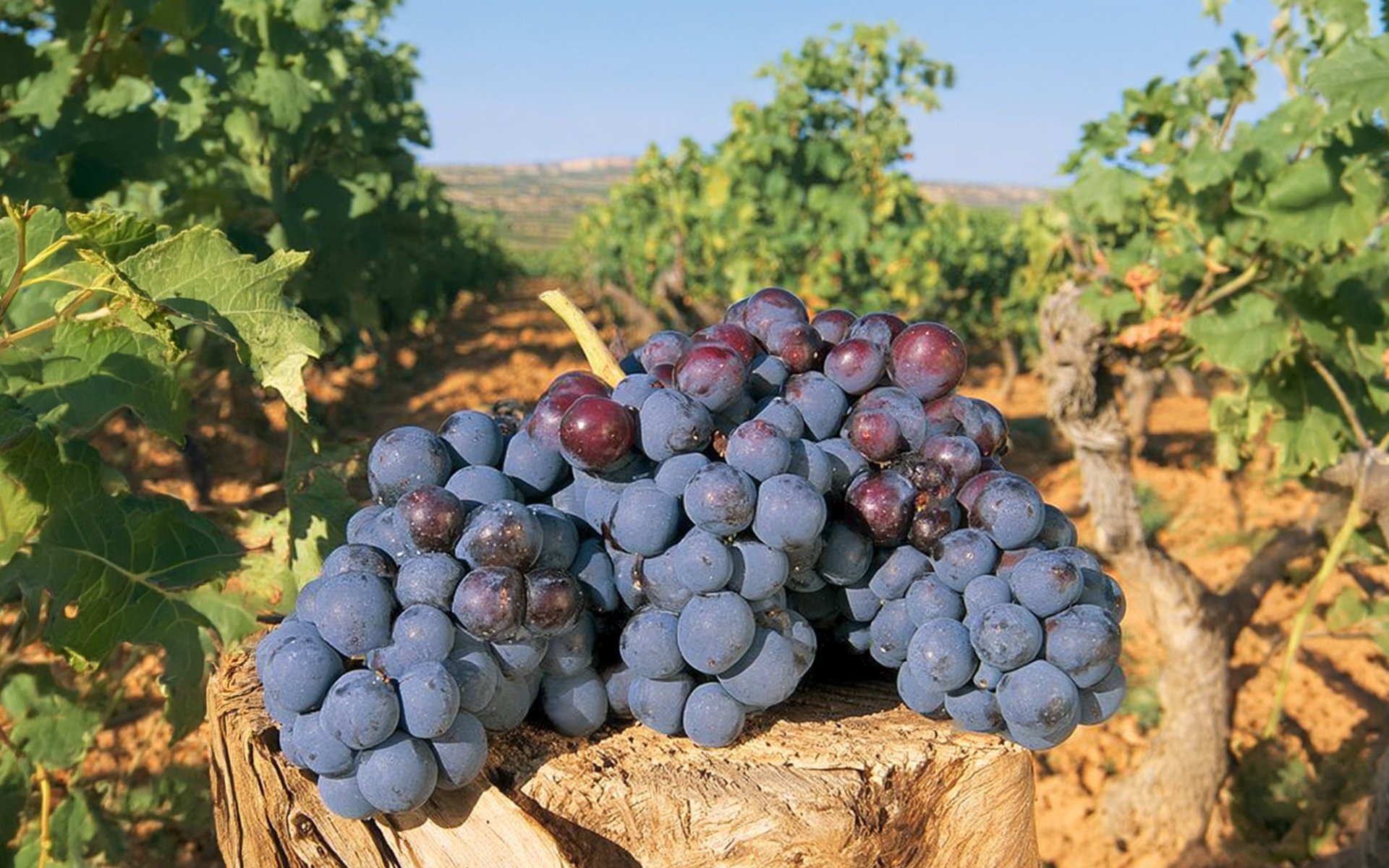
Historical evidence suggests that Garnacha may have originated in Aragón, in northeastern Spain, particularly around the Ebro Valley. The region has a semi-arid Mediterranean climate, with hot, dry summers and cooler winters. These conditions are well suited to Garnacha, a grape variety known for its tolerance of heat and drought and its ability to thrive in relatively challenging environments.Near the city of Calatayud in Aragón, archaeological evidence indicates that grape cultivation existed in the area as early as around 153 BC. However, one of the earliest written references to Garnacha itself appeared in Agricultura General, an agricultural treatise by Gabriel Alonso de Herrera, published in 1513. This is considered one of the important historical records supporting the presence of Garnacha in Spain.
The origins of Garnacha remain the subject of some debate. One theory suggests that the variety may have connections to the Italian island of Sardinia. Nevertheless, a substantial body of historical and genetic evidence continues to point to Aragón as the more likely birthplace of Garnacha, before the grape gradually spread to other parts of Europe.
The connection between Garnacha and Aragón remains strong today, particularly in Zaragoza, the capital of the region. The city has played an important role in promoting and sharing the story of Garnacha and was named the “World Capital of Garnacha” in 2025.
The Crown of Aragón and the Journey to Becoming "Grenache"
During the 13th century, the Kingdom of Aragón, the historical kingdom from which the modern region takes its name, held considerable influence across the western Mediterranean through what was known as the Crown of Aragón. Its territories and sphere of influence extended from Catalonia and southern France to Sardinia and parts of Italy.The expansion of the Crown of Aragón, together with the movement of trade, people, and settlements between these territories, played an important role in the spread of Garnacha beyond its origins in Aragón. The grape travelled along the same routes that connected the Mediterranean world during this period.
By the 14th century, Garnacha had become increasingly established in territories under the influence of the Kingdom of Aragón. From there, it gradually spread into southern France, particularly Roussillon and Languedoc, where the climate and landscape were also well suited to the variety.
As Garnacha became established in France, its name evolved according to the local language and came to be widely known as “Grenache.” This name remains commonly used in the international wine world today. From this point onward, Garnacha began to develop an increasingly important presence across several European wine regions.
Beyond red wine, Grenache has also played an important role in the production of rosé. In Provence and Languedoc, producers often use the grape to create wines known for their freshness, fruit-forward character, and easy-drinking style. This versatility has made Grenache an important part of French wine culture and marked another significant stage in its journey from its Spanish origins to international recognition.
Key Characteristics: Adaptability and Old-Vine Magic
One of the key reasons Garnacha was able to spread from Spain to wine regions around the world is its remarkable adaptability.
- Climate Resilience: Garnacha performs particularly well in hot, dry climates where some other grape varieties may struggle. Its ability to withstand heat and drought allows it to grow in areas with limited water availability while still producing quality fruit when carefully cultivated in suitable sites.
- Distinctive Flavor Profile: When fully ripe, Garnacha typically produces wines with relatively high alcohol levels and pronounced fruit character. Red fruits such as raspberry, cherry, and strawberry are commonly associated with the variety, while notes of spice and Mediterranean herbs may also appear. Differences in climate, elevation, soil, and vine age all contribute to the distinctive character of Garnacha wines from different regions.
- The Power of Old Vines: Another fascinating characteristic of Garnacha is its ability to produce quality fruit even in relatively dry soils or areas with limited water. As vines grow older and yields naturally decrease, the grapes can become more concentrated, often resulting in greater depth and detail of flavour.
For this reason, Old-Vine Garnacha has attracted increasing attention in the modern wine world. Wines made from old Garnacha vines are now valued by both producers and wine drinkers for their concentration, complexity, and expression of place.
The Modern Renaissance: Priorat and Sierra de Gredos
Despite its importance across many wine regions, Garnacha did not always receive the recognition it deserved in its home country of Spain. For a period, it was often used primarily as a blending grape, frequently combined with Tempranillo. One of the most significant developments in the modern history of Garnacha in Spain came with the revival of Priorat in Catalonia.
The Rebirth of Priorat: Priorat is a mountainous wine region characterised by steep slopes, a dry and demanding climate, and a distinctive slate soil known as llicorella. Vines in many parts of the region must send their roots deep into the ground in search of water and nutrients. The winemaking history of Priorat dates back to the late 12th century, when Carthusian monks established the Scala Dei monastery. However, the region’s vineyards were later severely affected by the spread of phylloxera during the 19th century.
The Gratallops Pioneers: In the 1990s, Priorat began a remarkable revival led by producers such as René Barbier. Together with five fellow winemakers, Barbier established a group of producers in the village of Gratallops. Their aim was to rediscover the potential of the region and its old vines while also experimenting with additional grape varieties.
International Acclaim: This movement played an important role in bringing wines from Priorat to international attention. Garnacha from old vines became particularly important, often blended with Carignan, a traditional variety of the region. In some wines, varieties such as Syrah, Cabernet Sauvignon, and Merlot were also incorporated to add further layers and complexity. Over time, Priorat wines gained international recognition for their structure, concentration, and complexity, eventually becoming some of Spain’s most respected premium wines.
This transformation also helped change the way Garnacha was perceived. Once regarded largely as a blending component, the grape increasingly demonstrated that it could stand on its own and produce wines with distinctive character, depth, and a strong sense of place.
Beyond Aragón and Priorat, another region that has played an important role in redefining the image of Garnacha is Sierra de Gredos in central Spain. The region is characterised by high-altitude vineyards and a significant number of old Garnacha vines, with some plots containing vines that are several decades old or even older. Many vineyards are planted on granite-rich soils, which contribute to the distinctive character of the wines produced here.
Garnacha from Sierra de Gredos can be markedly different from Garnacha grown in warmer regions. The wines often display aromas and flavours of red fruits such as raspberry and cherry, accompanied by floral notes, herbs, and subtle spices. Their structure is often more delicate, with a fresher and more vibrant character.
Today, Garnacha remains one of Spain’s important grape varieties and is planted across many parts of the country. According to Spain’s wine promotion authorities, Garnacha is among the country’s most widely planted red grape varieties and continues to play an important role in several renowned wine-producing regions.
From its historical roots in Aragón to its development across France and its modern renaissance in regions such as Priorat and Sierra de Gredos, Garnacha’s story is one of adaptation, resilience, and rediscovery.
What was once a native Spanish grape has become a truly international variety, capable of expressing remarkably different personalities depending on where it is grown. Its long history and versatility continue to make Garnacha an important part of the ever-evolving world of wine.