Anzac Biscuits
Last updated: 20 Oct 2025
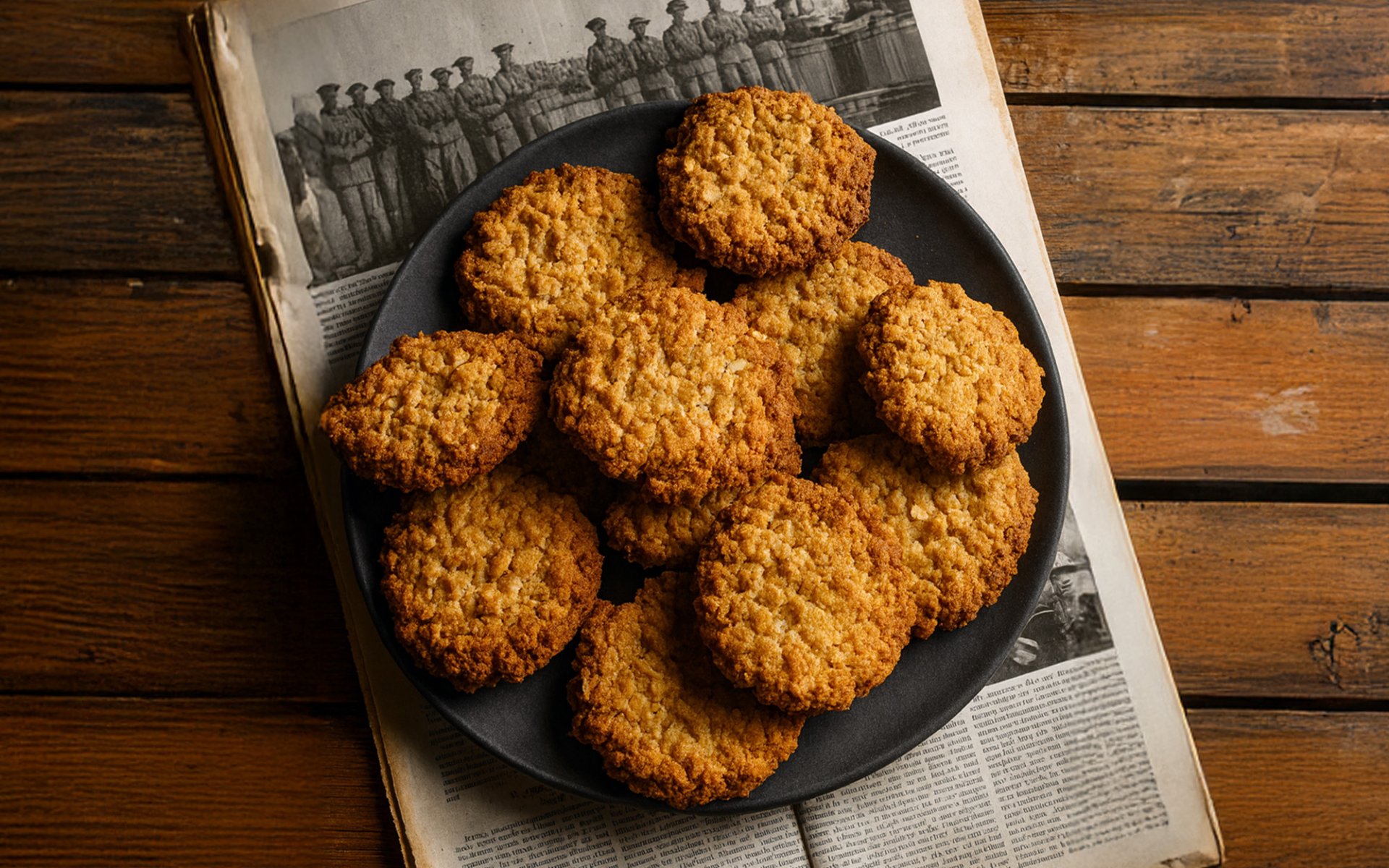
Anzac Biscuits are traditional cookies from Australia and New Zealand with deep historical ties to World War I. They were originally created to be sent to Australian and New Zealand soldiers fighting overseas a sweet, nourishing food that could keep for long periods, travel well, and bring comfort from home during difficult times.
According to popular belief, Anzac Biscuits were created by the wives, mothers, and loved ones of soldiers, who baked them to send overseas. The recipe was designed to last for weeks at sea without spoiling using only long-lasting ingredients like rolled oats, flour, sugar, desiccated coconut, butter, golden syrup, and baking soda. These biscuits were inspired by Scottish oat-based recipes, a staple in the diets of Scottish settlers who brought their baking traditions to the Southern Hemisphere.
Hardtack was a dense, dry biscuit made from flour, sugar, salt, and powdered milk tough enough to last for months but so hard that soldiers often had to crush or soak them in sweetened milk before eating. Because ingredients like coconut would have spoiled during long voyages, they were unlikely to be used at the time.
1916 The Sunday Times published a recipe called Anzac Ginger Biscuits on June 4, marking the first known combination of Anzac and Biscuit in print though oats were not yet included.
1917 War Chest Cookery Book (Sydney) featured Anzac Biscuits with ingredients like eggs, rice flour, cinnamon, and jam quite different from the current recipe.
1920 The Argus (Melbourne) printed a recipe from a reader named Josephine that introduced rolled oats and golden syrup. This version became the foundation of the modern Anzac Biscuit we know and love today.
A Symbol of Support and National Pride
Even if Anzac Biscuits werent sent to the frontlines, they became a symbol of community and remembrance. Women across Australia and New Zealand baked and sold the biscuits at fairs, fundraisers, and public events to raise money for war relief efforts and support the troops.
Their enduring popularity led the Australian government to legally protect the name ANZAC under the Protection of Word Anzac Regulations. The law prohibits commercial use of the term without permission but Anzac Biscuits are a notable exception, as they are recognized as a cultural icon of national heritage and pride.
The law also requires that they be called Biscuits, not Cookies, to preserve the authenticity of the name and honor the historical connection to the ANZAC legacy.
You can find all the ingredients for your Anzac Biscuits at Rimping Supermarket.
The Meaning Behind ANZAC
The name ANZAC stands for Australian and New Zealand Army Corps, a combined military force established during World War I. The corps became legendary for its courage during the Gallipoli Campaign in Turkey on April 25, 1915. This date is now commemorated annually as Anzac Day, a national day of remembrance honoring those who served and sacrificed their lives in war.According to popular belief, Anzac Biscuits were created by the wives, mothers, and loved ones of soldiers, who baked them to send overseas. The recipe was designed to last for weeks at sea without spoiling using only long-lasting ingredients like rolled oats, flour, sugar, desiccated coconut, butter, golden syrup, and baking soda. These biscuits were inspired by Scottish oat-based recipes, a staple in the diets of Scottish settlers who brought their baking traditions to the Southern Hemisphere.
Separating Myth from History
Despite the heartwarming legend, food historians Helen Leach and Allison Reynolds later clarified that the biscuits sent to Gallipoli were not the Anzac Biscuits we know today, but rather hardtack (also known as Army Biscuits).Hardtack was a dense, dry biscuit made from flour, sugar, salt, and powdered milk tough enough to last for months but so hard that soldiers often had to crush or soak them in sweetened milk before eating. Because ingredients like coconut would have spoiled during long voyages, they were unlikely to be used at the time.
The Evolution of the Anzac Biscuit Recipe
The modern Anzac Biscuit recipe gradually evolved after World War I. Early cookbooks and newspapers published several variations before the version we know today took shape:1916 The Sunday Times published a recipe called Anzac Ginger Biscuits on June 4, marking the first known combination of Anzac and Biscuit in print though oats were not yet included.
1917 War Chest Cookery Book (Sydney) featured Anzac Biscuits with ingredients like eggs, rice flour, cinnamon, and jam quite different from the current recipe.
1920 The Argus (Melbourne) printed a recipe from a reader named Josephine that introduced rolled oats and golden syrup. This version became the foundation of the modern Anzac Biscuit we know and love today.
A Symbol of Support and National Pride
Even if Anzac Biscuits werent sent to the frontlines, they became a symbol of community and remembrance. Women across Australia and New Zealand baked and sold the biscuits at fairs, fundraisers, and public events to raise money for war relief efforts and support the troops.
Their enduring popularity led the Australian government to legally protect the name ANZAC under the Protection of Word Anzac Regulations. The law prohibits commercial use of the term without permission but Anzac Biscuits are a notable exception, as they are recognized as a cultural icon of national heritage and pride.
The law also requires that they be called Biscuits, not Cookies, to preserve the authenticity of the name and honor the historical connection to the ANZAC legacy.
More Than a Biscuit A Piece of History
Today, Anzac Biscuits continue to be a beloved part of Australian and New Zealand identity crisp on the edges, chewy inside, and rich with buttery oat flavor. They are baked every year on Anzac Day, not only as a sweet treat but as a tribute to courage, unity, and remembrance.You can find all the ingredients for your Anzac Biscuits at Rimping Supermarket.
Tags :
Related Content

Getting to Know “Strawberry Salsa” A Fusion-Style Salsa Inspired by Traditional Mexican Tomato Salsa