Sugar Cookies
Last updated: 1 Dec 2025
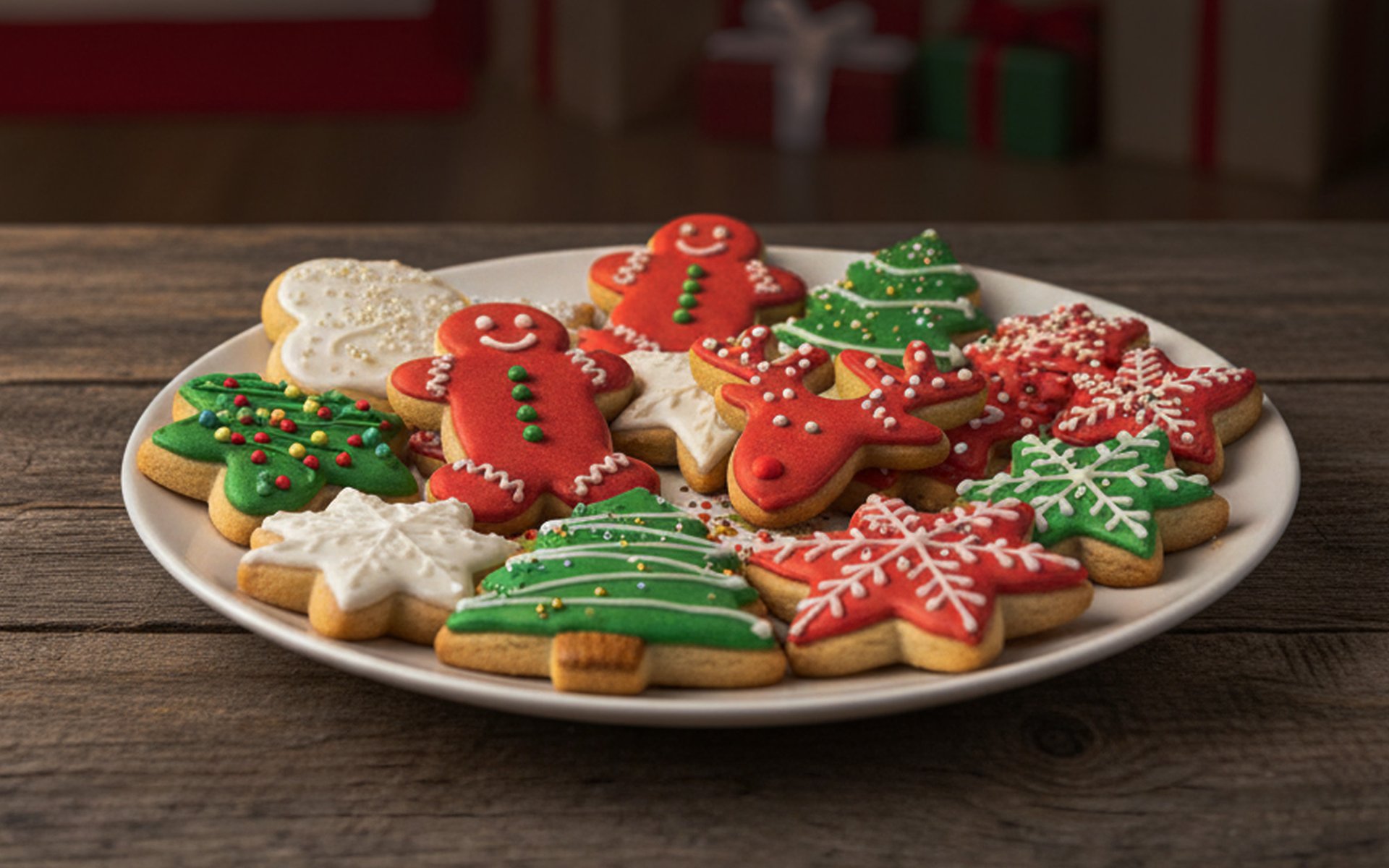
Sugar Cookies are widely known cookies made from simple ingredients sugar, flour, butter, and eggs. They have a sweet, buttery flavor with a fragrant hint of vanilla. This type of cookie is especially popular for rolling out and cutting into various shapes using cookie cutters for festive occasions such as Christmas.
Cookies have a history dating back to the 7th century, following the commercial cultivation of sugarcane in Southeast Asia. In the earliest stages, cookies were created from testing oven temperatures. Bakers would place a small amount of cake batter into the oven to check the heat level. Over time, they developed these test cakes into a separate type of baked treat, which eventually became cookies.
One of the earliest sweets resembling modern Sugar Cookies was Jumbles, made from nuts, flour, eggs, sugar, vanilla, and spices such as anise or caraway seeds. Jumbles were highly popular in Europe during the 17th18th centuries. However, their taste was spicier than sweet, and they were often shaped into rings or knots before baking, giving them a texture closer to bagels or pretzels rather than todays cookies.
During the Middle Ages, sugar was a rare luxury commodity, so most cookies at the time were not sweet and were made primarily for basic consumption rather than celebrations. However, cookies began taking on sweeter and more contemporary forms during the 16th century when German bakers developed gingerbread-like cookies using sugar and spices made available through flourishing European trade routes.
In the late 16th century, Dutch settlers introduced cookies to North America, calling them Koekje, meaning little cake.
By the 17th century, sugar production had expanded significantly in Europe and the United States, making sugar more accessible. Ordinary households could make sweet treats at home, which led to the creation of more cookie varieties, including what would become Sugar Cookies.
In the mid-18th century, German Protestant settlers in Pennsylvania created a cookie that is considered the early prototype of American Sugar Cookies. This cookie was made from flour, butter, sugar, eggs, and a leavening agent called Pearl Ashan early alkaline leavener that helped cookies rise without yeast or mechanically whipping air into the dough. This discovery marked an important step in the development of modern cookies.
This early cookie closely resembled todays Sugar Cookies, with a crumbly texture and typically shaped into circles or Keystone shapes (symbolizing Pennsylvania), though vanilla extract was not yet widely used at the time.
A major milestone in Sugar Cookie history occurred in 1796 when Amelia Simmons published a cookbook titled American Cookery in Hartford, Connecticut, which included a recipe for Sugar Cookies.
American Cookery is highly significant in American culinary history as it was the first cookbook to use distinctly American terminology and ingredients, such as cornmeal and molasses. Most importantly, it used the term Cookie instead of Biscuit or Small Cakes, which were common British terms.
The Sugar Cookies recipe in Amelia Simmonss book was titled Another Christmas Cookey, marking the first usage of the word Cookie in English print. The recipe began with an instruction that may seem unusual today: Skim the scum from off the sugara necessary step at the time because sugar often contained impurities and had to be boiled so the scum could rise and be removed.
Amelia Simmonss Sugar Cookies recipe included the following ingredients:
American Cookery became extremely popular and was reprinted over a span of 35 years, with at least 13 editions published between 1796 and 1831.
The term Sugar Cookies was coined to distinguish them from other emerging cookie varieties of the time, such as peanut butter cookies and oatmeal cookies, which had distinctive flavors from their main ingredients. In contrast, Sugar Cookies are defined by their simplicity and sweetness from sugar as the primary flavor.
By the late 19th century, Sugar Cookies became an essential part of Christmas celebrations. People would visit families, friends, and neighbors with simple gifts, and Sugar Cookies became a favorite gift due to their affordability, ease of storage, and festive charm. Many households baked them in large batches to give as gifts or serve to guests.
Sugar Cookies were also used as Christmas tree decorations. They were cut into festive shapes and hung on branches a practice made possible due to their durability, long shelf life, and low production cost.
In modern times, Sugar Cookies continue to be beloved worldwide, both as homemade treats and commercial products. Many variations now exist, featuring added flavors such as chocolate or dried fruits, and cookie cutters in countless shapes tailored for various holidays beyond Christmas.
Cookies have a history dating back to the 7th century, following the commercial cultivation of sugarcane in Southeast Asia. In the earliest stages, cookies were created from testing oven temperatures. Bakers would place a small amount of cake batter into the oven to check the heat level. Over time, they developed these test cakes into a separate type of baked treat, which eventually became cookies.
One of the earliest sweets resembling modern Sugar Cookies was Jumbles, made from nuts, flour, eggs, sugar, vanilla, and spices such as anise or caraway seeds. Jumbles were highly popular in Europe during the 17th18th centuries. However, their taste was spicier than sweet, and they were often shaped into rings or knots before baking, giving them a texture closer to bagels or pretzels rather than todays cookies.
During the Middle Ages, sugar was a rare luxury commodity, so most cookies at the time were not sweet and were made primarily for basic consumption rather than celebrations. However, cookies began taking on sweeter and more contemporary forms during the 16th century when German bakers developed gingerbread-like cookies using sugar and spices made available through flourishing European trade routes.
In the late 16th century, Dutch settlers introduced cookies to North America, calling them Koekje, meaning little cake.
By the 17th century, sugar production had expanded significantly in Europe and the United States, making sugar more accessible. Ordinary households could make sweet treats at home, which led to the creation of more cookie varieties, including what would become Sugar Cookies.
In the mid-18th century, German Protestant settlers in Pennsylvania created a cookie that is considered the early prototype of American Sugar Cookies. This cookie was made from flour, butter, sugar, eggs, and a leavening agent called Pearl Ashan early alkaline leavener that helped cookies rise without yeast or mechanically whipping air into the dough. This discovery marked an important step in the development of modern cookies.
This early cookie closely resembled todays Sugar Cookies, with a crumbly texture and typically shaped into circles or Keystone shapes (symbolizing Pennsylvania), though vanilla extract was not yet widely used at the time.
A major milestone in Sugar Cookie history occurred in 1796 when Amelia Simmons published a cookbook titled American Cookery in Hartford, Connecticut, which included a recipe for Sugar Cookies.
American Cookery is highly significant in American culinary history as it was the first cookbook to use distinctly American terminology and ingredients, such as cornmeal and molasses. Most importantly, it used the term Cookie instead of Biscuit or Small Cakes, which were common British terms.
The Sugar Cookies recipe in Amelia Simmonss book was titled Another Christmas Cookey, marking the first usage of the word Cookie in English print. The recipe began with an instruction that may seem unusual today: Skim the scum from off the sugara necessary step at the time because sugar often contained impurities and had to be boiled so the scum could rise and be removed.
Amelia Simmonss Sugar Cookies recipe included the following ingredients:
- 1.3 kg flour
- 680.39 g sugar
- 113 g butter
- 1 teaspoon Pearl Ash dissolved in milk
- Ground coriander spice
American Cookery became extremely popular and was reprinted over a span of 35 years, with at least 13 editions published between 1796 and 1831.
The term Sugar Cookies was coined to distinguish them from other emerging cookie varieties of the time, such as peanut butter cookies and oatmeal cookies, which had distinctive flavors from their main ingredients. In contrast, Sugar Cookies are defined by their simplicity and sweetness from sugar as the primary flavor.
By the late 19th century, Sugar Cookies became an essential part of Christmas celebrations. People would visit families, friends, and neighbors with simple gifts, and Sugar Cookies became a favorite gift due to their affordability, ease of storage, and festive charm. Many households baked them in large batches to give as gifts or serve to guests.
Sugar Cookies were also used as Christmas tree decorations. They were cut into festive shapes and hung on branches a practice made possible due to their durability, long shelf life, and low production cost.
In modern times, Sugar Cookies continue to be beloved worldwide, both as homemade treats and commercial products. Many variations now exist, featuring added flavors such as chocolate or dried fruits, and cookie cutters in countless shapes tailored for various holidays beyond Christmas.
Tags :
Related Content