Flæskesteg
Last updated: 16 Dec 2025
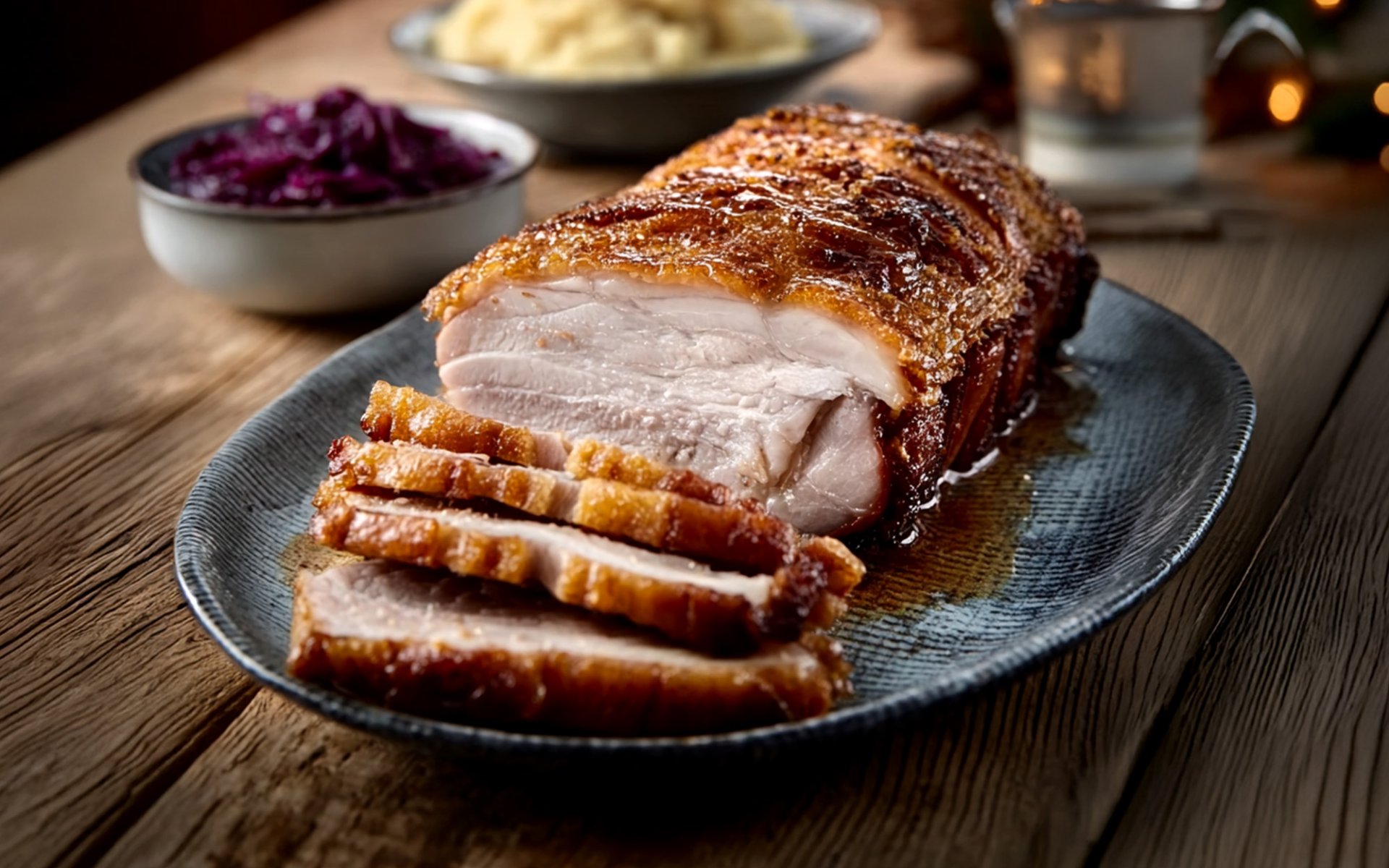
Flæskesteg, known in Thai as Danish-style roast pork, is regarded as one of Denmarks most important national dishes. Its defining feature lies in the careful selection of porktypically pork loin or cuts with the skin left onwhich is seasoned and roasted with great precision until the skin becomes puffed and perfectly crisp, while the meat inside remains tender and juicy.
Meaning and Etymology of the Word Flæskesteg
The Danish word Flæskesteg is composed of two parts. Flæsk originates from the Old Norse word flesk, meaning pork, bacon, or pork fat, and in modern Danish it refers to pork with a relatively high fat content. Steg derives from the Old Norse verb steikja, meaning to roast or to bake, reflecting the traditional cooking method of roasting the pork in an oven.Pork Consumption and Festive Traditions in Scandinavia
Danes have consumed pork for many centuries, particularly during the Middle Ages, when pig farming was widespread throughout Scandinavia. At that time, roasting pork was usually reserved for special occasions and celebrations, especially during the midsummer solstice, a significant festival influenced by Viking traditions. As a result, roasted pork was not merely a dish, but also a reflection of beliefs, lifestyle, and festive culture in ancient Scandinavian society.The Industrial Revolution and the Rise of Modern Flæskesteg
Although roasted pork has existed for centuries, Flæskesteg in its modern form became widely popular after the Industrial Revolution, around 1860, when ovens began to be commonly used in private households. Prior to this, most cooking was done over open hearths, which offered limited temperature control. The development of modern ovens allowed for more precise heat regulation, ensuring even cooking of meat and enabling pork skin to become perfectly crisp.Traditional Preparation Method of Flæskesteg
The traditional preparation of Flæskesteg involves roasting pork with the skin left intact. Before roasting, a sharp knife is used to score the skin into narrow, even strips, cutting down to the meat without slicing all the way through. This technique allows heat to penetrate evenly during roasting.The Science Behind Perfectly Crispy Pork Skin
The signature crispiness of the pork skin results from small amounts of moisture trapped within the skin layer. When exposed to high heat, this moisture turns into steam, forming tiny air bubbles that harden as they cool, creating the light, crunchy texture that defines Flæskesteg.Common Pork Cuts Used for Flæskesteg in Denmark
In Denmark, the most commonly used pork cuts for Flæskesteg include pork loin (Svinekam), pork belly or rib roast (Ribbenssteg)similar to thick-cut pork bellyand neck or shoulder cuts (Nakkekam), which resemble coppa and contain generous layers of fat with the skin attached.Essential Elements for High-Quality Flæskesteg
Regardless of the cut used, the most important factors are a proper fat layer and intact pork skin, as these elements are essential to achieving the characteristic tenderness of the meat and the crisp, airy crackling that defines a high-quality Flæskesteg.Flæskesteg and Danish Christmas Traditions
Flæskesteg plays a central role in Danish holiday traditions, especially as the main dish for Christmas celebrations. It has been served as the centerpiece of Juleaften (Christmas Eve) dinners since the 19th century.Enjoying Flæskesteg Throughout the Year
Although strongly associated with Christmas, Flæskesteg is enjoyed throughout the year in Denmark. It is commonly served with Rødkål (red cabbage), Brunede kartofler (caramelized potatoes), and traditional boiled potatoes.Flæskesteg as Smørrebrød
Flæskesteg has also been adapted into another popular form: Flæskesteg Smørrebrød, an open-faced Danish sandwich that demonstrates how traditional dishes are seamlessly incorporated into everyday meals.Popularity of Flæskesteg in Norway
Beyond Denmark, Flæskesteg is also popular in Norway, particularly during the Christmas season, where it is often served with traditional Norwegian side dishes such as fried apples and small pork sausages.Differences Between Danish and Norwegian Flæskesteg
Norwegian-style Flæskesteg differs slightly from the Danish version, especially in how the pork skin is scored. In Denmark, the skin is cut into long, straight strips, making it easier to carve and serve. In Norway, the skin is scored into square patterns approximately 11.5 inches wide. Because the crackling becomes extremely crisp, slicing through it is more difficult, so the pork is typically served in smaller but thicker pieces. Tags :
Related Content

Tea Pairing : The Art of Pairing Tea with Food in Chinese Tea Culture During Chinese New Year