Roast Pork with Apples
Last updated: 7 Jan 2026
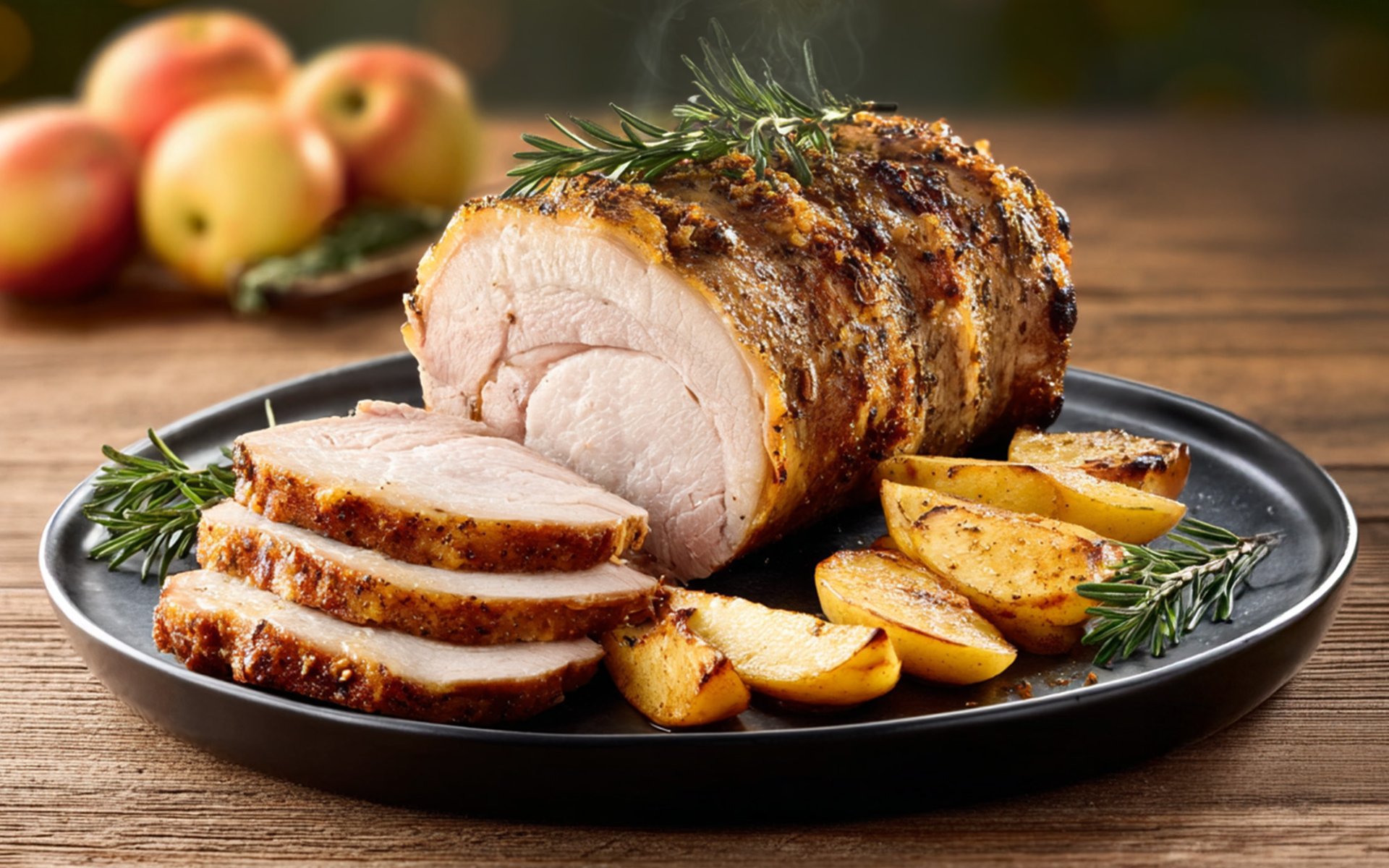
Introduction to Roast Pork with Apples and the Principles of Food Pairing
Roast Pork with Apples is a classic European dish that features pork—most commonly pork loin or pork neck—roasted together with fresh apples and aromatic herbs such as rosemary or thyme. The sweet-tart flavor of the apples helps cut through the richness of the pork, enhancing its savory qualities and creating a well-balanced, harmonious taste. This pairing is considered a perfect example of food pairing principles.Prehistoric Origins of Pork and Apple Consumption
The combination of pork and apples has deep historical roots dating back to prehistoric times. Archaeological evidence suggests that humans began consuming pork as early as 5,000 BCE. Apples, meanwhile, were traded and spread along the Silk Road long before the 12th century.Central Asia and the Early Coexistence of Apples and Wild Boar
In Central Asia, particularly around the Tian Shan mountain range—now part of Sairam-Ugam National Park in Kazakhstan—wild apple trees believed to be ancestors of modern apples have been discovered, along with wild boars living in nearby areas. Scholars therefore speculate that early humans in this region may have cooked these two ingredients together.Archaeological Limitations and Culinary Assumptions
However, prehistoric humans did not leave written recipes on cave walls. Archaeologists can only infer what they ate based on remnants found in ancient refuse sites.The First Recorded Pork and Apple Recipe in Ancient Rome
The earliest written recipe explicitly pairing pork with apples appears in The Art of Cooking by Marcus Gavius Apicius, a Roman cookbook compiled in the 4th century. The dish is known as Minutal Matianum.Ingredients and Apple Varieties in Roman Cuisine
This recipe uses pork in two forms—ground pork shaped into meatballs and diced pork shoulder—grilled together with Matianum apples. It is believed that the apple variety was named in honor of Gaius Maecius or Gaius Matias, a writer and food connoisseur who lived during the time of Julius Caesar.Seasonings and Flavor Complexity in Ancient Roman Cooking
The recipe also includes onions, stock, and a variety of spices such as pepper, coriander, coriander seeds, mint leaves, and silphium root. It is further seasoned with vinegar, honey, garum (fermented fish sauce), and defrutum—a reduced grape must—creating the complex, layered flavors characteristic of ancient Roman cuisine.Medieval Europe and Seasonal Food Practices
During the Middle Ages, autumn was the season for apple harvesting and pig slaughtering in preparation for winter. As a result, pork and apples became a natural and popular pairing. Orchard owners often fed fallen apples to pigs to reduce feeding costs, and it was believed that this practice may have subtly infused the pork with apple aromas and flavors.Porc à la Normande: A French Culinary Classic
In France, a classic dish known as Porc à la Normande (Normandy-style pork) features roasted pork cooked with caramelized apples, cider, and cream. This dish originated in Normandy, a region renowned for its apple orchards and high-quality dairy production, resulting in a rich, aromatic, and complex flavor profile.Legendary Origins Linked to William the Conqueror
According to legend, a chef named Gautier created this pork-and-apple dish to serve William the Conqueror before his invasion of England in 1066, believing it to be a meal of good fortune and auspicious beginnings.British Interpretations: Cheshire Pork Pie
In England, a recipe known as Cheshire Pork Pie appears in the cookbook of Hannah Glasse. This dish combines sliced apples with pork loin, cooked with wine and spices, then wrapped in pastry and baked. It illustrates another evolution of the pork-and-apple pairing within British culinary tradition.Roast Pork with Apples in American Food Culture
Over time, the pairing of pork and apples crossed the Atlantic with European settlers and became deeply embedded in American food culture. A notable reference appears in Eliza Leslie’s Directions for Cookery (1837), which clearly states that “roast pork should always be served with apple sauce.”From Dish to Cultural Expression in the United States
Additionally, the popular play Our American Cousin (1858) uses the phrase “apple sass over roast pork,” a colloquial expression of the era. This demonstrates that Roast Pork with Apples was not merely a dish, but also a cultural reference woven into everyday language in America. Tags :
Related Content

Discover the Banana Shallot: An Elongated Shallot Often Described as a Cross Between a Shallot and an Onion