Strawberry Salsa
Last updated: 8 Jan 2026
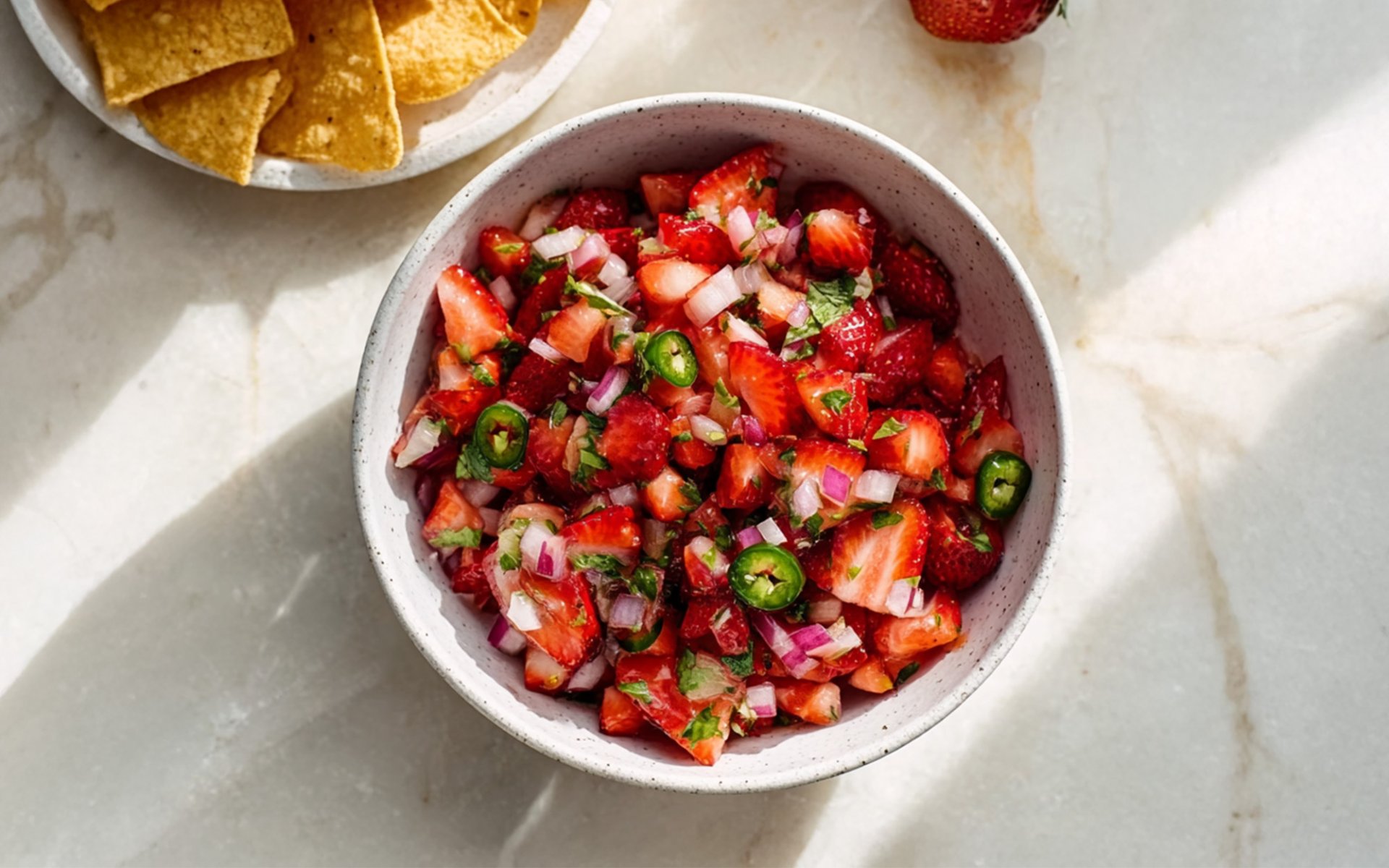
What Is Strawberry Salsa
Strawberry Salsa is a fusion-style salsa that uses fresh, diced strawberries as the main ingredient instead of tomatoes. It delivers a refreshing flavor profile created by the balance of sweet and tangy strawberries, mild heat from chili peppers, and the bright aroma of cilantro and lime juice.How Strawberry Salsa Is Commonly Served
Strawberry Salsa is commonly served as a dip alongside tortilla chips or spooned over grilled meats such as fish, shrimp, or chicken. Its natural acidity and sweetness help cut through richness, add complexity to savory dishes, and enhance visual appeal with vibrant color.Ancient Roots of Salsa in Mesoamerican Civilizations
Salsa has its roots in ancient Mesoamerican civilizations such as the Aztecs, Maya, and Inca, where tomatoes, chilies, and pumpkin seeds were ground and mixed together as condiments long before the 16th century.The Arrival of the Spanish and a Turning Point in Salsa History
When Spanish explorers arrived in the Americas in the late 15th century and conquered Mexico between 1519 and 1521, they encountered these indigenous recipes—marking a significant turning point in the history of salsa.Old World Ingredients and the Evolution of Salsa
The Spanish introduced ingredients from the Old World, including garlic, onions, and cilantro, and blended them with native recipes. This fusion led to greater complexity and diversity in flavor, forming the foundation of the salsa styles we recognize today.The Naming of Salsa and Its Spread Across Latin America
In 1571, Spanish priest and grammarian Alonso de Molina recorded and named this preparation “salsa,” a Spanish word meaning “sauce” or “condiment.” From that point onward, salsa spread throughout the Spanish Empire and gradually became an essential part of culinary culture across Latin America.Flexible Recipes and Culinary Wisdom in Early Salsa
Early salsa had no fixed recipe. It was prepared flexibly, depending on seasonal availability and local ingredients—reflecting ancient culinary wisdom that emphasized resourcefulness and harmony with nature.The Rise of Salsa in the United States
During the 20th century, salsa gained widespread popularity in the United States. Commercial production began in 1916 when Charles E. Erath introduced bottled salsa in New Orleans. One of the most recognizable styles to emerge was Pico de Gallo, also known as Salsa Fresca, made from chopped tomatoes, onions, chilies, and cilantro.The Emergence of Fruit-Based Salsa Variations
While tomato-based salsa remains widely popular, modern cooks began experimenting with new variations by replacing tomatoes with other fruits. From a botanical perspective, tomatoes themselves are fruits, making the use of other fruits a natural extension rather than a departure from tradition.Caribbean Influence on Fruit Salsa
Fruit-based salsas first gained popularity in the Caribbean, where tropical fruits such as mango, pineapple, and papaya were combined with chilies and herbs. These salsas were celebrated for their harmonious balance between fruit freshness and spicy heat, adding depth and excitement to a wide range of dishes.Strawberry Salsa in Contemporary Cuisine
Strawberry Salsa is considered a relatively modern fruit salsa. Although there is no clear record identifying a single creator, evidence suggests that multiple cooks independently developed similar recipes around the same time—highlighting the open, flexible, and creative nature of salsa in contemporary cuisine.The Growing Popularity of Strawberry Salsa Since the Late 2000s
Strawberry Salsa began gaining widespread popularity in the late 2000s, particularly among home cooks and food enthusiasts. Recipes were shared through food blogs, cookbooks, and community gatherings, eventually establishing it as one of the most popular fruit-based salsas.Second, its distinctive flavor profile—combining sweet-tart strawberries with chili heat and fresh herbs—creates a vibrant and stimulating sensory experience.
Finally, Strawberry Salsa is simple to prepare, requires minimal steps, and uses easily accessible ingredients. This makes it ideal for home cooking as well as for creative adaptation in a wide variety of contemporary dishes.
Tags :
Related Content