Atsuage Tofu
Last updated: 19 Jan 2026
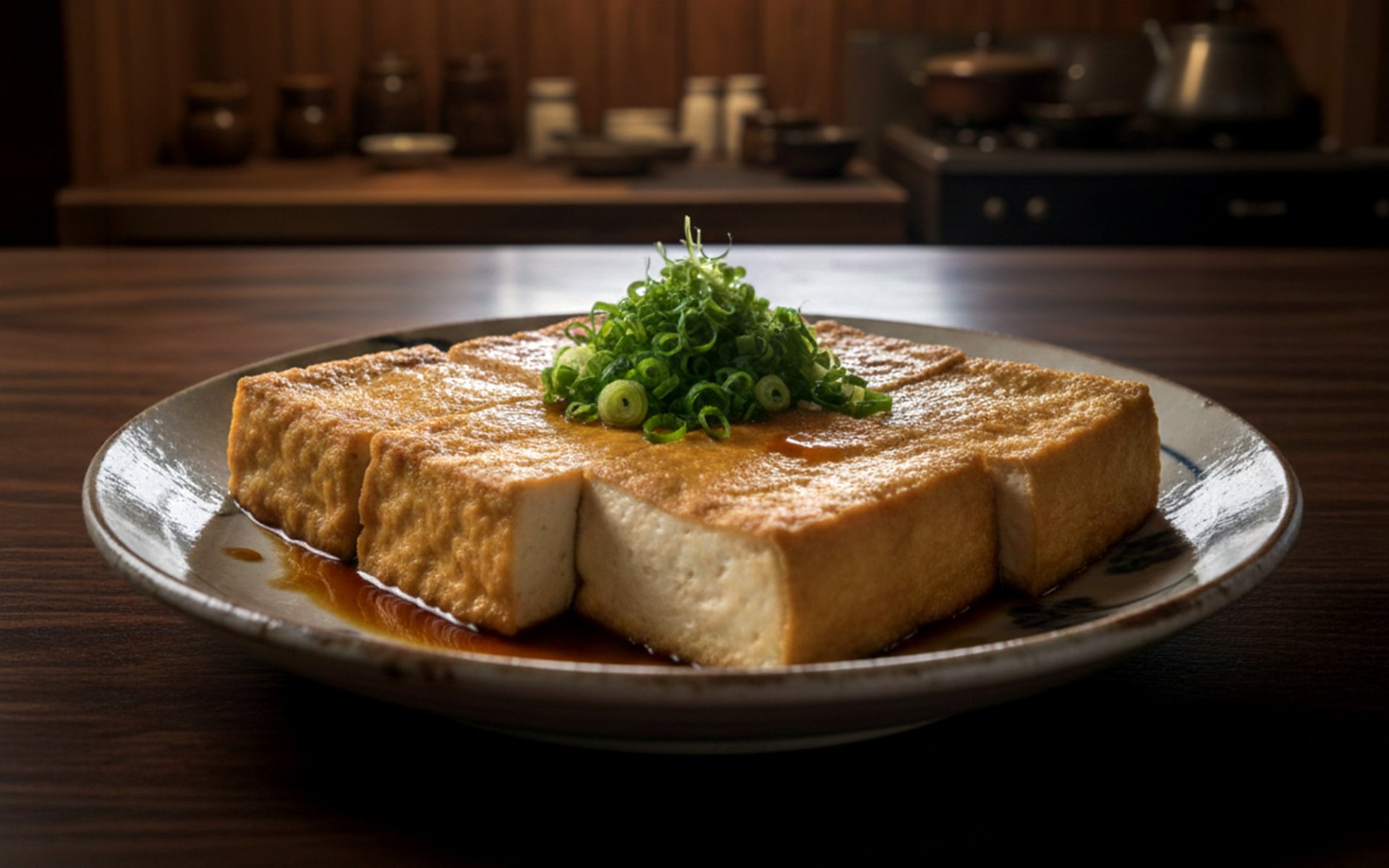
Atsuage Tofu, also known as Namaage, is a traditional Japanese fried tofu distinguished by its unique character. It features a golden-brown exterior with a lightly crisp surface, while the interior retains the smooth, delicate texture of fresh tofu.
What Makes Atsuage Different from Other Fried Tofu
What sets Atsuage apart from other types of fried tofu lies in its cooking technique. Only the outer surface is fried until lightly cooked, while the heat is carefully controlled so that it does not fully penetrate the tofu. This characteristic is reflected in the name Namaage, which literally means “partially fried,” referring to the fresh, tender texture preserved inside.Origins of Tofu in Ancient China
Tofu itself originated in China approximately 2,000 years ago during the Han Dynasty (206 BCE–220 CE). The most widely accepted theory attributes its discovery to Prince Liu An of the Huainan Kingdom, who was experimenting with elixirs of immortality made from soybeans.The Accidental Discovery of Tofu
During one such experiment, cooked soy milk was mixed with sea salt containing calcium and magnesium. These minerals acted as coagulants, causing the soy proteins to solidify and leading to the accidental discovery of tofu.Introduction of Tofu to Japan
Tofu was introduced to Japan during the Nara period (710–784 CE) by Buddhist monks who had traveled to China for study. Initially, tofu consumption was limited to temples and the imperial court, as its production required specialized knowledge and high-quality ingredients that were not widely available at the time.Development of Fried Tofu During the Muromachi Period
The practice of frying tofu is believed to have developed during the Muromachi period (1336–1573 CE), with Buddhist monks playing a significant role in refining this technique. As monks were prohibited from consuming meat, they sought ways to enhance tofu’s texture and flavor to resemble meat more closely, leading them to fry it in oil.Fried Tofu as a Versatile Ingredient
Frying not only added complexity to tofu’s flavor and texture but also helped extend its shelf life. As a result, fried tofu became a versatile ingredient suitable for a wide range of dishes and gradually gained widespread acceptance throughout Japanese society.Expansion of Tofu Consumption in the Edo Period
During the Heian period (794–1185 CE), tofu remained largely confined to the aristocracy and samurai class. However, in the Edo period (1603–1868 CE), tofu became a staple of everyday life as tofu shops began to appear in large numbers across major cities.The Rise of Atsuage Production
At the same time, vegetable oil became more widely produced and affordable, making fried foods—including Atsuage—accessible to the general population. During this era, tofu shops increasingly produced and sold Atsuage on a broad scale.Atsuage in Japanese Culinary Literature
The popularity of tofu during the Edo period is clearly reflected in the famous cookbook Tōfu Hyakuchin (豆腐百珍), or One Hundred Tofu Recipes, published in 1782. This best-selling book compiled 100 tofu-based recipes, including Atsuage and various other fried tofu dishes.Traditional Atsuage Preparation Method
Atsuage is typically made from thick blocks of tofu cut into pieces approximately 2–3 centimeters thick, then fried once in oil heated to around 180–200°C. Only the outer layer is fried, ensuring that the inside remains soft and tender.Regional Variations of Atsuage in Japan
Although Atsuage is found throughout Japan, each region has developed its own distinctive variations. For example:Tochioage: Atsuage from Nagaoka City
In Nagaoka City (formerly Tochio City), Atsuage is known for its impressive thickness of about 3 centimeters. After frying, the tofu is skewered or hung with string to allow excess oil to drain, creating small holes throughout the tofu. This distinctive style is known as Tochioage.Kyoage: Kyoto-Style Atsuage
In Kyoto, Atsuage is often called Kyoage. It is larger than typical Atsuage, measuring approximately 20 centimeters in length and 12 centimeters in width. Its lighter color and refined flavor make it well suited for Obanzai, Kyoto’s traditional home-style cuisine, and its size allows for versatility in cooking.Atsuage from Miyagi Prefecture
In Miyagi Prefecture, Atsuage is typically triangular in shape and similar in thickness to standard Atsuage, featuring a crisp exterior and a soft interior.Atsuage in Japanese Festivals and Traditions
Atsuage has long played an important role in Japanese food culture and seasonal festivals. During Tsukimi, the moon-viewing festival, fried tofu is sometimes used in dishes symbolizing abundance. Additionally, the Tofu Festival held in Kyotango celebrates tofu-making traditions and local culinary wisdom.Modern Interpretations of Atsuage
In modern times, Atsuage continues to be creatively adapted to contemporary tastes. Examples include Atsuage steak, where the tofu is grilled and seasoned with soy sauce, as well as Atsuage served with cheese. These modern interpretations highlight Atsuage’s versatility and its enduring appeal in today’s culinary landscape.Nutritional Value of Atsuage
Nutritionally, Atsuage is a high-quality plant-based protein source, providing complete protein with essential amino acids, along with carbohydrates, fats, and important minerals such as calcium, magnesium, and zinc—approximately 14% of the recommended daily intake per 100 grams. These qualities make Atsuage a nutrient-dense yet relatively low-calorie food, ideal for health-conscious consumers. It is also rich in isoflavones, which are known to help reduce cholesterol levels, alleviate symptoms associated with menopause, and support bone health. Tags :
Related Content

Get to Know Shepherds and Cottage Pie: From Humble Shepherds Fare to English Aristocratic Delicacy