Japanese Tea Ceremony
Last updated: 28 Jan 2026
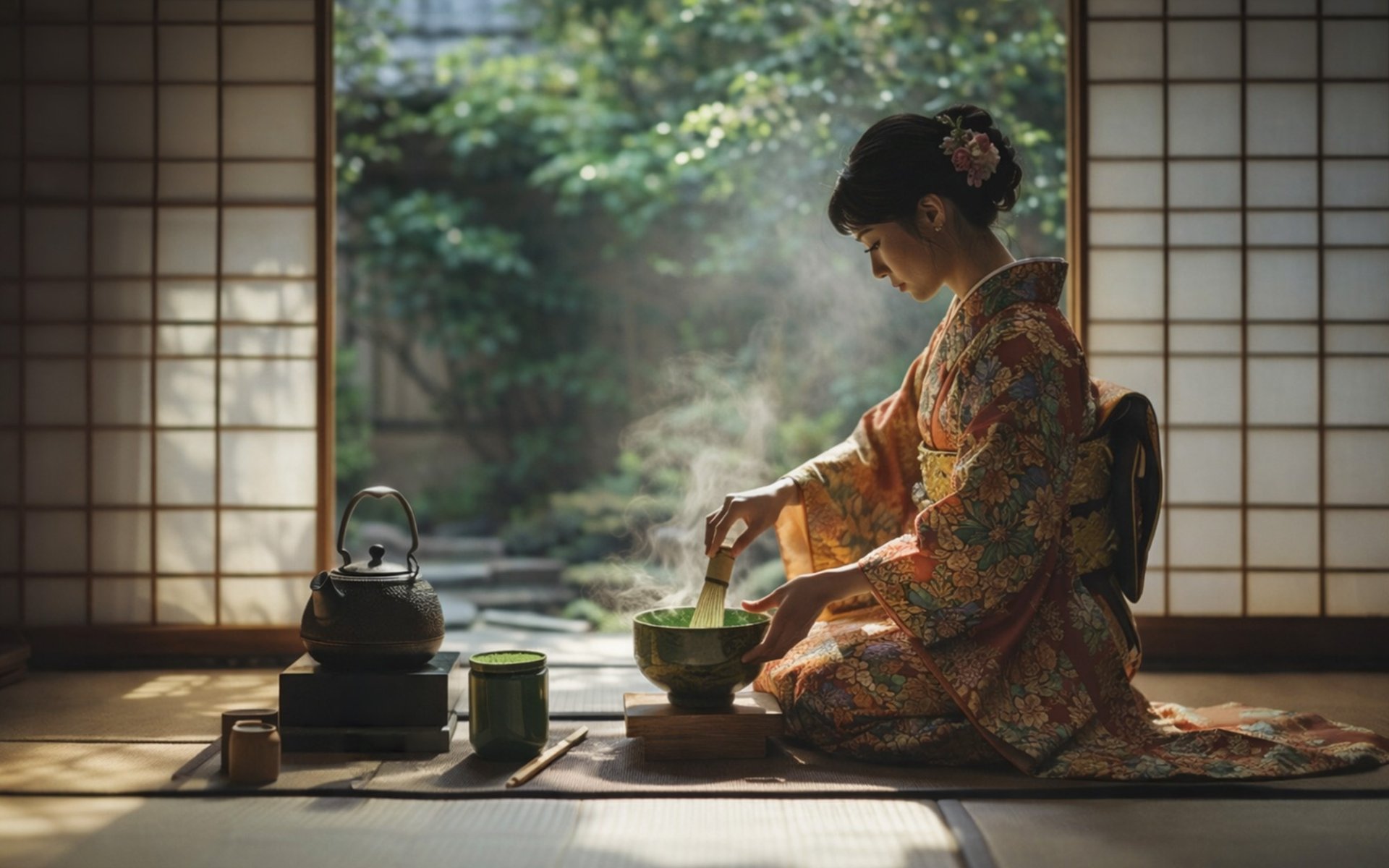
The Japanese tea ceremony, known as Chadō (茶道) or Sadō, literally meaning “the Way of Tea,” is a cultural practice centered on the ceremonial preparation and presentation of matcha. Far beyond the simple act of making tea, the ceremony represents a spiritual discipline deeply rooted in Zen Buddhism.
The amino acid L-theanine promotes a sense of calm and relaxation without inducing drowsiness, while the caffeine in matcha is absorbed and released gradually. This results in sustained energy without the jitteriness or fatigue often associated with other caffeinated beverages.
Additionally, matcha stimulates alpha brain waves, fostering a mental state that is both alert and serene—ideal for meditation and activities requiring deep concentration.
The Tea Ceremony as a Space for Mindfulness and Connection
The tea ceremony serves as a space for cultivating a meaningful connection between host and guests, while also offering an opportunity for meditation and the pursuit of inner calm. Tea rooms are typically small, accommodating only four to five participants, and are designed to resemble a hermit’s hut. Surrounded by a garden, the setting creates an atmosphere of quietude, intentionally separated from the distractions of the outside world.Types of Matcha Used in the Tea Ceremony
In the Japanese tea ceremony, matcha is generally divided into two main types:- 濃茶 – Koicha (Thick Tea) Koicha is reserved for the most important part of the tea ceremony and is prepared using exceptionally high-quality matcha. Approximately 4 grams of matcha are combined with 30 milliliters of hot water at around 80°C. Unlike other preparations, Koicha is not whisked to create foam; instead, it is gently kneaded until it achieves a smooth, syrup-like consistency.
- 薄茶 – Usucha (Thin Tea) Usucha has a lighter flavor than Koicha and uses about half the amount of matcha, with double the volume of water. Hot water at approximately 90°C is used, and the tea is whisked to produce a fine layer of foam, helping to soften any astringency. Each guest receives their own bowl. Usucha is lighter, more refreshing, and easier to drink than Koicha.
The Structure of a Formal Tea Ceremony (Chaji)
A complete formal tea ceremony, known as Chaji, may last several hours and consists of a series of carefully choreographed steps, each rich in symbolic meaning:- Reception: Guests remove their shoes before entering the waiting area, where the host greets them with a calm and respectful bow.
- Purification: Guests cleanse their hands and rinse their mouths at a stone basin, symbolizing the removal of worldly concerns before entering the ceremony.
- Entering the Tea Room: Guests enter the tatami-matted tea room and sit in the formal seiza kneeling position.
- Appreciation of the Setting: Guests take time to admire the kakejiku (hanging scroll) and the seasonal flower arrangement displayed in the tokonoma, reflecting Japanese aesthetics and the impermanence of nature.
- Cleansing of Utensils: The host carefully cleans each tea utensil in a prescribed order, demonstrating mindfulness, respect, and concentration in every movement.
Tea Preparation
Tea Preparation: Water is heated in a kettle over charcoal. Matcha is placed in the bowl, hot water is added, and the tea is whisked using a chasen (bamboo whisk).
Serving and Drinking
Serving and Drinking: The principal guest raises the bowl in gratitude to the host, rotates it slightly to avoid drinking from the front, and then sips the tea calmly, appreciating its flavor, texture, and the atmosphere of the ceremony.Tea Ceremony Utensils (Chadōgu)
The utensils used in the tea ceremony are collectively known as Chadōgu, each selected with great care for functionality, beauty, and appropriateness to the occasion:- 茶碗 – Chawan: The tea bowl used for drinking matcha, often handcrafted pottery reflecting the aesthetics of the tea ceremony.
- 茶筅 – Chasen: A bamboo whisk used to mix matcha with hot water until smooth or frothy.
- 茶杓 – Chashaku: A bamboo scoop used to measure and transfer matcha powder with precision and elegance.
- 茶器 – Chaki: Containers for storing matcha. Chaire (ceramic) is used for Koicha, while Natsume (wood or bamboo) is used for Usucha.
- 風炉 – Furo: A portable charcoal brazier used to heat water during the ceremony.
Health Benefits of Matcha
Numerous studies suggest that regular consumption of matcha may offer several health benefits, including:- Liver protection: Supporting liver function and reducing the risk of liver disease.
- Blood sugar regulation: Improving insulin sensitivity, potentially aiding in diabetes prevention and management.
- Cholesterol reduction: Helping balance blood lipid levels and supporting cardiovascular health.
- Anti-aging effects: High antioxidant content helps slow cellular aging and supports skin health.
Matcha as a Caffeinated Beverage
Matcha is known to enhance focus and memory. Research indicates that matcha consumption can improve concentration, cognitive performance, and information processing.The amino acid L-theanine promotes a sense of calm and relaxation without inducing drowsiness, while the caffeine in matcha is absorbed and released gradually. This results in sustained energy without the jitteriness or fatigue often associated with other caffeinated beverages.
Additionally, matcha stimulates alpha brain waves, fostering a mental state that is both alert and serene—ideal for meditation and activities requiring deep concentration.
Zen Philosophy Expressed Through Tea
Together, the Japanese tea ceremony and matcha embody a harmonious balance of ritual, mindfulness, and well-being, offering a profound expression of Zen philosophy through the simple act of preparing and sharing tea. Tags :
Related Content

Meet Fannie Farmer The Woman Who Standardized Recipes and Transformed the Way the World Cooks


Getting to Know “Functional Food”: Food Innovation for Health Promotion and Disease Prevention