Tea Pairing
Tea Pairing as an Expression of Balance and Harmony
Tea pairing is considered an integral part of Cha Dao, with the goal of achieving balance and harmony between tea and food. Neither element should overpower the other; instead, both should work together to create a subtle, layered, and harmonious sensory experience that reflects the principle of moderation central to tea culture.Understanding Different Types of Tea for Pairing
Different types of tea possess distinct flavor profiles, aromas, and structures, which influence their suitability for pairing with various foods:Green Tea
Green tea is known for its refreshing taste and natural vegetal aroma. It has a light body with gentle astringency and is particularly effective at cutting through fat and cleansing the palate. As a result, it pairs well with rich or oily dishes and foods where the natural flavors of the ingredients should remain prominent.White Tea
White tea undergoes minimal processing and is made from young tea buds and tender leaves. It offers a delicate sweetness, a soft mouthfeel, and subtle floral aromas. White tea is best paired with lightly seasoned dishes, as its gentle character can be easily overwhelmed by strong flavors.Oolong Tea
Oolong tea is partially oxidized, falling between green and black tea. It is known for its complex flavor profile, which may include floral, fruity, or lightly roasted notes. With its excellent balance and versatility, oolong tea is one of the most popular choices for tea pairing and pairs well with a wide range of foods.Black Tea
Fully oxidized black tea delivers a bold flavor, deep aroma, and a well-defined structure. Many black teas feature notes of caramel, malt, or ripe fruit. These qualities make black tea an excellent companion for sweet, rich, or dense desserts and pastries.Pu-erh Tea
Pu-erh is a fermented tea with a distinctive deep, earthy character and a smooth, rounded flavor. It is highly regarded for its digestive benefits and its ability to cut through grease. Pu-erh tea is especially well suited for fatty dishes or heavy meals, making it a popular choice during festive occasions.Scented Tea
Scented teas are made by infusing tea leaves with natural floral aromas such as jasmine or rose. They are characterized by their elegant fragrance and soothing qualities. Scented teas pair particularly well with light desserts and snacks, as their floral aromas enhance sweetness while maintaining balance and refinement.
Chinese tea pairing follows several key principles:
- Balance : Bitter or astringent teas pair well with sweet foods, while naturally sweet teas complement salty or rich dishes.
- Cutting Richness: Teas known for aiding digestion are ideal for fatty or heavy foods.
- Enhancing Aroma: Fragrant teas should be paired with delicately flavored dishes to preserve subtle aromas.
- Temperature Harmony: Hot foods pair best with hot tea, while cooler dishes are better matched with warm tea.
Tea Pairing with Traditional Chinese New Year Desserts
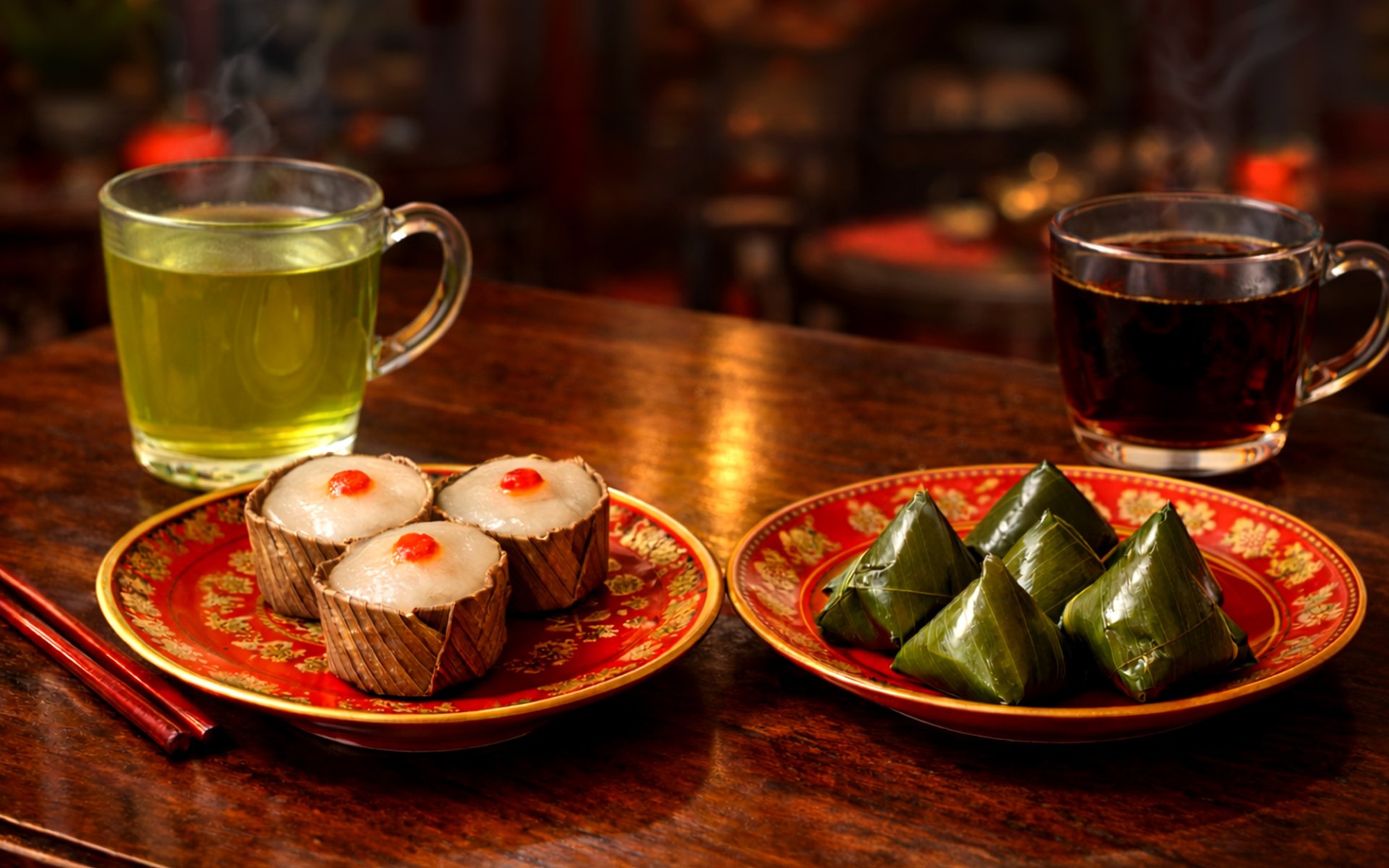
Green Tea with Nian Gao (Sticky Rice Cake)
Nian Gao is a traditional Chinese New Year dessert that is sweet and rich, often filled with red bean paste, salted egg yolk, or lotus seed paste. Green tea’s refreshing bitterness helps cut through the sweetness and richness, cleansing the palate effectively.
Pu-erh Tea with Fried Sesame Dumplings (Khanom Tian)
Khanom Tian, or Chinese New Year dumplings, are made from glutinous rice flour and are sometimes fried, resulting in a rich and oily texture. Pu-erh tea’s digestive properties help reduce heaviness, cut through sweetness, and refresh the palate.
Oolong Tea with Tangyuan
Tangyuan are glutinous rice balls filled with sweet fillings such as black sesame, red bean, or peanut paste, served in sweet syrup. Commonly eaten during Lunar New Year and the Lantern Festival, Tangyuan pair well with oolong tea, whose balanced flavor enhances the dessert without overpowering it.
Brewing Tips for Tea Pairing
- Water Temperature
Oolong and black tea: 90–95°C
Pu-erh tea: 100°C
- Brewing Time
Oolong tea: 2–3 minutes
Black tea and Pu-erh tea: 3–5 minutes
- Tea Quantity
High-quality Chinese teas can be infused multiple times, with each infusion revealing different flavor nuances.
Tea Drinking During Lunar New Year: Symbolism and Beliefs
During the Lunar New Year, tea drinking is more than a moment of relaxation; it is regarded as a way of welcoming good fortune. Traditional beliefs include:- New Beginnings: Brewing tea at the start of the new year symbolizes cleansing the past and welcoming fresh energy.
- Respect for Elders: Serving tea to elders represents gratitude and filial piety, core values in Confucian philosophy.
- Health and Balance: Drinking tea after festive meals is believed to restore yin-yang balance, aid digestion, and prevent discomfort—an important consideration during the auspicious beginning of the year.