English Muffin
Last updated: 22 Apr 2026
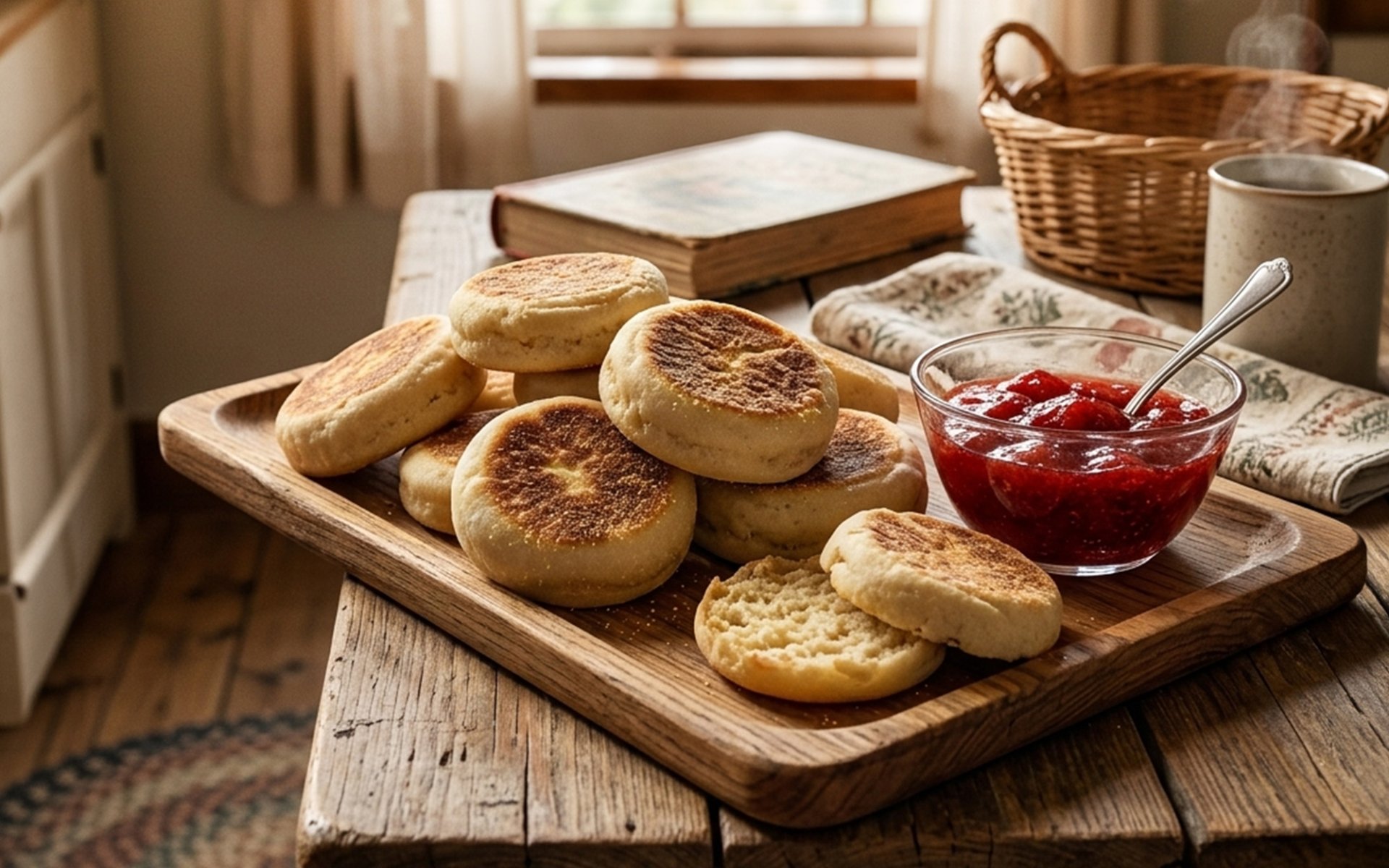
An English Muffin is a distinctive type of bread characterized by its round, flat shape, typically measuring about 10–12 centimeters in diameter. Its interior has a soft, airy texture filled with small holes resembling a honeycomb structure, allowing it to absorb butter, jam, or other toppings exceptionally well.
Origins of English Muffins: From England to the United States
Despite the word “English” in its name, the English Muffin as we know it today was developed in the United States, inspired by traditional English muffins from the 18th century. These early muffins were small, flat breads made from wheat flour, yeast, water, and milk, and were cooked on a griddle rather than baked in an oven like most conventional breads.Muffins as Working-Class Food in Early England
At that time, muffins were considered food for the working class, particularly among household servants. They would often combine leftover bread or biscuit dough with mashed potatoes and cook it on a hot griddle for consumption. Over time, members of the upper class began to enjoy this bread, and it gradually gained popularity across all social classes in England.The Role of Muffins in Victorian Tea Culture
During the Victorian era (1837–1901), muffins became an integral part of the British afternoon tea culture. A familiar figure during this period was the “Muffin Man,” a street vendor who carried trays of muffins and sold them in residential areas of London before tea time, often ringing a bell to attract customers.Historical Record of the Muffin Man Tradition
Historian Michael Paterson noted in his book A Brief History of Life in Victorian Britain that the sound of the muffin seller’s bell was “one of the most delightful sounds of childhood in the Victorian era.”The Development of English Muffins in the United States
In the late 19th century, muffins were introduced to the United States by Samuel Bath Thomas, a young man from Plymouth, England, who emigrated to New York City in 1874. He initially worked in a local bakery to gain experience before establishing his own business.The Beginning of Commercial English Muffins
In 1880, Thomas purchased a bakery on Ninth Avenue in New York and began producing muffins with the intention of creating a higher-quality alternative to standard toast for hotels and upscale restaurants.The Unique Texture: “Nooks and Crannies”
Thomas’s muffins differed significantly from traditional English versions. Instead of using a batter, he used a dough, which created numerous air pockets within the bread. When split open, these pockets—known as “nooks and crannies”—became visible. This unique structure allowed butter, jam, and other toppings to seep into the bread more effectively.From Toaster Crumpets to English Muffins
Initially, Thomas marketed his product as “Toaster Crumpets” to emphasize that it was meant to be toasted before eating. Later, in 1894, he officially named it “English Muffins,” marking the beginning of the product as it is known worldwide today.The Meaning Behind the Name English Muffins
The choice of the name “English Muffins” is believed to reflect both a desire to differentiate it from traditional English muffins and to highlight the British roots of the recipe he had reinvented.The Paradox of English Muffins
Interestingly, this name created a paradox. According to The Kitchn, English Muffins in their modern form were largely unknown in the United Kingdom until they were imported from the United States in the 1990s.Culinary Identity and Marketing Influence
This means that a bread labeled “English” became widely popular in the United States long before gaining recognition in its namesake country—demonstrating how culinary innovation and marketing can reshape food identity.Differences in the Meaning of Muffin Across Cultures
Today, to distinguish them from traditional British muffins, English Muffins sold in the UK and Ireland are often referred to as “American Muffins.” Meanwhile, in the United States, the term “muffin” generally refers to sweet, cake-like baked goods such as blueberry or chocolate muffins, which are entirely different from English Muffins in both texture and preparation.English Muffins in Modern Food Culture
Since the 20th century, English Muffins have become a staple in Western breakfast culture. They are typically split in half and toasted to achieve a crisp exterior and soft interior.Popular Ways to Enjoy English Muffins
They are commonly served with butter, jam, honey, or peanut butter and are also a key ingredient in various popular dishes, including:
- Eggs Benedict: A classic breakfast dish consisting of English Muffins, poached eggs, bacon, and Hollandaise sauce
- Breakfast Sandwiches: Filled with eggs, bacon, sausage, or cheese
- Open-faced Toasts: Topped with a variety of ingredients
Traditional Splitting Technique for Better Texture
One of the defining characteristics of English Muffins is the traditional method of splitting them by hand rather than cutting them with a knife. This is typically done by inserting a fork around the edges before pulling the halves apart. This technique preserves the “nooks and crannies,” creating a rough surface that enhances the absorption of butter, jam, or sauces.Modern Variations of English Muffins
Today, English Muffins are no longer limited to their original form. They are available in a variety of options, including whole wheat, raisin and cinnamon, and even gluten-free versions.Nutritional Benefits of English Muffins
From a nutritional perspective, English Muffins are often considered a healthier alternative to white bread or bagels, as they generally contain fewer calories and less fat—especially when consumed without excessive butter or sugar-based toppings.Global Adaptation of English Muffins
Although they originated in England and were developed in the United States, English Muffins have spread worldwide and adapted to local culinary cultures. In some countries, they are used in fusion dishes such as mini burgers or as a base for quick, simple pizzas. They are also widely popular in modern cafés and breakfast establishments. Tags :
Related Content