Yanagi Matsutake
Last updated: 20 Mar 2026
Origins and Natural Distribution of Yanagi Matsutake
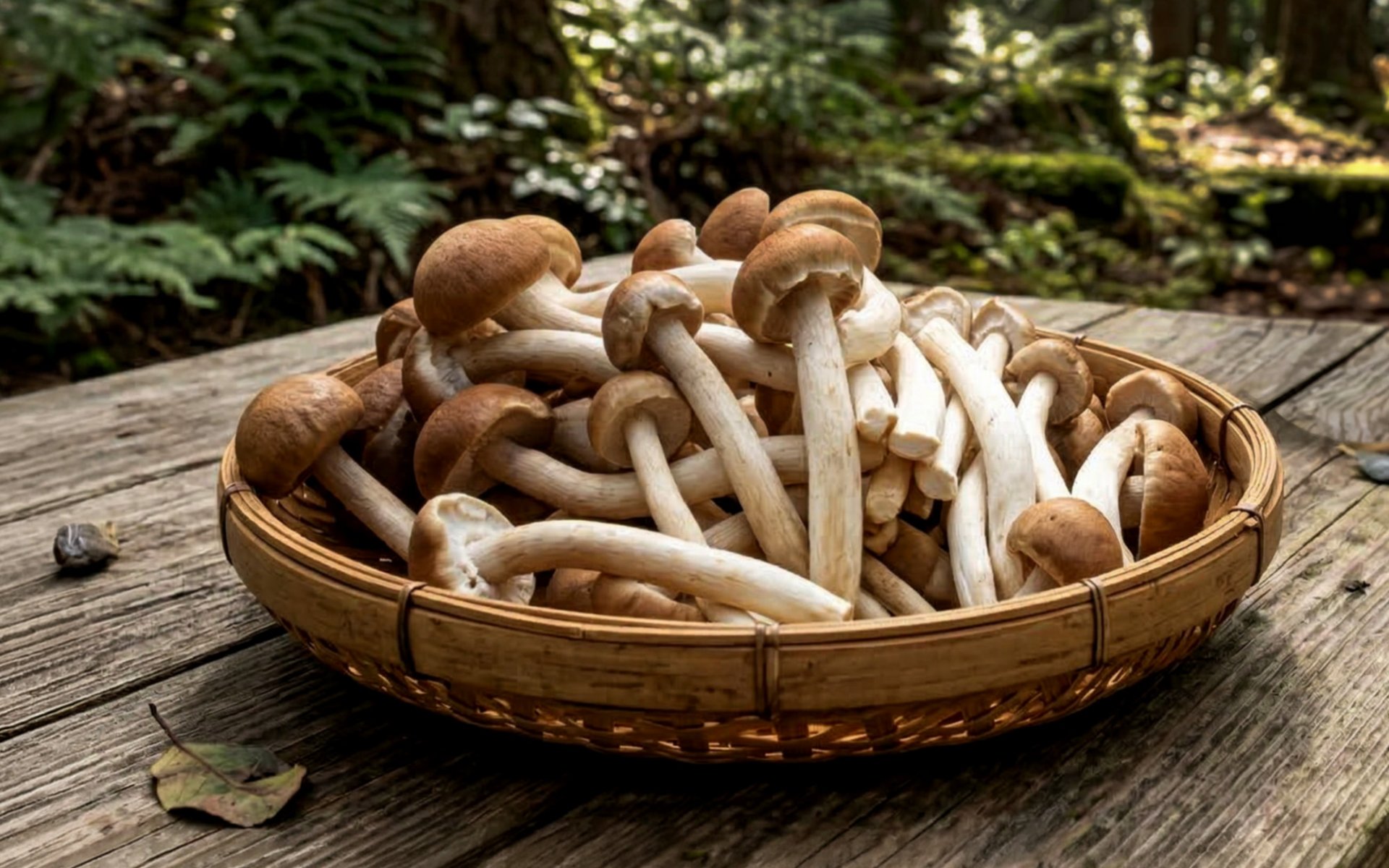
Yanagi Matsutake, known in Thai as “Japanese Termite Mushroom,” is a mushroom with a natural distribution across temperate regions worldwide, particularly in southern Europe and East Asia. In ancient Roman times, this mushroom was recorded as a delicacy with exceptional flavor and was highly sought after among urban populations.The ancient Romans were among the first to attempt cultivating this mushroom. They used logs from poplar and willow trees that were naturally inoculated with the fungus, placing them in suitable environments and regularly watering them to encourage growth.
Natural Habitat and Growth Characteristics
In nature, Yanagi Matsutake typically grows on decaying wood from various deciduous trees, including willow, poplar, maple, and elm. It often appears in large clusters and can sometimes be found in tree hollows or areas with accumulated wood debris. Regions where this mushroom is commonly found include Japan, China, Korea, and parts of Europe such as Italy, Spain, and France.Physical Characteristics and Culinary Uses
Yanagi Matsutake is characterized by its long, slender stems with an off-white color and caps that range from light to dark brown. It has a slightly crisp texture, firm flesh, and a distinctive aroma. When cooked, it develops a natural sweetness along with a rich umami flavor, making it suitable for a wide variety of dishes, including stir-fries, soups, shabu, and grilled preparations.Scientific Classification and Taxonomic History
The scientific name of Yanagi Matsutake is Cyclocybe aegerita. However, before this name was established, the mushroom underwent several taxonomic reclassifications as botanical and mycological knowledge evolved. The study of this species dates back to 1876, when French botanist Auguste Pyramis de Candolle first described it and named it Pholiota cylindracea.Later, in 1938, another French botanist, René Charles Joseph Ernest Maire, reclassified the species into the genus Agrocybe. Eventually, in 2014, Italian mycologists Alfredo Vizzini and Claudio Angelini conducted DNA-based studies, leading to a modern reclassification and the currently accepted name, Cyclocybe aegerita.
Development of Commercial Cultivation in Japan
Although this mushroom is naturally found in many regions, Japan has played a key role in advancing its cultivation and consumption to an industrial level. The development of commercial cultivation techniques began in earnest during the 20th century, incorporating scientific knowledge and agricultural technology. These advancements included environmental control, strain improvement, and optimized production management, enabling the consistent production of high-quality mushrooms at scale.Initially, Yanagi Matsutake cultivation relied on traditional methods such as log inoculation, which required significant time and offered limited control over yield. Over time, more advanced techniques were developed, including the use of sawdust-based substrates, temperature and humidity control within cultivation facilities, and plastic bag cultivation systems. These innovations have allowed for year-round production and significantly improved efficiency.
Global Popularity and Culinary Applications
By the late 20th century, Yanagi Matsutake gained increasing international popularity, particularly in Europe and the United States. Italy, in particular, has prominently incorporated this mushroom into its cuisine, where it is known as “Pioppino” and commonly used in dishes such as pasta and risotto.Nutritional Value and Health Benefits
Yanagi Matsutake has also been extensively studied for its nutritional value. Research published in PubMed Central indicates that this mushroom contains a diverse range of beneficial nutrients. It provides a balanced composition of carbohydrates and protein, while being low in fat. Most of its fat content consists of unsaturated fatty acids, particularly linoleic acid, which accounts for up to 78.40%.In addition, it is rich in essential vitamins, including vitamin E—especially in the form of γ-tocopherol—as well as B vitamins such as B2, B3, B5, and biotin, all of which play important roles in supporting various bodily functions.
In terms of minerals, Yanagi Matsutake is a valuable source of nutrients such as copper, potassium, folate, and selenium. It also contains beta-glucan, a type of dietary fiber known for its role in enhancing immune function and promoting overall health.
Tags :
Related Content