Terrine
Last updated: 8 Apr 2026
Terrine is a classic French dish that beautifully reflects the elegance and artistry of traditional French cuisine. Its preparation requires a high level of precision and meticulous attention to detail.
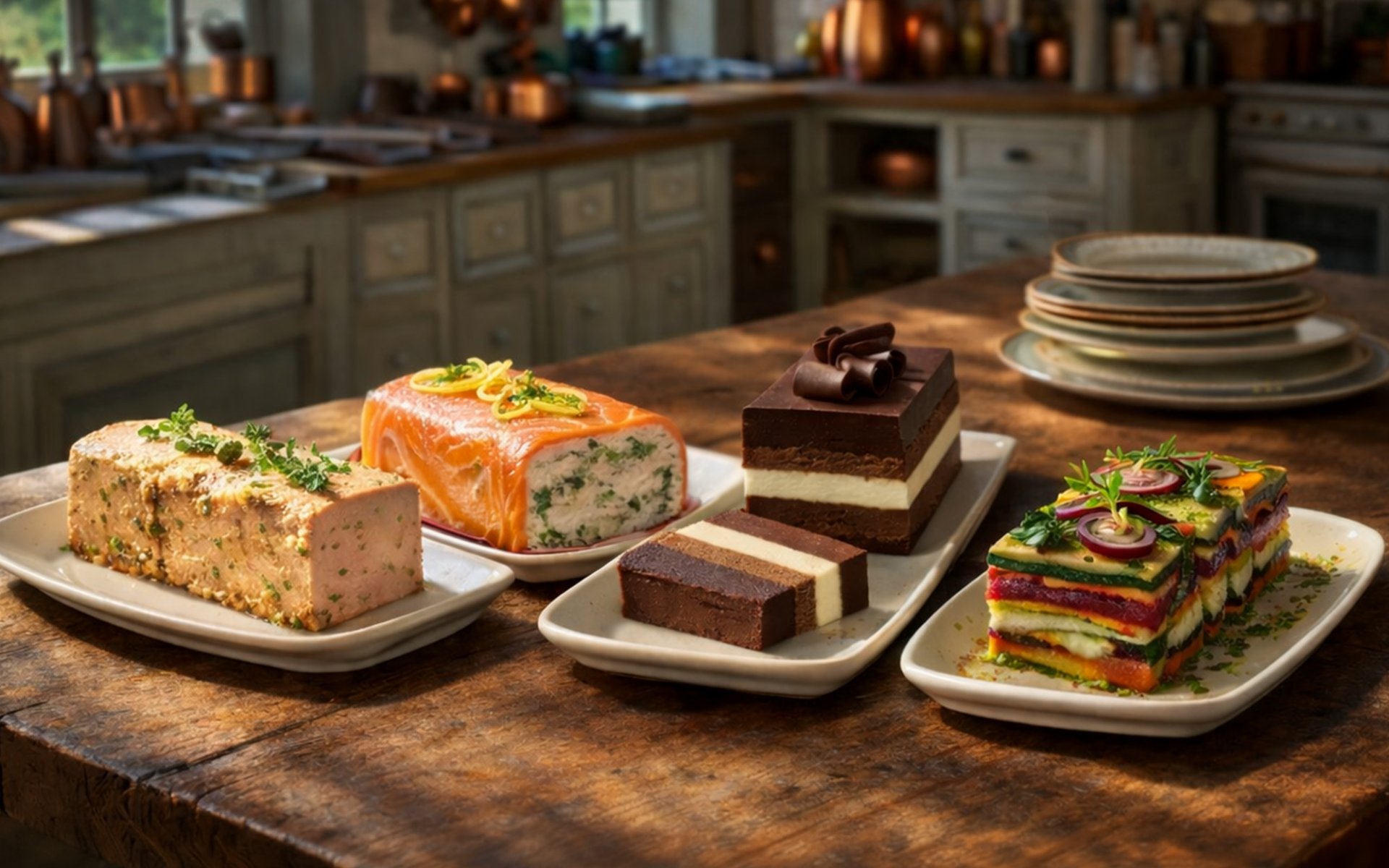
A terrine typically consists of meat, vegetables, or seafood seasoned with herbs, then pressed into a rectangular mold and gently cooked using the bain-marie (water bath) method. One of its defining features is the visually appealing layers of ingredients revealed when sliced. It is commonly served cold, accompanied by bread or acidic condiments, making it a refined appetizer.
The term “Terrine” originates from the French word for an earthenware container, traditionally rectangular in shape, used for cooking and preserving food—especially minced or processed meats.
As culinary techniques evolved, the word “Terrine” came to refer not only to the container but also to the dish itself. Typically, it involves ground meat mixed with spices, herbs, and fat, then slowly cooked to develop rich flavors.
Terrine is often compared to pâté, which can lead to confusion. The key difference lies in preparation: traditional pâté is usually encased in pastry, while terrine is cooked directly in a mold and typically served at room temperature or chilled, allowing fats and natural gelatin to set.
This method was designed to extend the shelf life of food in an era without refrigeration, allowing meat to be stored for longer periods—especially during winter when food was scarce.
In the Renaissance period, François Pierre de La Varenne, chef to King Louis XIV, documented terrine recipes in his book Le Cuisinier François (1651), one of the earliest systematically organized French cookbooks. These recipes featured premium ingredients such as venison, foie gras, and fine wines, reflecting the sophistication of French royal cuisine.
In the 19th century, Auguste Escoffier, regarded as the father of modern cuisine, played a key role in standardizing French culinary practices. In his influential work Le Guide Culinaire, he emphasized the importance of ingredient purity and quality in preparing dishes like terrine.
Modern terrines are no longer limited to meat. Variations now include vegetarian terrines, fish and seafood terrines, and even dessert terrines made from chocolate or fruit. Contemporary chefs also place great emphasis on presentation and color composition, transforming terrine into a dish that is as visually artistic as it is flavorful.
The mixture is then placed into a mold, often lined with thin slices of fat (such as pork fat) to help retain moisture during cooking.
The most critical step is the bain-marie cooking method, where the mold is placed in a hot water bath to ensure even heat distribution. This prevents the proteins from overcooking and becoming tough, preserving a smooth and delicate texture.
After cooking, the terrine undergoes a pressing process, where weight is applied as it cools. This step helps compact the mixture, eliminate air pockets, and achieve the signature dense, smooth texture of a well-made terrine.
A terrine typically consists of meat, vegetables, or seafood seasoned with herbs, then pressed into a rectangular mold and gently cooked using the bain-marie (water bath) method. One of its defining features is the visually appealing layers of ingredients revealed when sliced. It is commonly served cold, accompanied by bread or acidic condiments, making it a refined appetizer.
The term “Terrine” originates from the French word for an earthenware container, traditionally rectangular in shape, used for cooking and preserving food—especially minced or processed meats.
As culinary techniques evolved, the word “Terrine” came to refer not only to the container but also to the dish itself. Typically, it involves ground meat mixed with spices, herbs, and fat, then slowly cooked to develop rich flavors.
Terrine is often compared to pâté, which can lead to confusion. The key difference lies in preparation: traditional pâté is usually encased in pastry, while terrine is cooked directly in a mold and typically served at room temperature or chilled, allowing fats and natural gelatin to set.
Origins and Early Development
The origins of terrine date back to ancient Greek and Roman civilizations, when early food preservation techniques were developed. Meat was finely ground, mixed with spices, and sealed with a layer of fat to prevent exposure to air, then cooked in covered containers.This method was designed to extend the shelf life of food in an era without refrigeration, allowing meat to be stored for longer periods—especially during winter when food was scarce.
Medieval and Renaissance France
During the Middle Ages (12th–15th centuries), terrine began to evolve significantly in France. What was once a humble, practical dish was elevated by royal chefs into a refined and luxurious preparation. High-quality ingredients such as venison, quail, freshwater fish, and salmon were introduced, along with rare imported spices like cloves and pepper.In the Renaissance period, François Pierre de La Varenne, chef to King Louis XIV, documented terrine recipes in his book Le Cuisinier François (1651), one of the earliest systematically organized French cookbooks. These recipes featured premium ingredients such as venison, foie gras, and fine wines, reflecting the sophistication of French royal cuisine.
Terrine in the Royal Court and Modernization
By the 17th century, terrine had become a symbol of luxury at the Palace of Versailles. It was often served cold as an appetizer, paired with baguette, butter, and mustard—enhancing both flavor and dining experience.In the 19th century, Auguste Escoffier, regarded as the father of modern cuisine, played a key role in standardizing French culinary practices. In his influential work Le Guide Culinaire, he emphasized the importance of ingredient purity and quality in preparing dishes like terrine.
Terrine in Contemporary Cuisine
Today, terrine remains popular in both fine dining restaurants and home kitchens. It has evolved to suit modern tastes, incorporating a wider variety of ingredients.Modern terrines are no longer limited to meat. Variations now include vegetarian terrines, fish and seafood terrines, and even dessert terrines made from chocolate or fruit. Contemporary chefs also place great emphasis on presentation and color composition, transforming terrine into a dish that is as visually artistic as it is flavorful.
The Art of Making a Perfect Terrine
Creating a perfect terrine requires patience and attention to detail at every stage. The process often begins with marinating the meat overnight with spices to allow flavors to fully penetrate.The mixture is then placed into a mold, often lined with thin slices of fat (such as pork fat) to help retain moisture during cooking.
The most critical step is the bain-marie cooking method, where the mold is placed in a hot water bath to ensure even heat distribution. This prevents the proteins from overcooking and becoming tough, preserving a smooth and delicate texture.
After cooking, the terrine undergoes a pressing process, where weight is applied as it cools. This step helps compact the mixture, eliminate air pockets, and achieve the signature dense, smooth texture of a well-made terrine.
Tags :
Related Content