Deviled Eggs
Last updated: 22 Apr 2026
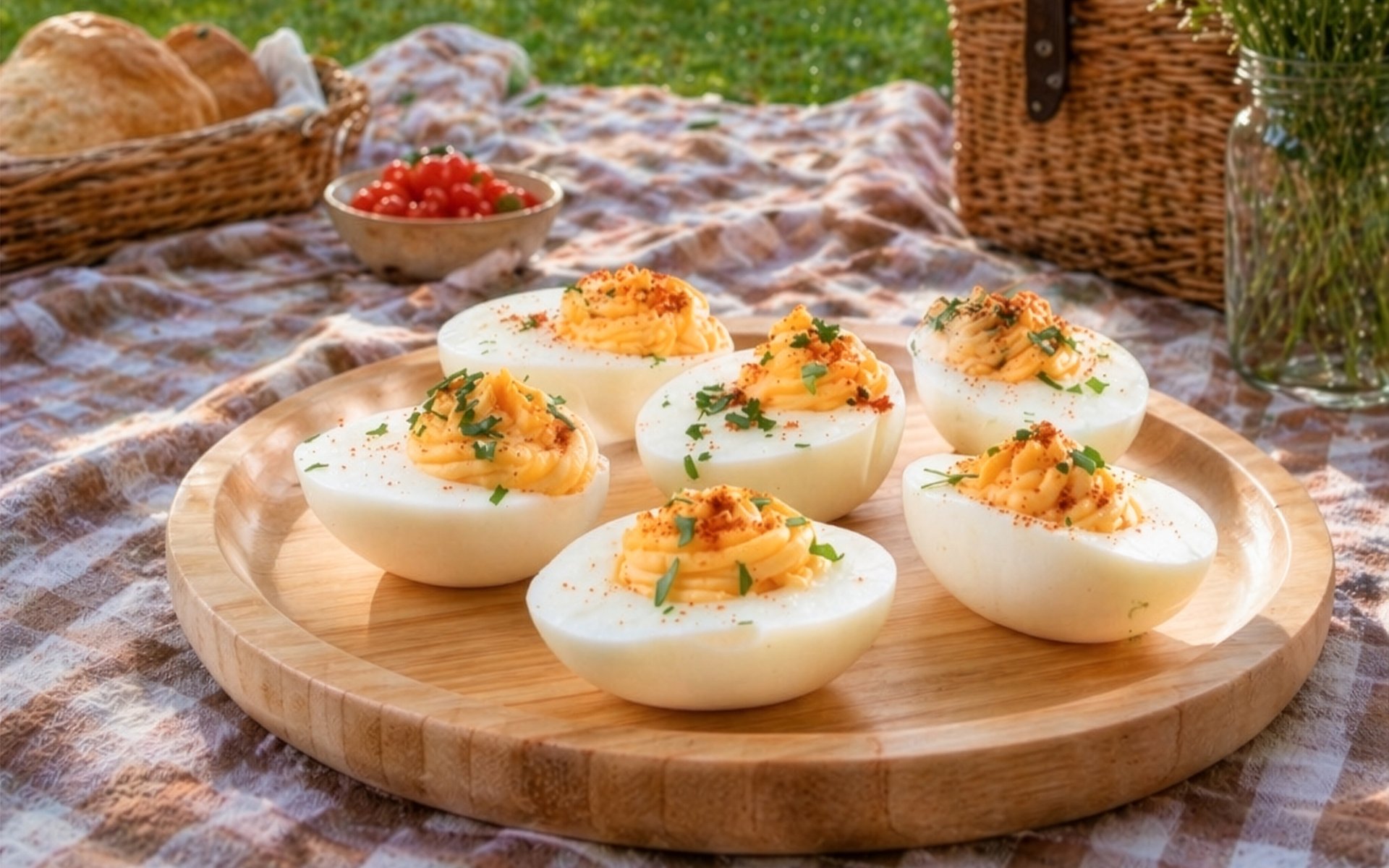
“Deviled Eggs” are a European-style side dish consisting of hard-boiled eggs that are cut in half, with the yolks removed and blended into a smooth mixture with seasonings such as mustard and mayonnaise. The seasoned yolk mixture is then returned to the egg whites, and the dish is typically finished with a sprinkling of paprika. Deviled Eggs are commonly served chilled and are distinguished by their slightly spicy and tangy flavor from mustard and paprika. Although the preparation method is simple and requires only a few ingredients, this dish carries a history that dates back to ancient times and has remained highly popular. In fact, the United States officially celebrates “National Deviled Eggs Day” on November 2 each year.
Origins of Stuffed Eggs in Medieval Europe
The technique of stuffing boiled eggs in European cuisine can be traced back to the 13th century. The earliest recorded recipe for stuffed eggs was documented in the region of Andalusia, located in what is now southern Spain. This unnamed recipe described mixing egg yolks with coriander, pepper, and onion juice, then blending the mixture with a fermented barley or fish-based sauce known in Spanish cuisine as “Murri,” along with salt and oil. Once the filling was prepared, it was placed back into the egg whites, the halves were reassembled, tied together with herbs, and then the whole egg was fried in oil.The Spread of Stuffed Eggs Across Europe
By the 15th century, stuffed boiled eggs had spread throughout Europe, with each country or region developing its own distinctive variations and ingredients. The general method still involved frying the eggs after stuffing them. These dishes were commonly referred to as “Stuffed eggs” or “Dressed eggs.” Over time, toward the late 18th century in the United Kingdom, a new culinary term emerged: “devil,” which referred to food that was heavily seasoned. This term later became widely used to describe dishes with strong, spicy, or tangy flavors. The phrase “Deviled eggs” first appeared in print in the year 1786.The Birth of Modern Deviled Eggs Recipe
A version of stuffed eggs that closely resembles the modern Deviled Eggs was first published in 1896 in The Boston Cooking School Cook Book by Fannie Farmer, one of the most influential American culinary experts of her time. She is well known for introducing standardized measurements into American cooking. Her recipe for stuffed eggs was the first to include mayonnaise as an ingredient. However, the dish did not become immediately popular, as making mayonnaise from scratch added complexity to the preparation.The Rise of Deviled Eggs in the 20th Century
It was not until 1920 that commercially produced mayonnaise became available on the market. Around the same time, the “Home-Making Helps” column in the Lethbridge Herald newspaper in Canada suggested that boiling and “deviling” eggs could help preserve large quantities of them. After World War II, mayonnaise became more widely accessible to the general public, leading to increased popularity of recipes that incorporated it, including stuffed eggs. The name “Deviled eggs” gained wider acceptance due to the spicy flavor imparted by mustard. Nevertheless, while “Deviled eggs” became the common term in the United States, the names “Stuffed eggs” or “Dressed eggs” continued to be used in certain contexts or by individuals who preferred to avoid terms with negative religious connotations.Deviled Eggs in Modern Food Culture
Deviled Eggs reached peak popularity in the 1950s, when refrigerators became common household appliances. Refrigeration allowed the ingredients to be preserved for longer periods and contributed to the development of the dish as one that is typically served cold. Today, Deviled Eggs are popular in Europe, North America, and Australia. They are commonly served as appetizers, party snacks, and picnic foods. They are also a traditional dish enjoyed during Easter celebrations. Tags :
Related Content

Discovering "Rice Pudding": An Asian Classic Dessert That Conquered Continents and Became a Global Delicacy