Vegan Wine
Last updated: 23 Apr 2026
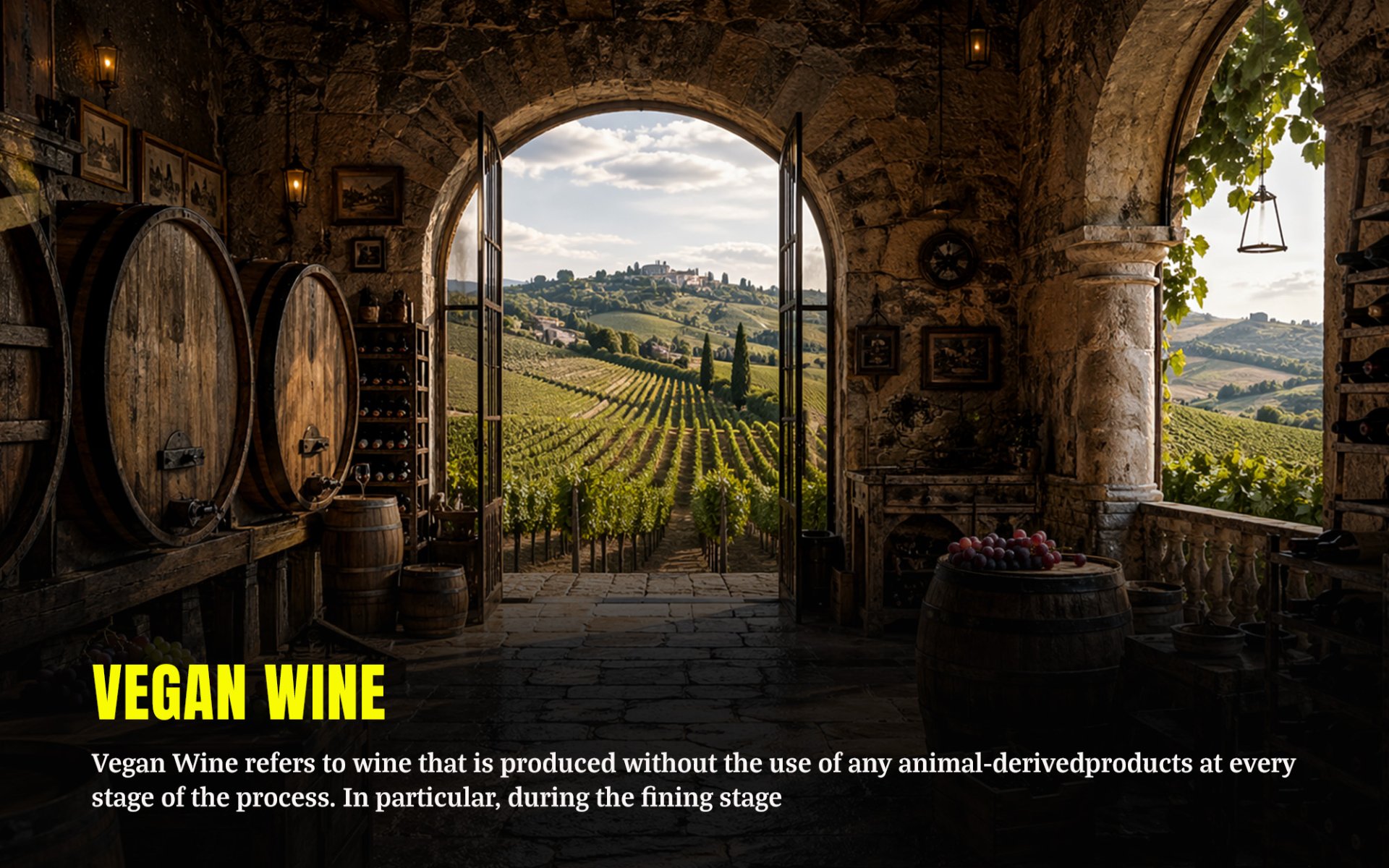
What is Vegan Wine and Why It Matters
In the modern world, as the term “Vegan Wine” gains widespread attention, many people may wonder, “Isn’t wine already vegan by nature?” At a basic level, the answer is yes. However, in industrial and commercial winemaking processes—aimed at achieving clarity and balance—certain practices are used that do not align with the principles of veganism.The Basics of Wine Fermentation
Naturally, wine is produced through the fermentation of grape juice by yeast, which converts sugar into alcohol. However, after fermentation, wine still contains sediments and suspended particles such as proteins, dead yeast cells, and phenolic compounds. These elements can cause the wine to appear cloudy or result in an imbalanced taste.What is Fining in Winemaking
To address this, winemakers employ a process called “fining,” which involves adding specific substances to bind with these particles. Once bound together, they settle at the bottom of the vessel, allowing the clear liquid to be separated. This results in a wine that is visually clear and more balanced in flavor.Animal-Derived Fining Agents in Wine Production
Fining agents vary in type, and some are derived from animals, which may conflict with vegan principles. Examples include:- Isinglass: A protein derived from fish bladders, commonly used to clarify white wines
- Gelatin: A protein obtained from boiling animal bones and skin, used to soften tannins in red wine
- Casein: A milk protein used to improve clarity in white wines and reduce oxidative aromas
- Egg albumin: Derived from egg whites, commonly used in red wines to reduce astringency
- Chitin: A fiber derived from the shells of crustaceans such as shrimp and crabs, also used in fining
Why Vegan Wine Avoids Animal-Based Substances
Although these substances are mostly removed in the final stages of production, their use during the process means the wine does not meet vegan standards.Modern and Natural Methods for Vegan Wine Production
To produce high-quality wines that are also vegan-friendly, many winemakers have adopted modern techniques or returned to more natural, traditional methods. These include:Natural Sedimentation in Vegan Winemaking
Natural sedimentation: Some producers choose not to use fining agents at all, allowing the wine to settle naturally over time. However, this method requires significantly more time and may increase production costs. Wines produced this way are often labeled as “Unfined” or “Unfiltered,” informing consumers about the production process and appealing to those who prioritize vegan or natural products.Plant-Based and Mineral Fining Alternatives
Use of mineral and plant-based fining agents, such as:- Bentonite clay: A natural clay mineral widely used for its ability to absorb proteins and haze-forming particles
- Activated carbon: Used to reduce color intensity and remove unwanted odors
- Kaolin clay: Another type of clay used for clarification
- Silica gel: Often used in combination with other agents to enhance filtration efficiency
- Limestone: A natural mineral used in clarification
- Vegetable proteins: Such as extracts from soybeans and peas
Challenges in Vegan Wine Labeling
One of the major challenges in the vegan wine industry is the lack of clear global labeling standards. In many countries, regulations do not require producers to list fining agents on labels, as these substances are considered processing aids rather than ingredients. Therefore, the easiest way for consumers to identify vegan wines is by looking for certification symbols.Recognizing Vegan Certification Labels
Common certification labels include:- The Vegan Society Trademark: A globally recognized flower symbol
- V-Label: A “V” symbol with a leaf, widely used in Europe
- Certified Vegan (Vegan.org): A strict certification standard from the United States
Growth of the Global Vegan Wine Market
In recent years, the global vegan wine market has shown steady growth and is expected to continue expanding in the long term. Several research reports highlight the strong potential of this market.According to IndustryARC, the global vegan wine market is projected to reach approximately USD 5 billion by 2030, with a compound annual growth rate (CAGR) of 9.8% between 2024 and 2030.
Meanwhile, a report by MetricWave Insights estimates the market value at around USD 3.15 billion in 2024, with projections reaching USD 4.93 billion by 2034, reflecting a CAGR of 5.10%.
Key Drivers Behind Vegan Wine Demand
Key factors driving this growth include:- Rising consumer awareness of health and wellness
- Increasing concern for environmental sustainability
- The growing popularity of plant-based diets
- Greater emphasis on ethical consumption, particularly among Millennials and Gen Z
Vegan Wine vs Organic and Biodynamic Wine
Vegan wine is clearly distinct from organic wine and biodynamic wine, as each represents a different aspect of production.Organic and biodynamic wines focus on vineyard practices, such as avoiding synthetic chemicals and maintaining soil and ecosystem health. In contrast, vegan wine focuses on the winemaking process after harvest, particularly avoiding the use of animal-derived substances during production.
Understanding the Difference Between Wine Categories
As a result, organic wine is not necessarily vegan, since animal-derived fining agents may still be used. On the other hand, vegan wine must strictly avoid any animal-derived inputs throughout the entire production process. Tags :
Related Content

Tracing the History of Southern Comfort: The Smooth, Fruity Whiskey from New Orleans, USA