Natural Wine
Last updated: 4 May 2026
The Rise of Natural Wine in the Modern Era
In the contemporary wine world, filled with technology and flavor manipulation, the concept of “Natural Wine” has become a widely discussed topic—not only among wine experts and sommeliers, but also among modern consumers who prioritize health, transparency in production, and environmental sustainability.Definition of Natural Wine
Natural Wine refers to wine made from grapes using minimal human intervention throughout the entire process—from cultivation to fermentation and bottling. It emphasizes the use of natural ingredients, avoids synthetic chemicals, and excludes additives commonly found in industrial wines.Historical Roots of Natural Wine
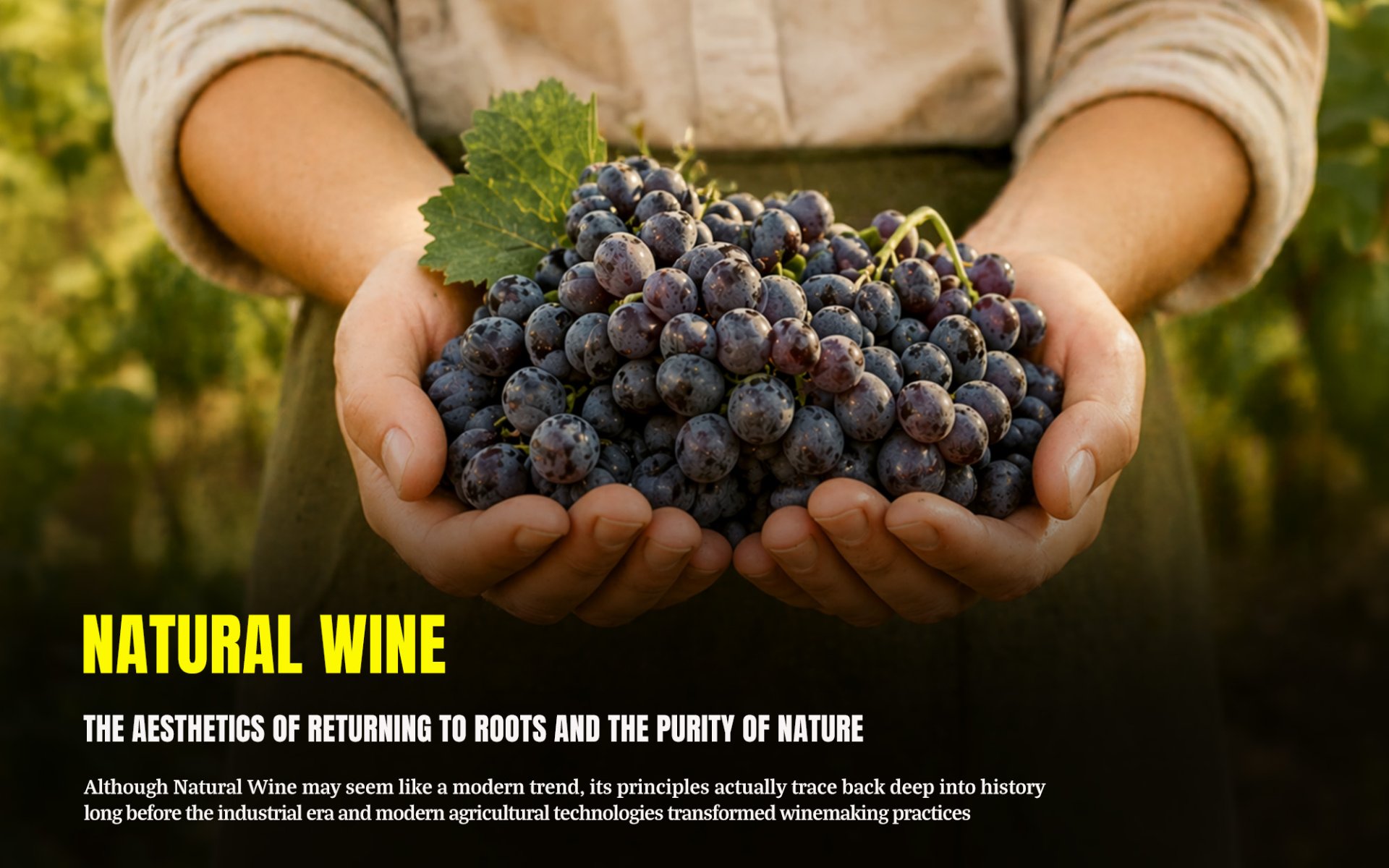
Although Natural Wine may seem like a modern trend, its principles actually trace back deep into history—long before the industrial era and modern agricultural technologies transformed winemaking practices.Early Winemaking as Natural Wine
Many food and beverage historians believe that the earliest wines in human civilization were essentially “Natural Wines,” as there were no additives or chemical processes involved. Fermentation occurred naturally through wild yeasts present in the environment.Industrialization and Its Impact on Winemaking
However, after World War II, European agriculture underwent significant changes. The widespread adoption of chemicals and industrial technologies also influenced winemaking, including the use of pesticides, synthetic fertilizers, commercial yeasts, and various additives to increase yield and standardize flavor profiles.The Birth of the Modern Natural Wine Movement
The modern Natural Wine movement began to take shape in the late 20th century in the Beaujolais region of France, led by a group of four winemakers—Marcel Lapierre, Jean Foillard, Charly Thevenet, and Guy Breton—collectively known as “The Gang of Four.”Philosophy of The Gang of Four
These winemakers shared a common goal: to revive traditional winemaking methods used by their ancestors before industrialization. They chose to avoid chemical use and minimize intervention throughout the production process.Influence of Wine Science Pioneers
Their philosophy was heavily influenced by Jules Chauvet and Jacques Neauport, scientists who studied and advocated for low-intervention winemaking, emphasizing respect for the natural processes of grapes and yeast.Natural Wine as a Return to Authenticity
This movement was not a rejection of the wine industry, but rather a “return to roots”—prioritizing authenticity, natural expression, and the true identity of the vineyard.Global Expansion of Natural Wine
Before long, the concept of Natural Wine spread internationally. A new generation of winemakers in countries such as Italy, Spain, Austria, the United States, and Australia began embracing low-intervention practices, focusing on expressing the character of grapes and terroir.Health Considerations of Natural Wine
Although Natural Wine is popular among health-conscious consumers, claims regarding its “gut health benefits” should be approached with caution. Some believe that unfiltered wine and the use of natural yeast may introduce beneficial microorganisms.Scientific Perspective on Wine and Probiotics
However, Professor David Mills from UC Davis points out that wine is not a reliable source of probiotics, and there is currently no scientific evidence to suggest that microorganisms in wine provide the same health benefits as probiotic foods like yogurt or kefir.Research on Sulfites and Gut Microbiota
Furthermore, a study published in the Journal of Agricultural and Food Chemistry (2025) found that sulfur dioxide (SO₂) in wine may affect gut microbiota by slightly reducing certain beneficial bacteria. However, the overall impact varies depending on individual microbiome composition and must also be considered alongside the effects of alcohol itself.Key Benefits of Natural Wine
For these reasons, most experts agree that the clearer, evidence-based benefits of Natural Wine lie in:- Reducing chemical use in agriculture
- Promoting environmental sustainability
- Supporting small-scale producers and local communities
Core Principles of Natural Wine
Although there is currently no universal legal definition for Natural Wine, it is generally guided by the following principles:- Grapes must be grown using organic or biodynamic methods
- No synthetic pesticides or chemical fertilizers
- Use of natural (wild) yeast for fermentation
- No chemical additives such as acids, enzymes, or artificial coloring
- Unfiltered or minimally filtered
- Very low or no added sulfites
Legal Recognition of Natural Wine in Georgia
In April 2025, the Parliament of Georgia officially passed legislation defining Natural Wine—making it the first country in the world to establish a legal definition.According to this law, Natural Wine must be produced through the natural fermentation of grape juice certified as organic, with strict avoidance of synthetic chemicals and minimal intervention throughout the production process.
Differences Between Natural Organic and Biodynamic Wine
Many consumers often confuse Natural Wine with Organic Wine and Biodynamic Wine. While all three share a commitment to nature, they differ in key aspects:What Is Organic Wine
Organic Wine refers to wine made from grapes grown without synthetic chemicals such as pesticides or fertilizers, with clear certification systems like USDA Organic or EU standards. However, certain additives are still permitted during production—up to around 35 substances in the EU.Biodynamic Wine and Holistic Agriculture
Biodynamic Wine builds upon organic practices using the holistic agricultural philosophy of Rudolf Steiner. Vineyards are treated as self-sustaining ecosystems, with planting guided by astronomical calendars and natural preparations. Certification is provided by organizations such as Demeter International.Natural Wine and Minimal Intervention Philosophy
Natural Wine, on the other hand, differs in that it lacks a universal certification system and places the strongest emphasis on minimal intervention—both in the vineyard and during winemaking. It typically avoids all additives or uses them at the lowest possible levels, especially during fermentation and aging, which distinguishes it from certified organic wines. Tags :
Related Content
Understanding Top-Fermentation and Bottom-Fermentation : Ancient Techniques in Beer Brewing


Discovering "Non-Alcoholic Beer": An Alternative for Socializing Without Getting Drunk