Manuka Honey & Green Tea
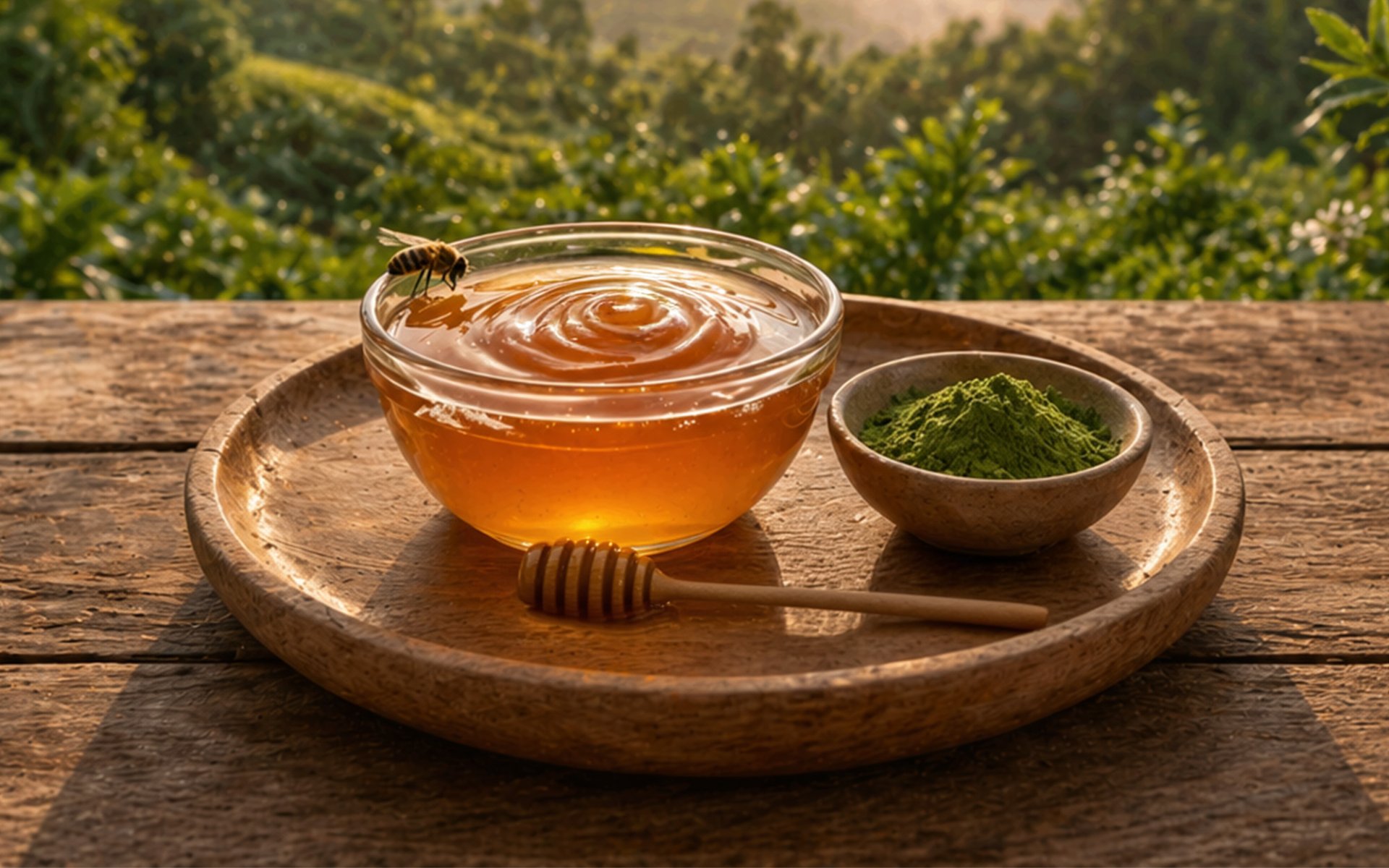
Manuka Honey: Nature’s Remarkable Honey
Manuka honey is a special type of honey produced by bees that collect nectar from the flowers of the Manuka tree (Leptospermum scoparium), found in New Zealand and parts of Australia. Its key active compound is Methylglyoxal (MGO), which provides significantly stronger antibacterial effects compared to regular honey.
In addition, Manuka honey has been shown to inhibit drug-resistant bacteria such as Staphylococcus aureus and Escherichia coli (E. coli), which are associated with infections in the body. It also possesses anti-inflammatory properties and supports the healing of chronic wounds effectively.
In terms of quality assessment, Manuka honey is graded using the UMF (Unique Manuka Factor) system, an international standard that measures key compounds such as MGO, DHA, and Leptosperin. This ensures the product’s purity, potency, and overall quality. With these unique characteristics, Manuka honey is not only a natural sweetener but also a functional ingredient with recognized health benefits worldwide.
Consuming 1–2 teaspoons of Manuka honey daily can support various aspects of health, including boosting immunity, helping prevent colds, and relieving cough symptoms. It is also beneficial for digestive health, particularly in cases of stomach infections such as Helicobacter pylori, a major cause of gastritis and stomach ulcers.
Skin Benefits of Manuka Honey
Wound Healing and Skin Repair : Manuka honey is scientifically recognized for its antimicrobial and wound-healing properties. It helps inhibit the growth of harmful microorganisms and reduces inflammation, making it useful in clinical treatments for infected and chronic wounds.
Natural Protective Barrier : Its viscous texture forms a protective film over the skin, shielding it from environmental stressors, reducing bacterial buildup, and retaining moisture to prevent dryness.
Collagen Stimulation : The natural sugars in Manuka honey act as a source of glucose, providing energy for key cells such as fibroblasts and endothelial cells, which play a direct role in collagen production and skin regeneration.
Green Tea : A Potent Source of Antioxidants Green tea is a beverage that originated in China and has been widely consumed around the world for centuries. Its key highlight is the abundance of catechins, a group of beneficial polyphenols, particularly Epigallocatechin gallate (EGCG), which is considered a highly potent antioxidant.
Research published in the journal MDPI Molecules clearly indicates that EGCG plays a role in enhancing immune system function and effectively reducing the risk of inflammation and immune-related diseases.
Skin Benefits of Catechins in Green Tea
Antioxidant Protection : EGCG contains multiple hydroxyl groups, enabling it to effectively neutralize free radicals caused by UV radiation and pollution, reducing skin cell damage and slowing the aging process.
UV Protection : Catechins provide biological sun protection by enhancing the skin’s resistance to UV radiation, reducing the risk of sunburn, pigmentation, and premature aging.
Anti-Inflammatory Effects : They help soothe inflammatory skin conditions such as acne and rosacea by reducing inflammatory responses at the cellular level, restoring skin balance.
Improved Hydration and Elasticity : Studies show that both consumption and topical application of green tea extracts can significantly improve skin hydration, elasticity, and texture.
Melanin Inhibition : EGCG has been reported to reduce melanin synthesis, which is responsible for dark spots and pigmentation, resulting in a more even and radiant skin tone.
The Synergy of Manuka Honey and Green Tea
When Manuka honey and green tea are combined, they create a synergistic effect that enhances overall health benefits. Manuka honey provides antimicrobial support, boosts immunity, and aids tissue repair, while green tea delivers antioxidant protection, reduces inflammation, and protects cells from degeneration.
Together, they complement each other at multiple levels—supporting the immune system, improving skin health, and promoting overall well-being—resulting in a balanced approach to inner and outer health.
How to Combine Manuka Honey and Green Tea
Basic Manuka Honey Green Tea Recipe
- Brew 1 green tea bag with hot water at approximately 80°C
- Steep for 3–5 minutes to extract beneficial compounds
- Let the tea cool slightly (not too hot)
- Add 1 teaspoon of Manuka honey (UMF 10+)
Allowing the tea to cool slightly before adding honey is crucial to preserve the beneficial properties of MGO and enzymes.
Recommended Consumption
Drink twice daily (morning and evening) to help boost immunity, nourish the skin, and refresh the body.
Healthy Smoothie Recipe
Ingredients:
- Leafy greens (such as kale, spinach, or celery)
- Mixed fruits (such as banana, apple, or kiwi)
- 1 teaspoon Manuka honey
- 1 teaspoon matcha green tea powder
- A small amount of water or plant-based milk (such as almond milk)
Method:
Blend all ingredients until smooth. This smoothie provides a complete combination of vitamins, minerals, and antioxidants in a single glass.
Brightening Face Mask Recipe
Ingredients:
- 1 tablespoon Manuka honey
- 2 tablespoons brewed green tea
- A small amount of turmeric powder
Mix all ingredients until well combined. Apply evenly to a clean face, leave on for approximately 15 minutes, then rinse with clean water. Use 2–3 times per week. This mask helps reduce acne inflammation, control bacteria, and enhance skin radiance.