Taberu Layu (食べるラー油)
Last updated: 10 Jun 2026
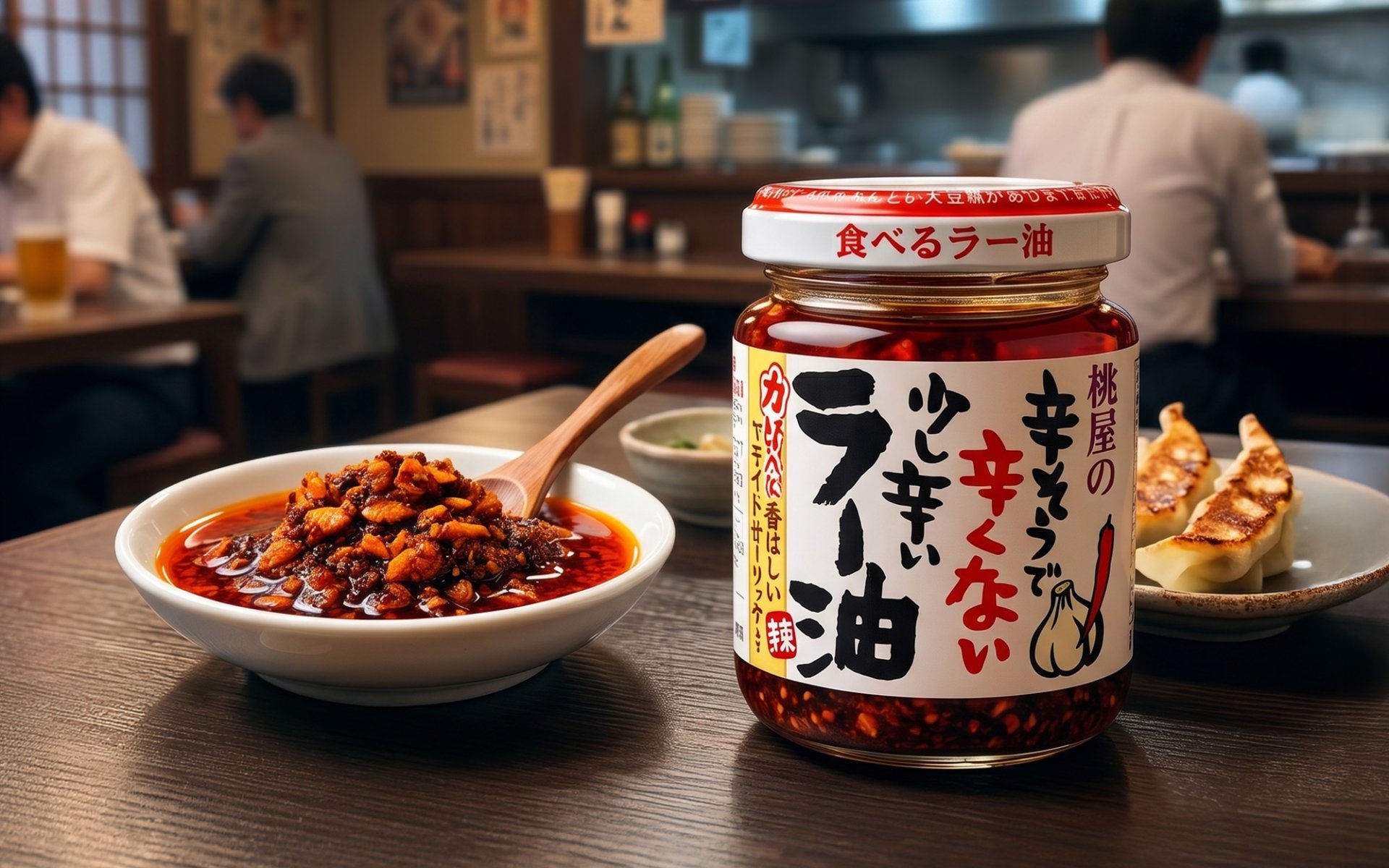
In Japanese food culture, condiments have long played an essential role in enhancing flavors and defining the character of various dishes. Most people are familiar with traditional Japanese seasonings such as soy sauce, miso, and wasabi. However, in the late 2000s, a new culinary phenomenon emerged in Japan with the creation of a unique condiment known as Taberu Layu.
Traditional Japanese Rayu typically consisted of a clear reddish-orange oil made by infusing sesame oil with dried chili peppers and various spices. After the infusion process, the solid ingredients were strained out, leaving behind a fragrant chili oil that was commonly used in small amounts to enhance dishes such as gyoza, ramen, and other noodle-based meals.
This innovative product became known among food enthusiasts as “Ishi-Ra,” short for Ishigaki Rayu (“Ishigaki Chili Oil”). Thanks to its unique taste and texture, it quickly gained popularity through word-of-mouth recommendations among tourists visiting Okinawa, gradually building a devoted following across Japan.
The growing popularity of Ishi-Ra inspired major food manufacturers to develop their own versions, ultimately leading to the creation and widespread commercialization of Taberu Layu.
What truly set Taberu Layu apart was its development philosophy. Rather than focusing solely on adding heat, manufacturers emphasized flavor complexity, texture, and versatility.
One of its most distinctive characteristics is the high ratio of solid ingredients to oil. While traditional chili oils consist primarily of flavored oil, Taberu Layu is packed with fried garlic, crispy onions, and other flavorful ingredients. In some varieties, the solid ingredients account for nearly as much of the product as the oil itself. This results in a crunchy texture that allows consumers to eat it directly rather than simply using it as a condiment.
Another important feature is its approachable spice level. Unlike many traditional Chinese chili oils that prioritize intense heat, Taberu Layu reduces the spiciness and instead highlights umami richness, the aroma of fried garlic, and the savory depth of its ingredients. This makes it appealing even to people who do not typically enjoy spicy foods.
Thanks to these qualities, Taberu Layu has evolved beyond the role of a simple condiment. It has become an integral culinary ingredient capable of transforming everyday meals and creating entirely new dining experiences. As a result, it is widely regarded as one of Japan’s most successful food innovations of the 21st century.
Japanese specialty stores, imported food supermarkets, and e-commerce platforms around the world began offering Taberu Layu to meet growing consumer interest. It gained particular traction in the United States, Europe, and Southeast Asia, where Japanese food culture continues to enjoy widespread popularity.
Today, Taberu Layu has evolved from a uniquely Japanese food trend into a globally recognized condiment, appreciated for its rich flavor, satisfying texture, and remarkable versatility in the kitchen.
The Origins of Traditional Rayu in Japan
Before Taberu Layu was introduced, Japan already had its own version of chili oil called Rayu, a condiment that originated from Chinese culinary traditions and was brought to Japan alongside the growing popularity of Chinese cuisine during the 20th century.Traditional Japanese Rayu typically consisted of a clear reddish-orange oil made by infusing sesame oil with dried chili peppers and various spices. After the infusion process, the solid ingredients were strained out, leaving behind a fragrant chili oil that was commonly used in small amounts to enhance dishes such as gyoza, ramen, and other noodle-based meals.
The Birth of Taberu Layu on Ishigaki Island
The story of Taberu Layu as we know it today began on Ishigaki Island in Okinawa Prefecture, where a small restaurant called Pengin Shokudo developed a distinctive chili oil unlike anything available at the time. The restaurant incorporated crispy fried garlic and fried onions into the chili oil, creating a condiment that offered not only flavor but also texture.This innovative product became known among food enthusiasts as “Ishi-Ra,” short for Ishigaki Rayu (“Ishigaki Chili Oil”). Thanks to its unique taste and texture, it quickly gained popularity through word-of-mouth recommendations among tourists visiting Okinawa, gradually building a devoted following across Japan.
Unique Okinawan Ingredients and the Rise of Ishi-Ra
One of the key factors behind Ishi-Ra’s success was its use of distinctive local Okinawan ingredients. These included Shima Togarashi, a native Okinawan chili pepper known for its unique aroma and heat, as well as Kokuto (Okinawan black sugar) and various local spices. Together, these ingredients created a harmonious balance of spiciness, sweetness, and savory depth that distinguished it from traditional chili oils.The growing popularity of Ishi-Ra inspired major food manufacturers to develop their own versions, ultimately leading to the creation and widespread commercialization of Taberu Layu.
More Than Just a Condiment : Texture and Umami
Unlike conventional chili oils, Taberu Layu was not designed merely as a seasoning. Instead, it was created to be enjoyed as a food ingredient in its own right.What truly set Taberu Layu apart was its development philosophy. Rather than focusing solely on adding heat, manufacturers emphasized flavor complexity, texture, and versatility.
One of its most distinctive characteristics is the high ratio of solid ingredients to oil. While traditional chili oils consist primarily of flavored oil, Taberu Layu is packed with fried garlic, crispy onions, and other flavorful ingredients. In some varieties, the solid ingredients account for nearly as much of the product as the oil itself. This results in a crunchy texture that allows consumers to eat it directly rather than simply using it as a condiment.
Another important feature is its approachable spice level. Unlike many traditional Chinese chili oils that prioritize intense heat, Taberu Layu reduces the spiciness and instead highlights umami richness, the aroma of fried garlic, and the savory depth of its ingredients. This makes it appealing even to people who do not typically enjoy spicy foods.
Culinary Versatility : How to Enjoy Taberu Layu
Its versatility has also contributed significantly to its popularity. Because of its balanced flavor profile, Taberu Layu pairs well with a wide range of dishes, including steamed rice, ramen, gyoza, tofu, and many other traditional Japanese foods. It has also found its way into more contemporary dishes such as salads, pasta, and even yogurt. Some Japanese consumers enjoy using it as a topping for pizza, fried eggs, and various fusion dishes to add both flavor and texture.Thanks to these qualities, Taberu Layu has evolved beyond the role of a simple condiment. It has become an integral culinary ingredient capable of transforming everyday meals and creating entirely new dining experiences. As a result, it is widely regarded as one of Japan’s most successful food innovations of the 21st century.
From a Local Trend to a Global Sensation
Following its remarkable success in Japan, the popularity of Taberu Layu gradually expanded into international markets. Demand grew particularly among consumers who enjoy Japanese cuisine and have an interest in Asian food culture.Japanese specialty stores, imported food supermarkets, and e-commerce platforms around the world began offering Taberu Layu to meet growing consumer interest. It gained particular traction in the United States, Europe, and Southeast Asia, where Japanese food culture continues to enjoy widespread popularity.
Today, Taberu Layu has evolved from a uniquely Japanese food trend into a globally recognized condiment, appreciated for its rich flavor, satisfying texture, and remarkable versatility in the kitchen.
Tags :
Related Content

Get to Know Salsa: One of Mexican Cuisines Classic Dishes, Renowned for Its Spicy Kick and Refreshing Flavor

Gravlax & New Potatoes: Discovering a Dish Rooted in Scandinavian Food Preservation Traditions