Sardinhas Assadas
Last updated: 8 Jul 2026
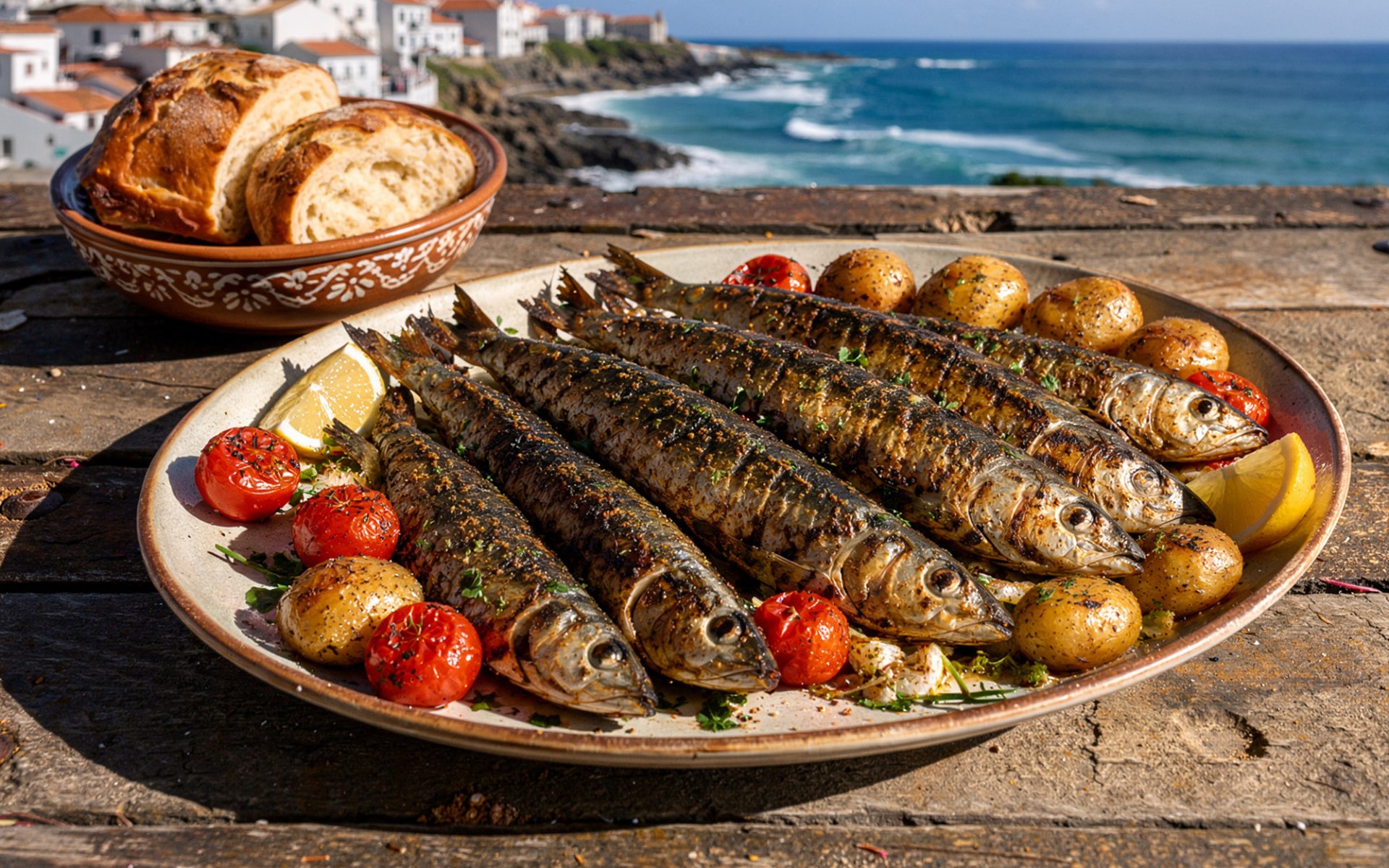
Sardinhas Assadas, or Portuguese charcoal-grilled sardines, is one of Portugal's most iconic national dishes. Celebrated for its remarkable simplicity, the dish consists of fresh whole sardines seasoned only with coarse sea salt before being grilled over hot charcoal until the skin becomes crisp and smoky while the flesh remains tender and juicy. Traditionally, the sardines are served atop thick slices of rustic bread, allowing the flavorful natural oils to soak into the bread and create an unforgettable combination.
Archaeological discoveries around Lisbon and along Portugal's coastline reveal that the Romans developed a sophisticated fishing and fish-processing industry, particularly for sardines and other small marine fish. These fish became the principal ingredient in Garum, the famous fermented fish sauce that was widely consumed throughout the Roman Empire and is considered one of the earliest ancestors of modern fish sauce.
The prosperity of Garum production in what is now Portugal demonstrates that the Atlantic waters surrounding the country have been rich in sardines since ancient times, making the species an important contributor to the region's economy for centuries.
Portuguese fishermen relied on generations of accumulated knowledge, carefully observing weather conditions, wind patterns, ocean currents, and fish behavior to determine the best times to set sail. This traditional wisdom has been passed down through families for centuries and remains an important part of Portugal's maritime cultural heritage.
Among these celebrations, the Festival of Saint Anthony, held on 12–13 June in Lisbon, is the largest and most famous. As the patron saint of the Portuguese capital, Saint Anthony is deeply revered for his compassion toward the poor and his lifelong dedication to charitable works and religious teaching.
Sardines became the festival's signature food not by coincidence, but because of a perfect combination of natural and social factors. Portugal's sardine fishing season typically runs from May through October, coinciding perfectly with the celebrations. During early summer, sardines reach their peak condition, becoming plump, rich in natural oils, and exceptionally flavorful—qualities that make them ideal for charcoal grilling.
Beyond seasonal abundance, sardines also reflected the everyday lives of ordinary Portuguese people. During the late nineteenth and early twentieth centuries, sardines were inexpensive and readily available, serving as a vital source of protein for working-class families and fishing communities. Larger and more expensive fish were often reserved for wealthier households, making sardines not only a staple food but also a symbol of simplicity, abundance, and community.
Equally important is the atmosphere in which the dish is enjoyed. Rather than dining formally in restaurants, locals gather along streets, public squares, and outdoor food stalls, eating grilled sardines while surrounded by the irresistible aroma of charcoal smoke, live traditional music, and vibrant community celebrations. This festive environment perfectly captures the spirit of the Portuguese summer.
Alongside grilled sardines, several other traditional dishes are commonly enjoyed during the festivities. Among the most popular are:
A 2,000-Year Legacy: From the Roman Empire to Garum
Portugal's deep connection with sardines stretches back more than 2,000 years to the time when Lisbon was known as Olissipo under the Roman Empire. During this period, the city flourished as a major port and commercial center at the mouth of the Tagus River.Archaeological discoveries around Lisbon and along Portugal's coastline reveal that the Romans developed a sophisticated fishing and fish-processing industry, particularly for sardines and other small marine fish. These fish became the principal ingredient in Garum, the famous fermented fish sauce that was widely consumed throughout the Roman Empire and is considered one of the earliest ancestors of modern fish sauce.
The prosperity of Garum production in what is now Portugal demonstrates that the Atlantic waters surrounding the country have been rich in sardines since ancient times, making the species an important contributor to the region's economy for centuries.
The Atlantic Heritage and Fishing Traditions
With more than 900 kilometers of Atlantic coastline and the influence of cold, nutrient-rich ocean currents, Portugal provides an ideal habitat and spawning ground for sardines. As a result, sardine fishing became an essential way of life for coastal communities throughout the country's history.Portuguese fishermen relied on generations of accumulated knowledge, carefully observing weather conditions, wind patterns, ocean currents, and fish behavior to determine the best times to set sail. This traditional wisdom has been passed down through families for centuries and remains an important part of Portugal's maritime cultural heritage.
Festas dos Santos Populares : A Summer Celebration
Although sardines had long been abundant along Portugal's coast, the tradition of grilling them over charcoal—and their transformation into a national culinary symbol—emerged during the Middle Ages. The custom became closely associated with the Festas dos Santos Populares (Popular Saints' Festivals), a series of celebrations held throughout June in honor of Portugal's three beloved saints: Saint Anthony (Santo António), Saint John (São João), and Saint Peter (São Pedro).Among these celebrations, the Festival of Saint Anthony, held on 12–13 June in Lisbon, is the largest and most famous. As the patron saint of the Portuguese capital, Saint Anthony is deeply revered for his compassion toward the poor and his lifelong dedication to charitable works and religious teaching.
Sardines became the festival's signature food not by coincidence, but because of a perfect combination of natural and social factors. Portugal's sardine fishing season typically runs from May through October, coinciding perfectly with the celebrations. During early summer, sardines reach their peak condition, becoming plump, rich in natural oils, and exceptionally flavorful—qualities that make them ideal for charcoal grilling.
Beyond seasonal abundance, sardines also reflected the everyday lives of ordinary Portuguese people. During the late nineteenth and early twentieth centuries, sardines were inexpensive and readily available, serving as a vital source of protein for working-class families and fishing communities. Larger and more expensive fish were often reserved for wealthier households, making sardines not only a staple food but also a symbol of simplicity, abundance, and community.
How to Enjoy Traditional Sardinhas Assadas
The traditional way of enjoying Sardinhas Assadas is beautifully uncomplicated. Freshly grilled sardines are placed directly onto thick slices of rustic bread, which absorb the delicious juices and natural oils released during grilling. They are eaten almost entirely unseasoned, with only the coarse sea salt added before grilling, allowing the fresh flavor of the fish to shine.Equally important is the atmosphere in which the dish is enjoyed. Rather than dining formally in restaurants, locals gather along streets, public squares, and outdoor food stalls, eating grilled sardines while surrounded by the irresistible aroma of charcoal smoke, live traditional music, and vibrant community celebrations. This festive environment perfectly captures the spirit of the Portuguese summer.
Alongside grilled sardines, several other traditional dishes are commonly enjoyed during the festivities. Among the most popular are:
- Caldo Verde: Portugal's beloved soup made with potatoes and kale.
- Bifana: A flavorful Portuguese sandwich filled with marinated pork.
Tags :
Related Content


Discover Frisée Fine: The Elegant French Curly Endive and Its Remarkable Health Benefits