Summer Pudding
Last updated: 14 Jul 2026
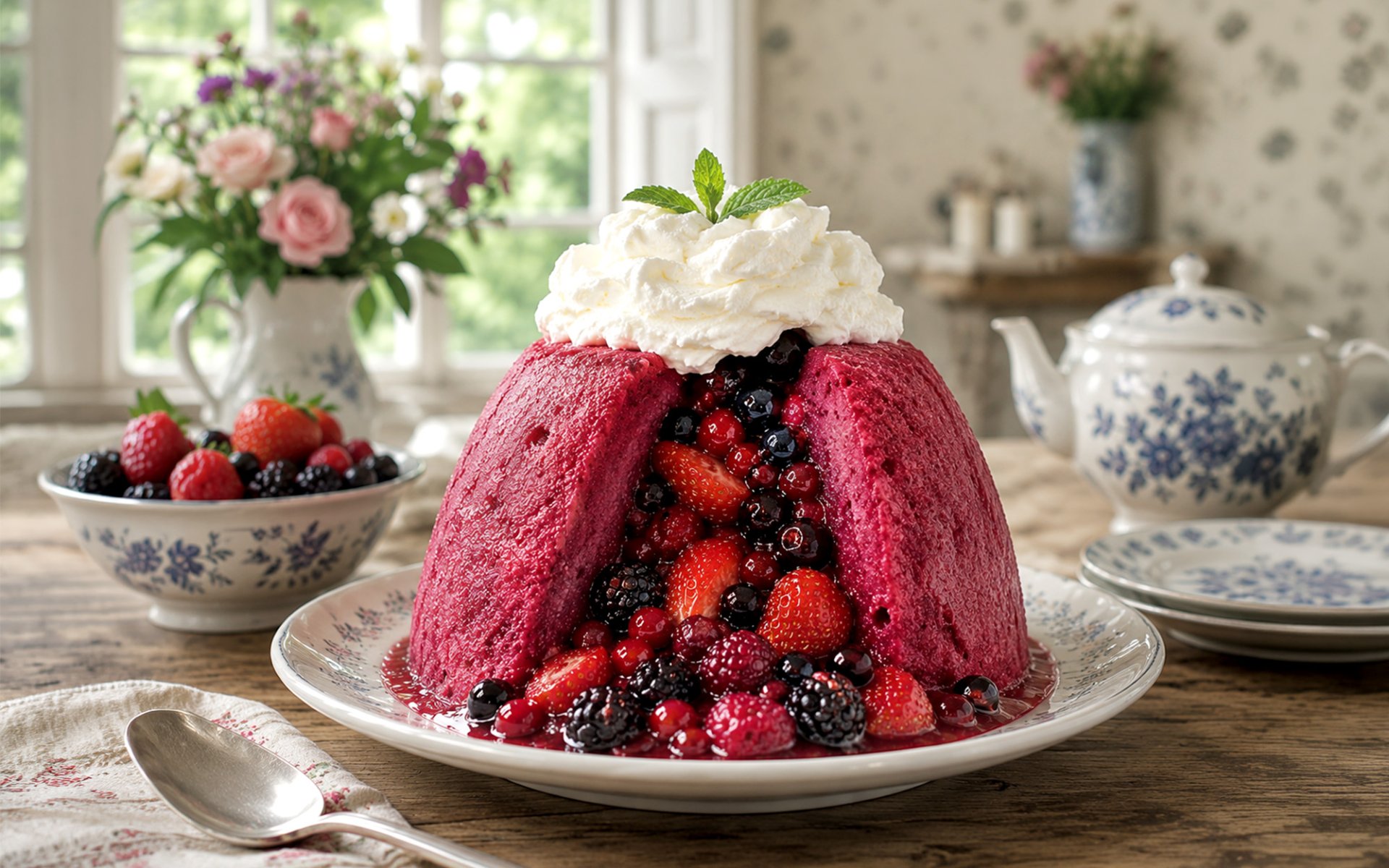
Summer Pudding is one of Britain's most beloved classic desserts, perfectly capturing the freshness and abundance of the English summer. It is traditionally made by lining a pudding basin or bowl with thin slices of white bread, filling it with sugar-simmered mixed berries, and sealing the top with another layer of bread. The pudding is then chilled for several hours—or preferably overnight—allowing the bread to absorb the vibrant berry juices and transform into a beautiful deep pink or purple. Once unmolded, it is typically served with fresh cream, custard, or crème fraîche.
One of the earliest documented examples appears in the second edition of Modern Cookery in All Its Branches by Eliza Acton, published in 1845, which included a recipe titled "Queen Mab's Summer Pudding." Although the recipe differs considerably from the version enjoyed today, it is regarded as one of the earliest records illustrating the evolution of what eventually became modern Summer Pudding.
The dessert in its present form is generally believed to have been developed during the Victorian era in the nineteenth century. At the time, the diets of Britain's middle and upper classes were typically rich in fat and calories. Popular desserts often included suet puddings made with beef or mutton fat, flour, and dried fruit, such as Plum Pudding and Spotted Dick.
As these heavy foods remained staples for many years, increasing numbers of people began experiencing health problems, including gout, indigestion, and other digestive disorders. By the late Victorian period, healthier eating habits and lighter, more easily digestible foods had become increasingly fashionable.
Eliminating desserts altogether, however, often reduced patients' enjoyment of meals. As a result, cooks working in these health resorts began developing lighter desserts made with fresh seasonal ingredients. White bread was lined inside a bowl or pudding basin, filled with vitamin-rich berries, and left to absorb their naturally sweet and slightly acidic juices until it became soft, moist, and flavorful.
These early versions were originally known as Hydropathic Pudding. Some historical records also refer to the dessert as Malvern Pudding, believed to have been named after Great Malvern in Worcestershire, one of England's most famous spa towns. The town's hydropathic institutions, founded by Dr. James Wilson and Dr. James Manby Gully during the 1840s, played a significant role in promoting hydrotherapy alongside dietary reform.
Food historians generally agree that this transition occurred during the early twentieth century, when the popularity of hydropathic establishments began to decline due to advances in modern medicine and changing attitudes toward health and nutrition. As the dessert gradually lost its association with convalescent diets, it became appreciated simply as a delicious seasonal dessert suitable for everyday enjoyment.
At the same time, the name Hydropathic Pudding, with its strong association with medical treatment and recovery, no longer appealed to home cooks or commercial publishers. Cookbook authors and women's magazines therefore began using the name Summer Pudding, highlighting the abundance of fresh berries available during the summer months—the very essence of the dessert.
Historical records show that the name Summer Pudding first appeared in The Times Cookery Book in 1904, after which it rapidly gained popularity and has remained the standard name ever since.
The Origins : From Victorian Feasts to Lighter Treats
Although the name Summer Pudding first appeared in a published cookbook in 1904, the origins of the dessert can be traced back to well before the nineteenth century. During this period, several British desserts were prepared using a similar concept: bread was wrapped around cooked fruit and left to absorb the juices, creating a uniquely soft texture and rich fruity flavor.One of the earliest documented examples appears in the second edition of Modern Cookery in All Its Branches by Eliza Acton, published in 1845, which included a recipe titled "Queen Mab's Summer Pudding." Although the recipe differs considerably from the version enjoyed today, it is regarded as one of the earliest records illustrating the evolution of what eventually became modern Summer Pudding.
The dessert in its present form is generally believed to have been developed during the Victorian era in the nineteenth century. At the time, the diets of Britain's middle and upper classes were typically rich in fat and calories. Popular desserts often included suet puddings made with beef or mutton fat, flour, and dried fruit, such as Plum Pudding and Spotted Dick.
As these heavy foods remained staples for many years, increasing numbers of people began experiencing health problems, including gout, indigestion, and other digestive disorders. By the late Victorian period, healthier eating habits and lighter, more easily digestible foods had become increasingly fashionable.
Hydropathic Pudding : A Spa Town Creation
Members of Britain's middle and upper classes frequently visited hydropathic establishments, or water-cure spas, which became important centers for health and nutritional reform. These institutions emphasized not only hydrotherapy through bathing and mineral water treatments but also carefully controlled diets. Physicians commonly advised patients to avoid foods that were high in fat, difficult to digest, or heavily seasoned.Eliminating desserts altogether, however, often reduced patients' enjoyment of meals. As a result, cooks working in these health resorts began developing lighter desserts made with fresh seasonal ingredients. White bread was lined inside a bowl or pudding basin, filled with vitamin-rich berries, and left to absorb their naturally sweet and slightly acidic juices until it became soft, moist, and flavorful.
These early versions were originally known as Hydropathic Pudding. Some historical records also refer to the dessert as Malvern Pudding, believed to have been named after Great Malvern in Worcestershire, one of England's most famous spa towns. The town's hydropathic institutions, founded by Dr. James Wilson and Dr. James Manby Gully during the 1840s, played a significant role in promoting hydrotherapy alongside dietary reform.
How It Became "Summer Pudding"
Many people wonder how a dessert once known as Hydropathic Pudding or Malvern Pudding eventually became Summer Pudding.Food historians generally agree that this transition occurred during the early twentieth century, when the popularity of hydropathic establishments began to decline due to advances in modern medicine and changing attitudes toward health and nutrition. As the dessert gradually lost its association with convalescent diets, it became appreciated simply as a delicious seasonal dessert suitable for everyday enjoyment.
At the same time, the name Hydropathic Pudding, with its strong association with medical treatment and recovery, no longer appealed to home cooks or commercial publishers. Cookbook authors and women's magazines therefore began using the name Summer Pudding, highlighting the abundance of fresh berries available during the summer months—the very essence of the dessert.
Historical records show that the name Summer Pudding first appeared in The Times Cookery Book in 1904, after which it rapidly gained popularity and has remained the standard name ever since.
The Science and Technique of the Perfect Summer Pudding
Although Summer Pudding contains only a handful of ingredients and requires no baking, producing a perfectly shaped pudding with the ideal texture requires careful attention to the properties of each ingredient—from selecting the bread and berries to assembling and chilling the finished dessert.- Choosing the Right Bread: One of the keys to a successful Summer Pudding is using one- or two-day-old white bread rather than freshly baked bread. Fresh bread retains a high moisture content and absorbs berry juices too quickly, causing the crumb structure to become overly soft and fragile. As a result, the pudding may collapse when unmolded. Slightly stale bread, by contrast, contains less moisture and has a firmer starch and gluten structure. This allows it to absorb the fruit juices gradually while maintaining its shape, effectively acting like a sponge that produces a pudding with a firm yet tender texture.
- The Role of Berries and Pectin: Using a variety of berries is not simply a matter of adding color or complexity of flavor—it also contributes important functional properties. Raspberries and strawberries provide sweetness and fragrance, while blackcurrants and redcurrants contribute acidity, deeper color, and higher levels of pectin. Pectin is a naturally occurring soluble fiber that increases the viscosity of the fruit juices, producing a lightly thickened syrup that adheres more effectively to the bread. This helps the pudding hold its shape beautifully when turned out of the mold without cracking or collapsing.
- Precision in Assembly: Assembling Summer Pudding requires considerable precision. The slices of bread must be carefully trimmed and fitted snugly against the curved sides of the pudding basin, ensuring there are no gaps through which the berry juices might escape during chilling.
- Pressing and Chilling: Once the cooked berries have been added, the top is sealed with another layer of bread. A plate or disk weighted with a heavy object is traditionally placed on top before the pudding is refrigerated overnight. The pressure gently compresses the bread and fruit into a cohesive structure while allowing the juices to penetrate every layer evenly. When unmolded, the pudding displays its signature vibrant pinkish-purple color, a beautifully defined shape, and a firm yet delicate texture.
Tags :
Related Content

Tracing the History of Ranch Dressing: An American-Style Salad Dressing with Buttermilk as its Main Ingredient