Grilled Corn on the Cob
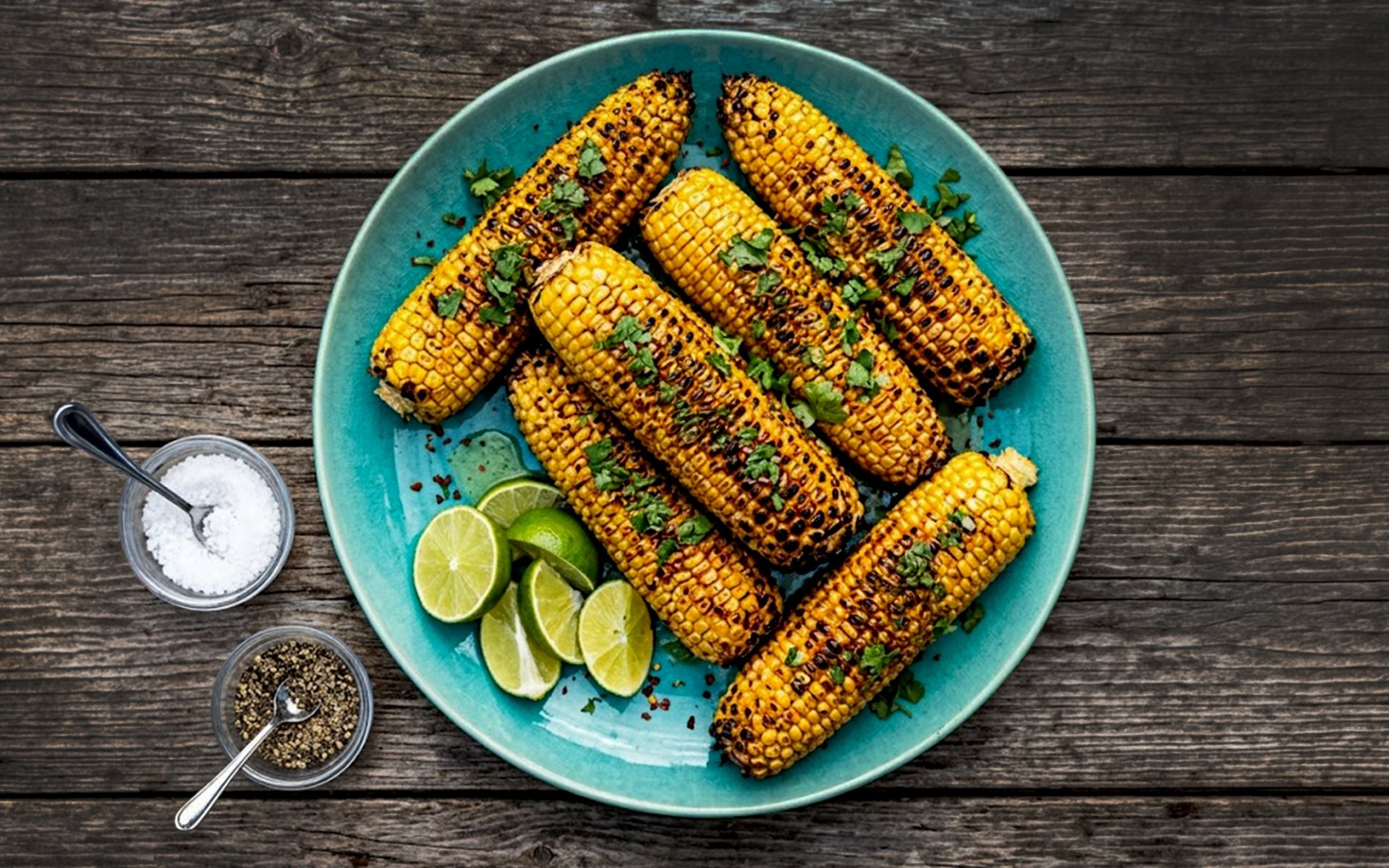
The Origins: From Teosinte to Sacred Maize
Maize originated in Mesoamerica, particularly in the Balsas River Valley of present-day southern Mexico. Its wild ancestor was a grass known as teosinte, a plant with small, hard kernels that were unsuitable for human consumption. Over thousands of years, Indigenous communities selectively cultivated and improved teosinte, gradually transforming it into maize with larger ears, more abundant kernels, and significantly higher yields.
Cultural Significance: Maize held profound cultural and spiritual significance throughout Mesoamerica, particularly among the Maya and Aztec civilizations. It was regarded as a sacred plant symbolizing life, fertility, and the origin of humankind, serving as both a staple food and an essential element in religious ceremonies.
Early Culinary Techniques: Before the arrival of the Spanish, Indigenous peoples used advanced techniques like nixtamalization (boiling corn in an alkaline solution) to process dried corn. However, freshly harvested sweet corn was commonly roasted whole over an open fire using the tostar technique, where the ears were turned over flames to char the kernels evenly.
The Columbian Exchange and Global Spread
A pivotal moment in the history of maize occurred in the late 15th century during the Columbian Exchange, which facilitated the transfer of plants, animals, and knowledge between the New World and the Old World. Maize crossed the Atlantic Ocean, rapidly adapting to diverse climates in Europe, Asia, and Africa.
By the early 19th century, boiled and grilled corn had become popular street food in the United States. Historical records, including personal journals of Thomas Jefferson and accounts of street vendors in New York City in 1808, confirm that corn-on-the-cob was already deeply woven into the fabric of everyday life.
Global Variations: How the World Grills Corn
The enduring appeal of grilled corn lies not only in its natural sweetness but also in how different cultures have adapted it:
- Peru : Choclo con Queso features large-grained Andean corn served warm with cheese.
- Central America : Freshly harvested corn is often grilled during the first harvest and seasoned simply with saltwater and lime juice at roadside stalls.
- India : Masala Bhutta is a vibrant street food where grilled corn is brushed with fresh lime juice and coated with aromatic masala spices.
- Japan : Yaki-tōmorokoshi (grilled corn brushed with soy sauce) is a festival staple. The soy sauce caramelizes over charcoal, creating an iconic aroma.
- Canada : The Épluchette de blé d'Inde (corn-husking party) is a social tradition in Quebec, where communities gather to husk, grill, and share corn with butter and salt.
In the United States, grilled corn is a barbecue essential. The practice of soaking the ears in water for 15–30 minutes before grilling creates a steaming effect inside the husks, while the eventual charring adds a smoky depth.
Beyond the flavor, the grilling process involves fascinating culinary chemistry:
- The Maillard Reaction: At temperatures above 140°C (284°F), amino acids and natural sugars in the kernels react to create hundreds of complex flavor compounds.
- Caramelization: The intense heat melts the natural sugars in the corn, turning them into deep, golden-brown or charred spots. These charred areas provide subtle bitter notes that balance the corn's natural sweetness, resulting in a more complex flavor than boiling, which dilutes the flavor with water.