Funnel Cake
Last updated: 23 Jul 2026
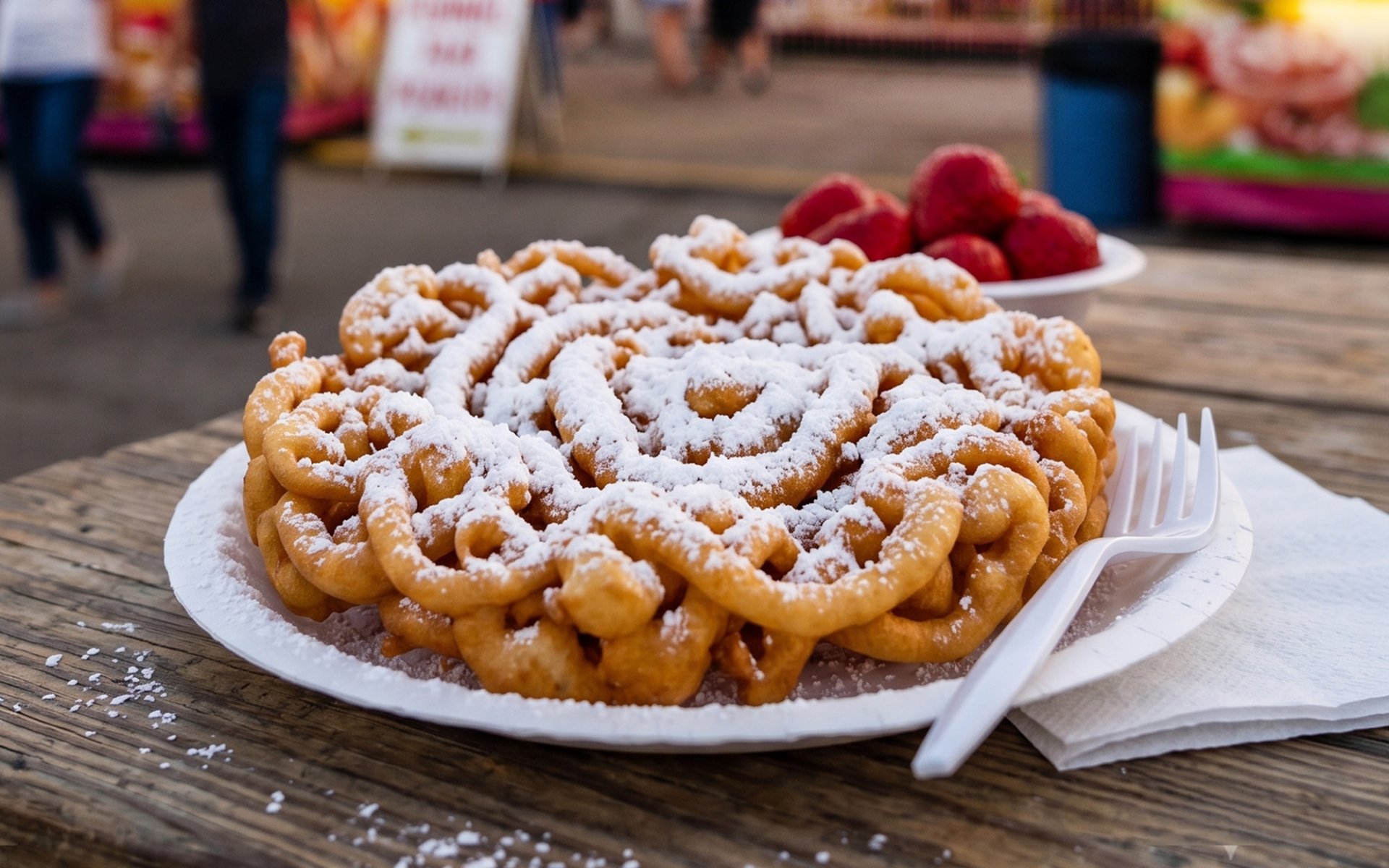
Funnel Cake is one of America's most iconic fried desserts, widely enjoyed at fairs, carnivals, amusement parks, and festivals across the country. Its signature appearance comes from pouring batter through a funnel into hot oil in a continuous stream, creating an intricate web of overlapping strands that resembles a bird's nest.
Freshly fried, Funnel Cake is crispy on the outside and light and fluffy on the inside. Although its texture is often compared to a doughnut, it is noticeably lighter and airier. It is traditionally served hot, generously dusted with powdered sugar, and can be topped with chocolate sauce, fresh fruit, ice cream, whipped cream, or a variety of other sweet toppings.
Zalabiyeh is considered one of the earliest ancestors of many fried batter desserts that later spread throughout the Middle East, North Africa, and Europe. As the recipe traveled across regions, it evolved to reflect local ingredients and culinary traditions, eventually giving rise to numerous variations—including Funnel Cake.
Evidence of similar pastries appears in Anglo-Norman cookbooks, where recipes were recorded under names such as Mincebek, Mistembec, and Cryspses. These names all derive from Old French, indicating that this style of fried pastry was already well established throughout Western Europe during the Middle Ages.
Historically, these pastries were typically made from yeast-leavened or sourdough batter before being fried until golden brown. They were then sprinkled with salt and drizzled with syrup or honey—a notable contrast to today's Funnel Cake, which is traditionally dusted with powdered sugar and served with a variety of sweet toppings.
Interestingly, the cooking technique used during the medieval period closely resembles the modern method. Bakers poured batter through perforated bowls or specially designed containers, allowing it to flow into hot oil in continuous strands that naturally formed crisscrossing patterns. This technique is widely regarded as the direct inspiration for Funnel Cake's distinctive appearance.
This long-standing tradition demonstrates that these pastries were far more than simple snacks—they were woven into the social customs and festive culture of European communities long before making their journey across the Atlantic.
Despite the name, "Dutch" in this context does not refer to the Netherlands. Instead, it is an Anglicized pronunciation of the German word "Deutsch," meaning "German."
These immigrants brought with them many traditional recipes, including a yeast-based fried pastry known in the Pennsylvania German dialect as Drechderkuche. This dessert is widely recognized as the direct predecessor of the modern Funnel Cake.
Over time, Pennsylvania Dutch cooks adapted the traditional recipe by replacing yeast with baking powder, making the batter quicker and easier to prepare. They also introduced the now-iconic finishing touch of powdered sugar sprinkled over the freshly fried cake—a tradition that continues today.
Rather than shaping the dough by hand, cooks pour batter through a funnel—or another narrow-spouted container—allowing it to flow into hot oil in continuous ribbons. As the batter twists and overlaps naturally, it forms the intricate lace-like pattern that has become the dessert's unmistakable trademark.
To preserve and celebrate Pennsylvania Dutch heritage while raising funds for folklore studies, they launched the Kutztown Folk Festival in Kutztown, Pennsylvania.
The festival became the first major public showcase for Funnel Cake, introducing the dessert to visitors from beyond the local community. According to local tradition, Emma Miller was the first person to sell Funnel Cakes at the festival, and her family continued making and selling them there for many decades.
Thanks to its delicious flavor and eye-catching appearance, Funnel Cake quickly became one of the festival's signature attractions and remains an essential part of the Kutztown Folk Festival to this day.
Its greatest surge in popularity came during the 1990s, as amusement parks, outdoor festivals, and community fairs flourished across America.
Funnel Cake became synonymous with these events because it is quick to prepare, served fresh, easy to eat while walking, and perfectly suited to the festive atmosphere of fairs and amusement parks.
Today, it is widely regarded as one of America's most beloved fairground treats.
In Canada, it is commonly found at agricultural exhibitions and summer fairs. In the United Kingdom, it has begun appearing at street festivals and outdoor food events. Meanwhile, in Japan, Funnel Cake has become a popular snack at amusement parks and seasonal festivals, where its freshly made presentation continues to attract visitors of all ages.
Its international appeal demonstrates how a simple fried pastry with ancient origins has evolved into a globally recognized festival favorite.
Freshly fried, Funnel Cake is crispy on the outside and light and fluffy on the inside. Although its texture is often compared to a doughnut, it is noticeably lighter and airier. It is traditionally served hot, generously dusted with powdered sugar, and can be topped with chocolate sauce, fresh fruit, ice cream, whipped cream, or a variety of other sweet toppings.
Ancient Origins in the Middle East
Although Funnel Cake is now widely recognized as a quintessential American fair food, its culinary roots stretch back much further—to medieval Persia and the Arab world, where a fried pastry known as Zalabiyeh was commonly enjoyed.Zalabiyeh is considered one of the earliest ancestors of many fried batter desserts that later spread throughout the Middle East, North Africa, and Europe. As the recipe traveled across regions, it evolved to reflect local ingredients and culinary traditions, eventually giving rise to numerous variations—including Funnel Cake.
The Evolution of Fried Batter Cakes in Medieval Europe
As the concept of fried batter pastries reached Europe, it was adapted to suit regional tastes and available ingredients.Evidence of similar pastries appears in Anglo-Norman cookbooks, where recipes were recorded under names such as Mincebek, Mistembec, and Cryspses. These names all derive from Old French, indicating that this style of fried pastry was already well established throughout Western Europe during the Middle Ages.
Historically, these pastries were typically made from yeast-leavened or sourdough batter before being fried until golden brown. They were then sprinkled with salt and drizzled with syrup or honey—a notable contrast to today's Funnel Cake, which is traditionally dusted with powdered sugar and served with a variety of sweet toppings.
Interestingly, the cooking technique used during the medieval period closely resembles the modern method. Bakers poured batter through perforated bowls or specially designed containers, allowing it to flow into hot oil in continuous strands that naturally formed crisscrossing patterns. This technique is widely regarded as the direct inspiration for Funnel Cake's distinctive appearance.
A Traditional Festival Treat in Europe
Throughout the 19th century, fried batter cakes remained popular across many European countries. They were frequently prepared for religious celebrations, seasonal festivals, and special occasions, and were often given as gifts.This long-standing tradition demonstrates that these pastries were far more than simple snacks—they were woven into the social customs and festive culture of European communities long before making their journey across the Atlantic.
The Pennsylvania Dutch Influence
The most significant transformation that shaped Funnel Cake into the dessert we know today occurred when German immigrants—later known as the Pennsylvania Dutch—settled in Pennsylvania during the 17th and 18th centuries.Despite the name, "Dutch" in this context does not refer to the Netherlands. Instead, it is an Anglicized pronunciation of the German word "Deutsch," meaning "German."
These immigrants brought with them many traditional recipes, including a yeast-based fried pastry known in the Pennsylvania German dialect as Drechderkuche. This dessert is widely recognized as the direct predecessor of the modern Funnel Cake.
Over time, Pennsylvania Dutch cooks adapted the traditional recipe by replacing yeast with baking powder, making the batter quicker and easier to prepare. They also introduced the now-iconic finishing touch of powdered sugar sprinkled over the freshly fried cake—a tradition that continues today.
The Origin of the Name "Funnel Cake"
The name "Funnel Cake" emerged later and comes directly from its unique preparation method.Rather than shaping the dough by hand, cooks pour batter through a funnel—or another narrow-spouted container—allowing it to flow into hot oil in continuous ribbons. As the batter twists and overlaps naturally, it forms the intricate lace-like pattern that has become the dessert's unmistakable trademark.
From Local Tradition to National Icon
A major turning point in Funnel Cake's history came in 1950, when faculty members from Franklin & Marshall College in Lancaster, Pennsylvania, established the Pennsylvania Dutch Folklore Center.To preserve and celebrate Pennsylvania Dutch heritage while raising funds for folklore studies, they launched the Kutztown Folk Festival in Kutztown, Pennsylvania.
The festival became the first major public showcase for Funnel Cake, introducing the dessert to visitors from beyond the local community. According to local tradition, Emma Miller was the first person to sell Funnel Cakes at the festival, and her family continued making and selling them there for many decades.
Thanks to its delicious flavor and eye-catching appearance, Funnel Cake quickly became one of the festival's signature attractions and remains an essential part of the Kutztown Folk Festival to this day.
America's Favorite Fair Food
Following its success at the Kutztown Folk Festival, Funnel Cake rapidly spread to county fairs, carnivals, and state fairs throughout the United States, particularly during the 1960s, when it gained nationwide popularity.Its greatest surge in popularity came during the 1990s, as amusement parks, outdoor festivals, and community fairs flourished across America.
Funnel Cake became synonymous with these events because it is quick to prepare, served fresh, easy to eat while walking, and perfectly suited to the festive atmosphere of fairs and amusement parks.
Today, it is widely regarded as one of America's most beloved fairground treats.
Funnel Cake Around the World
Today, Funnel Cake's popularity extends well beyond the United States.In Canada, it is commonly found at agricultural exhibitions and summer fairs. In the United Kingdom, it has begun appearing at street festivals and outdoor food events. Meanwhile, in Japan, Funnel Cake has become a popular snack at amusement parks and seasonal festivals, where its freshly made presentation continues to attract visitors of all ages.
Its international appeal demonstrates how a simple fried pastry with ancient origins has evolved into a globally recognized festival favorite.
Tags :
Related Content


World Chocolate Day: Tracing the History of Chocolate from a Sacred Ancient Beverage to a Beloved Modern Treat