Unagi (うなぎ)
Last updated: 29 Jul 2026
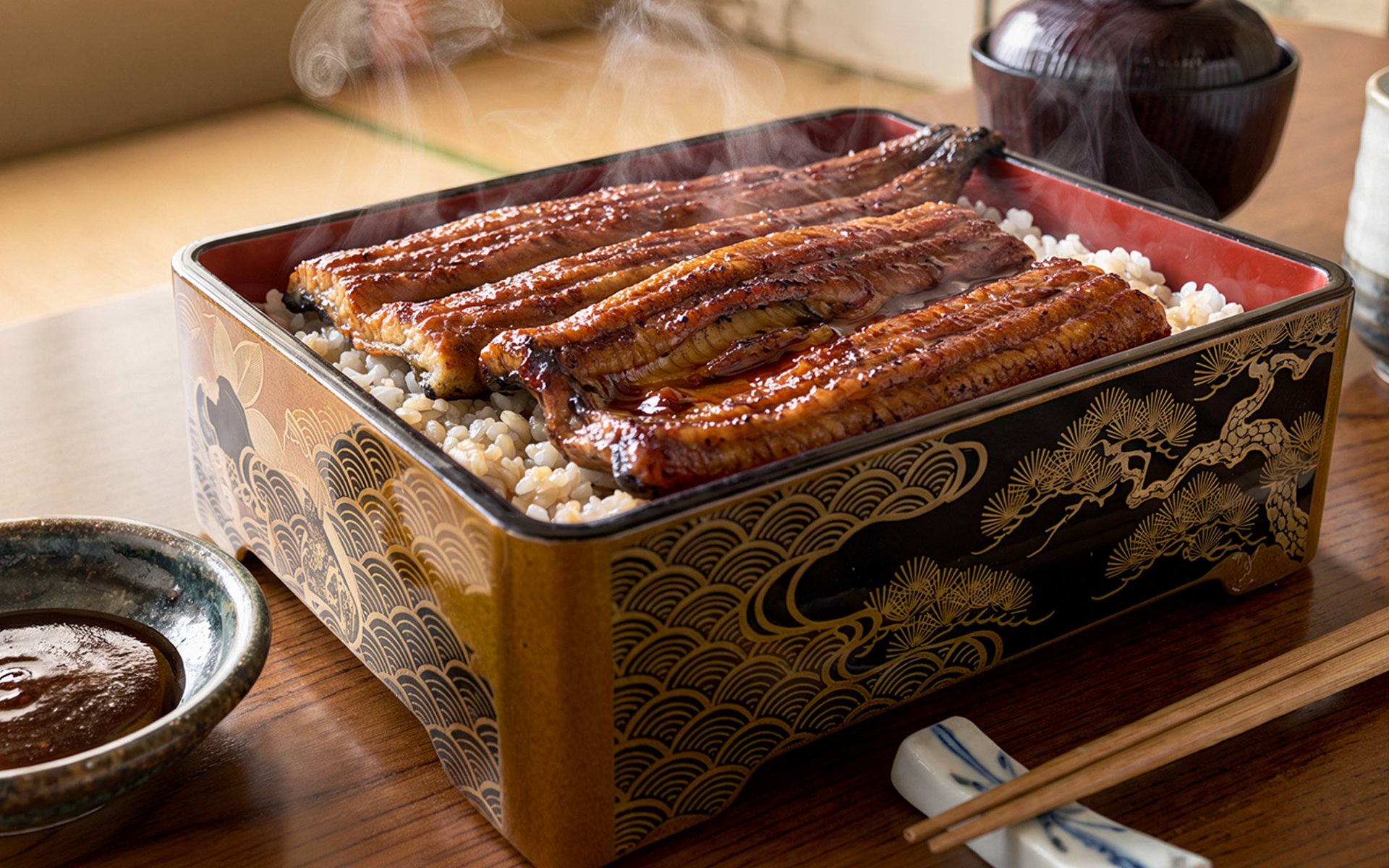
Unagi is the Japanese term for freshwater eel. This fish is renowned for its tender, juicy texture, rich marbling of fat, and delicate savory flavor. It is commonly prepared as “Kabayaki”, a traditional cooking method in which eel is grilled over charcoal, brushed with a sweet and savory soy-based sauce, and served over a bowl of steaming white rice.
Japan has long been blessed with abundant rivers, lakes, and wetlands, creating an ideal environment for freshwater eels to thrive. As a result, eel has played an important role in the lifestyle and culinary culture of the Japanese people since ancient times.
In addition, one of the earliest literary references to eel consumption in Japan appears in the Man’yōshū, the oldest existing collection of Japanese poetry, compiled during the Nara period around the 8th century. One poem by Ōtomo no Yakamochi recommends eating eel to relieve fatigue and restore energy. This reflects that people of the time already understood the nutritional value of eel and believed that consuming it could help strengthen the body and recover vitality.
Originally a small fishing village, Edo expanded rapidly and became one of the world’s most densely populated cities during that era. The city’s growth gave rise to a large population of merchants, craftsmen, and laborers, all of whom needed affordable food that was nutritious, convenient, and capable of providing energy for their busy daily lives.
As a result, freshwater eel, which was abundant in Edo Bay, surrounding rivers, and waterways, quickly became a popular ingredient among the urban population. Street stalls selling Kabayaki began appearing throughout the city, catering to the fast-paced lifestyle of Edo’s residents and marking the beginning of eel’s transformation into one of the city’s most beloved foods.
In the mid-17th century, Japanese culinary techniques reached a new level of sophistication when the production of soy sauce and mirin became more widespread. Chefs of the era began simmering these two seasonings together with sugar and other ingredients, creating Tare sauce, a sweet and savory sauce that became the defining element of Kabayaki.
This sauce not only enhanced the overall flavor and effectively reduced the distinctive aroma of freshwater eel, but when brushed onto eel grilling over charcoal, the sweetness of the sauce gradually caramelized, creating a unique fragrance that blended beautifully with the smoky aroma of burning charcoal drifting through the air.
In the Kantō region, where Edo served as the political center and was strongly influenced by samurai culture, cutting open eel from the belly was considered inauspicious because it resembled “Seppuku”, the ritual suicide practice of samurai involving abdominal disembowelment. As a result, chefs in this region developed the technique of opening eel from the back instead. Furthermore, after initially grilling the eel without sauce, they would steam it before grilling it again. This additional step allowed excess fat to melt away, resulting in a softer and more delicate texture before applying Tare sauce and finishing the eel over the charcoal grill once more.
In contrast, the Kansai region, with Osaka as its commercial center and a culture strongly shaped by merchants, did not view cutting open eel from the belly as a bad omen. In fact, it was associated with the expression “Hara o watte hanasu” (腹を割って話す), meaning “to speak openly from the heart” or to have an honest and sincere conversation.
Therefore, chefs in the Kansai region traditionally opened eel from the belly before grilling it directly over charcoal without steaming. This method preserved the eel’s natural fat, resulting in a beautifully aromatic and slightly crisp exterior from the grilling process, while the inside remained juicy, firm, and pleasantly rich in texture. This became the distinctive characteristic of Kansai-style Kabayaki, clearly differentiating it from the Kantō style.
A major turning point that transformed eel into a popular summer food occurred during the late Edo period. A certain eel restaurant owner, who was struggling with declining sales during summer, sought advice from Hiraga Gennai, a renowned scholar, inventor, and physician of the time.
According to legend, Hiraga Gennai used principles of psychology and Japanese cultural beliefs to create a marketing strategy. He advised the restaurant owner to display a sign promoting “Doyō no Ushi no Hi” (土用の丑の日), a traditional day marking the seasonal transition and a day for eating unagi.
This idea was connected to the traditional Japanese belief known as “U no Tsuku Mono”, which suggested that foods beginning with the sound “U,” such as Udon, Umeboshi, and Unagi, would bring strength, prevent illness, and help the body endure the fatigue caused by the intense summer heat when eaten on Doyō no Ushi no Hi.
After implementing this idea, the eel restaurant quickly regained popularity. As other restaurants witnessed its success, they began adopting the same strategy. As a result, the custom of eating Kabayaki on Doyō no Ushi no Hi gradually spread throughout Japan and became deeply rooted in Japanese society as a seasonal food tradition that continues to be practiced today.
Today, Doyō no Ushi no Hi is widely recognized in Japan as the “Day of Eating Eel,” usually occurring between late July and early August, which is considered the hottest and most humid period of the year.
One of the most significant changes during this period was the emergence of “Unadon” (うな丼), or eel rice bowl, which featured Kabayaki placed on top of freshly steamed white rice in a round bowl. This change in presentation was not merely for aesthetic purposes but also reflected the changing lifestyle of urban residents. The round bowl helped retain the heat of both the rice and eel for a longer period, making it suitable for delivery and eating outside the home. This demonstrates how Japanese cuisine adapted to the needs of an expanding urban society.
Later, in an effort to elevate the status of eel and present it in a more luxurious manner, a new style of serving eel emerged through the use of “Jūbako” (重箱), a square wooden lacquered box decorated with intricate and elegant designs. Eel served in this refined container became known as “Unaju” (うな重).
Japan has long been blessed with abundant rivers, lakes, and wetlands, creating an ideal environment for freshwater eels to thrive. As a result, eel has played an important role in the lifestyle and culinary culture of the Japanese people since ancient times.
Ancient Roots: Unagi in Early Japanese History
Archaeological evidence indicates that people during the Jōmon period, Japan’s prehistoric era (approximately 14,000–300 BCE), consumed eel as part of their diet. Eel bones have been discovered among food remains and shell middens at various archaeological sites, suggesting that eel was already recognized as a valuable food source thousands of years ago.In addition, one of the earliest literary references to eel consumption in Japan appears in the Man’yōshū, the oldest existing collection of Japanese poetry, compiled during the Nara period around the 8th century. One poem by Ōtomo no Yakamochi recommends eating eel to relieve fatigue and restore energy. This reflects that people of the time already understood the nutritional value of eel and believed that consuming it could help strengthen the body and recover vitality.
The Evolution of Grilling: From Cattail Flowers to Kabayaki
However, during this early period, eel preparation methods were relatively simple. Whole eels were often skewered and grilled directly over fire without being opened or deboned. The appearance of the grilled eel on a skewer was said to resemble the flower spike of the cattail plant, leading to the theory that the word “Kabayaki”, now widely used to describe the traditional Japanese method of grilling eel, may have originated from the term “Gamayaki”, meaning “grilling in a shape resembling a cattail flower.” Over time, the pronunciation gradually changed, eventually becoming the word used today for Japan’s famous grilled eel dish.The Edo Period: The Golden Age of Eel as Street Food
A major turning point in the history of eel occurred during the Edo period (1603–1868), when Tokugawa Ieyasu established Edo, present-day Tokyo, as the political center of Japan.Originally a small fishing village, Edo expanded rapidly and became one of the world’s most densely populated cities during that era. The city’s growth gave rise to a large population of merchants, craftsmen, and laborers, all of whom needed affordable food that was nutritious, convenient, and capable of providing energy for their busy daily lives.
As a result, freshwater eel, which was abundant in Edo Bay, surrounding rivers, and waterways, quickly became a popular ingredient among the urban population. Street stalls selling Kabayaki began appearing throughout the city, catering to the fast-paced lifestyle of Edo’s residents and marking the beginning of eel’s transformation into one of the city’s most beloved foods.
The Birth of “Tare” Sauce: The Heart of the Flavor
In the mid-17th century, Japanese culinary techniques reached a new level of sophistication when the production of soy sauce and mirin became more widespread. Chefs of the era began simmering these two seasonings together with sugar and other ingredients, creating Tare sauce, a sweet and savory sauce that became the defining element of Kabayaki.
This sauce not only enhanced the overall flavor and effectively reduced the distinctive aroma of freshwater eel, but when brushed onto eel grilling over charcoal, the sweetness of the sauce gradually caramelized, creating a unique fragrance that blended beautifully with the smoky aroma of burning charcoal drifting through the air.
Kantō vs. Kansai: The Regional Styles of Kabayaki
During this period in Japan, the preparation style of Kabayaki varied between the Kantō region and the Kansai region, with each area developing its own distinctive methods of preparing and grilling eel.In the Kantō region, where Edo served as the political center and was strongly influenced by samurai culture, cutting open eel from the belly was considered inauspicious because it resembled “Seppuku”, the ritual suicide practice of samurai involving abdominal disembowelment. As a result, chefs in this region developed the technique of opening eel from the back instead. Furthermore, after initially grilling the eel without sauce, they would steam it before grilling it again. This additional step allowed excess fat to melt away, resulting in a softer and more delicate texture before applying Tare sauce and finishing the eel over the charcoal grill once more.
In contrast, the Kansai region, with Osaka as its commercial center and a culture strongly shaped by merchants, did not view cutting open eel from the belly as a bad omen. In fact, it was associated with the expression “Hara o watte hanasu” (腹を割って話す), meaning “to speak openly from the heart” or to have an honest and sincere conversation.
Therefore, chefs in the Kansai region traditionally opened eel from the belly before grilling it directly over charcoal without steaming. This method preserved the eel’s natural fat, resulting in a beautifully aromatic and slightly crisp exterior from the grilling process, while the inside remained juicy, firm, and pleasantly rich in texture. This became the distinctive characteristic of Kansai-style Kabayaki, clearly differentiating it from the Kantō style.
A Clever Marketing Strategy: The Summer Tradition of Eating Eel
Although eel became widely popular throughout Japanese society, its consumption declined significantly during the summer months. Historically, many Japanese people considered eel a rich, fatty food that provided a high amount of energy, making it feel heavy and overly rich during Japan’s hot and humid summer season.A major turning point that transformed eel into a popular summer food occurred during the late Edo period. A certain eel restaurant owner, who was struggling with declining sales during summer, sought advice from Hiraga Gennai, a renowned scholar, inventor, and physician of the time.
According to legend, Hiraga Gennai used principles of psychology and Japanese cultural beliefs to create a marketing strategy. He advised the restaurant owner to display a sign promoting “Doyō no Ushi no Hi” (土用の丑の日), a traditional day marking the seasonal transition and a day for eating unagi.
This idea was connected to the traditional Japanese belief known as “U no Tsuku Mono”, which suggested that foods beginning with the sound “U,” such as Udon, Umeboshi, and Unagi, would bring strength, prevent illness, and help the body endure the fatigue caused by the intense summer heat when eaten on Doyō no Ushi no Hi.
After implementing this idea, the eel restaurant quickly regained popularity. As other restaurants witnessed its success, they began adopting the same strategy. As a result, the custom of eating Kabayaki on Doyō no Ushi no Hi gradually spread throughout Japan and became deeply rooted in Japanese society as a seasonal food tradition that continues to be practiced today.
Today, Doyō no Ushi no Hi is widely recognized in Japan as the “Day of Eating Eel,” usually occurring between late July and early August, which is considered the hottest and most humid period of the year.
The Meiji Era: Elevating Unagi with “Unadon” and “Unaju”
When Japan entered the Meiji period (1868–1912) and began embracing influences from the Western world, Japanese lifestyles, urban society, and food culture underwent significant transformations. The roadside grilled eel stalls that had once been an important part of Edo-era daily life gradually developed into more formal restaurants.One of the most significant changes during this period was the emergence of “Unadon” (うな丼), or eel rice bowl, which featured Kabayaki placed on top of freshly steamed white rice in a round bowl. This change in presentation was not merely for aesthetic purposes but also reflected the changing lifestyle of urban residents. The round bowl helped retain the heat of both the rice and eel for a longer period, making it suitable for delivery and eating outside the home. This demonstrates how Japanese cuisine adapted to the needs of an expanding urban society.
Later, in an effort to elevate the status of eel and present it in a more luxurious manner, a new style of serving eel emerged through the use of “Jūbako” (重箱), a square wooden lacquered box decorated with intricate and elegant designs. Eel served in this refined container became known as “Unaju” (うな重).
Tags :
Related Content

Getting to Know “Beef Tallow” — The Traditional Rendered Beef Fat Making a Comeback in the Culinary World