Vichyssoise
Last updated: 31 Jul 2026
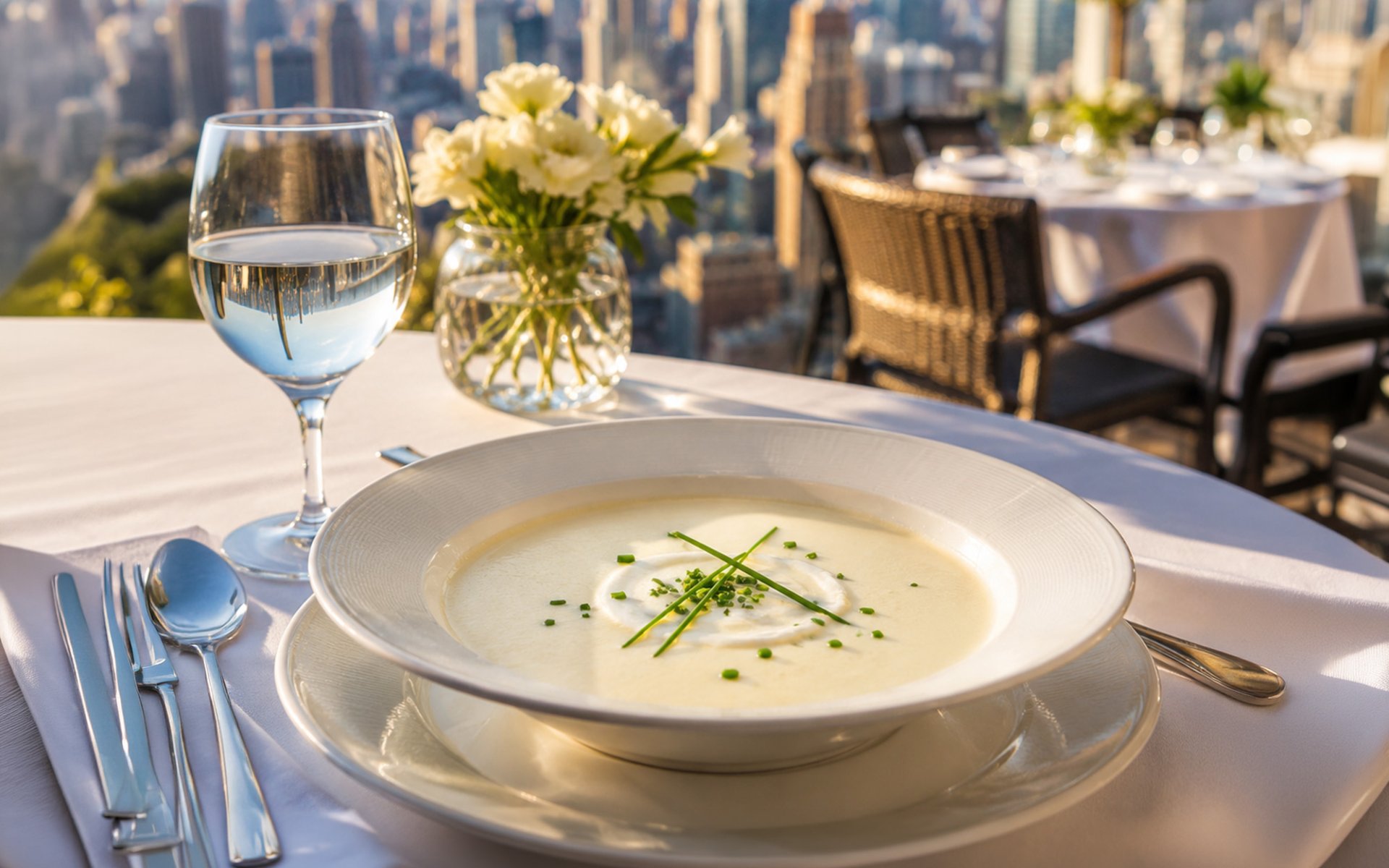
Vichyssoise is a creamy soup made from potatoes and leeks, renowned for its silky-smooth texture, delicate flavor, and refreshing taste. Unlike most classic French cream soups, which are traditionally served hot, Vichyssoise is distinguished by being served thoroughly chilled.
Although its name and flavor evoke French cuisine, Vichyssoise was actually created in New York City, USA, in 1917 by Louis Félix Diat, a French-born chef at the Ritz-Carlton Hotel.
The name Parmentier honors Antoine-Augustin Parmentier, an 18th-century French pharmacist and nutritionist who played a pivotal role in changing the French perception of potatoes. At the time, potatoes were widely regarded as livestock feed or even believed to be harmful to human health, making them unpopular as a food ingredient.
Parmentier devoted himself to promoting the nutritional value of potatoes through public banquets featuring potato-based dishes, educational campaigns, and the support of the French royal court in encouraging potato cultivation. Thanks to his efforts, potatoes eventually gained widespread acceptance and became a staple ingredient in French cuisine, particularly in Potage Parmentier, the soup that would later inspire Vichyssoise.
In the early 20th century, New York City was experiencing an era of remarkable economic and cultural prosperity. America's affluent society had developed a deep appreciation for French gastronomy and elegant living, making the Ritz-Carlton a favorite gathering place for the city's elite. As the hotel's executive chef, Diat was tasked with creating dishes that embodied the refinement of French cuisine while satisfying the sophisticated tastes and high expectations of his distinguished guests.
While developing new recipes, he recalled a cherished childhood memory. His mother and grandmother regularly prepared Potage Parmentier, but during the summer months, he and his older brother would pour cold milk into the still-warm soup to cool it down before eating. This simple family tradition became the inspiration for creating an entirely new dish that would eventually become known as Vichyssoise.
The final step that distinguished this creation from traditional French soups was chilling it thoroughly before serving. The soup was garnished with finely chopped chives, adding a touch of color and a delicate onion-like aroma. The result was Vichyssoise—an elegant, refreshing chilled soup with a character all its own.
After perfecting the recipe, Vichyssoise was added to the rooftop restaurant menu at the Ritz-Carlton Hotel. Its velvety texture, delicate buttery flavor, subtle sweetness of leeks, and refreshing chill quickly made it a favorite among New York City's elite, business leaders, and distinguished guests.
Initially, Diat intended Vichyssoise to be a seasonal specialty served only during the summer months. However, when autumn arrived and the soup was removed from the menu, many patrons continued requesting it. In response to its overwhelming popularity, he decided in 1923 to make Vichyssoise a permanent menu item at the Ritz-Carlton, serving it year-round.
From that point onward, Vichyssoise continued to grow in popularity. The recipe spread to fine restaurants and luxury hotels throughout the United States before eventually crossing the Atlantic back to France. As a result, many people came to believe that it was a traditional French classic. In reality, however, Vichyssoise was born in New York City, created by a French chef who transformed a cherished childhood memory into one of the world's most iconic chilled soups.
Although its name and flavor evoke French cuisine, Vichyssoise was actually created in New York City, USA, in 1917 by Louis Félix Diat, a French-born chef at the Ritz-Carlton Hotel.
The Legacy of Potage Parmentier and the French Potato
Before the invention of Vichyssoise, the French had enjoyed potato and leek soup for centuries in the form of Potage Parmentier. This traditional soup was prepared with potatoes, leeks, onions, butter, and stock, then blended until smooth and served hot.The name Parmentier honors Antoine-Augustin Parmentier, an 18th-century French pharmacist and nutritionist who played a pivotal role in changing the French perception of potatoes. At the time, potatoes were widely regarded as livestock feed or even believed to be harmful to human health, making them unpopular as a food ingredient.
Parmentier devoted himself to promoting the nutritional value of potatoes through public banquets featuring potato-based dishes, educational campaigns, and the support of the French royal court in encouraging potato cultivation. Thanks to his efforts, potatoes eventually gained widespread acceptance and became a staple ingredient in French cuisine, particularly in Potage Parmentier, the soup that would later inspire Vichyssoise.
Chef Louis Félix Diat and the Ritz-Carlton Era
Louis Félix Diat developed Vichyssoise while serving as executive chef at the Ritz-Carlton Hotel in New York. Born in 1885 in Montmarault, in the Bourbonnais region of France, not far from the town of Vichy, Diat grew up in a family passionate about cooking. He learned the fundamentals of French cuisine from his mother and grandmother before pursuing a professional culinary career. After working at the prestigious Ritz Hotel in London, he was invited to become executive chef at the newly opened Ritz-Carlton on Madison Avenue in New York in 1910. It was there that he created what would become one of the world's most celebrated soups.In the early 20th century, New York City was experiencing an era of remarkable economic and cultural prosperity. America's affluent society had developed a deep appreciation for French gastronomy and elegant living, making the Ritz-Carlton a favorite gathering place for the city's elite. As the hotel's executive chef, Diat was tasked with creating dishes that embodied the refinement of French cuisine while satisfying the sophisticated tastes and high expectations of his distinguished guests.
Summer of 1917: Childhood Memories as Culinary Inspiration
During the exceptionally hot summer of 1917, when the Ritz-Carlton opened its rooftop restaurant, Diat began searching for a refreshing dish suitable for warm weather.While developing new recipes, he recalled a cherished childhood memory. His mother and grandmother regularly prepared Potage Parmentier, but during the summer months, he and his older brother would pour cold milk into the still-warm soup to cool it down before eating. This simple family tradition became the inspiration for creating an entirely new dish that would eventually become known as Vichyssoise.
Elevating Tradition to Haute Cuisine
Louis refined his family's traditional soup into a dish worthy of Haute Cuisine. He used only the white parts of the leeks and onions, gently sautéing them in butter over low heat until tender without allowing them to brown. Potatoes and stock were then added before the mixture was blended and strained until perfectly smooth. Finally, heavy cream was incorporated to give the soup its signature rich, velvety texture.The final step that distinguished this creation from traditional French soups was chilling it thoroughly before serving. The soup was garnished with finely chopped chives, adding a touch of color and a delicate onion-like aroma. The result was Vichyssoise—an elegant, refreshing chilled soup with a character all its own.
The Origin of the Name and Its Rise to Global Fame
Diat named the soup in honor of Vichy, the famous spa town near his hometown in France, a place he had known well during his childhood. The word "Vichyssoise" is a French adjective meaning "from Vichy."After perfecting the recipe, Vichyssoise was added to the rooftop restaurant menu at the Ritz-Carlton Hotel. Its velvety texture, delicate buttery flavor, subtle sweetness of leeks, and refreshing chill quickly made it a favorite among New York City's elite, business leaders, and distinguished guests.
Initially, Diat intended Vichyssoise to be a seasonal specialty served only during the summer months. However, when autumn arrived and the soup was removed from the menu, many patrons continued requesting it. In response to its overwhelming popularity, he decided in 1923 to make Vichyssoise a permanent menu item at the Ritz-Carlton, serving it year-round.
From that point onward, Vichyssoise continued to grow in popularity. The recipe spread to fine restaurants and luxury hotels throughout the United States before eventually crossing the Atlantic back to France. As a result, many people came to believe that it was a traditional French classic. In reality, however, Vichyssoise was born in New York City, created by a French chef who transformed a cherished childhood memory into one of the world's most iconic chilled soups.
Tags :
Related Content



Discover St. Basils Cake or Vasilopita The New Year Celebration Cake of Greece and Eastern Europe