Gỏi cuốn
Last updated: 3 Aug 2026
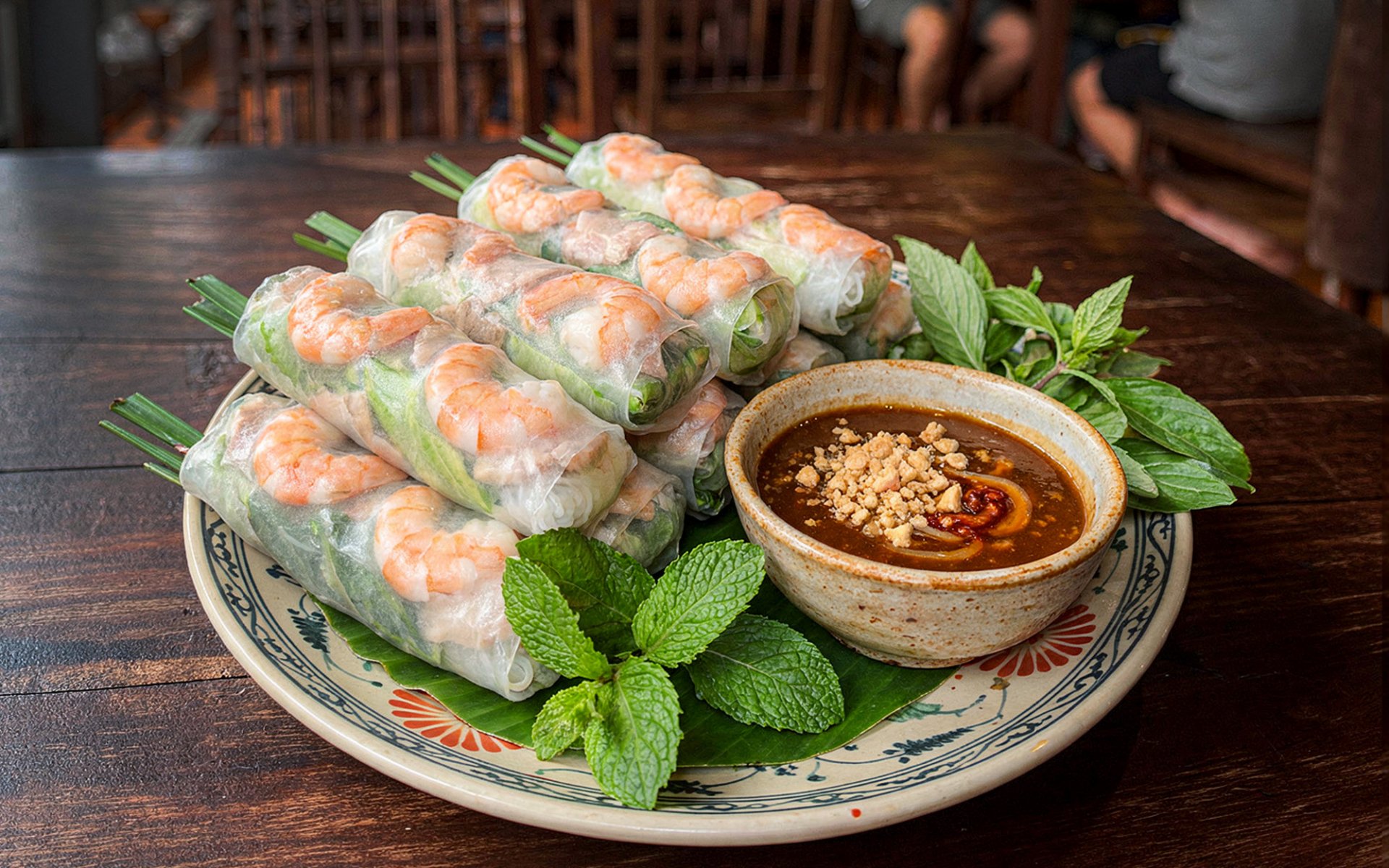
Gỏi cuốn (pronounced goy koon), commonly known in the West as Summer Rolls, is one of Vietnam's most beloved appetizers, celebrated for its fresh flavors and healthy ingredients. These fresh rice paper rolls are made by wrapping bánh tráng (Vietnamese rice paper) around a filling of boiled shrimp, sliced pork, rice vermicelli, and an assortment of fresh herbs and vegetables such as lettuce, mint, Thai basil, and garlic chives. The rolls are typically served with a rich hoisin-peanut dipping sauce or a traditional Vietnamese dipping sauce that balances sweet, sour, salty, and spicy flavors.
The name "Gỏi cuốn" can be divided into two parts. "Gỏi" refers to a Vietnamese salad or a dish made by combining fresh ingredients, while "cuốn" means "to roll" or "to wrap." Together, the name literally translates to "rolled salad."
In China, a similar dish is known as 春卷 (Chūnjuǎn), or spring rolls. Traditional Chinese spring rolls are typically filled with stir-fried vegetables and meat, wrapped in wheat-based pastry, and deep-fried until crisp and golden brown.
When this culinary tradition reached Vietnam, local cooks transformed it by replacing wheat wrappers with rice paper, and using fresh herbs, rice vermicelli, and boiled meats as fillings. Rather than deep-frying the rolls, they were enjoyed fresh, creating a lighter and more refreshing dish.
Vietnam, however, also has its own version of fried spring rolls known as Chả Giò or Nem Rán. Although inspired by the original Chinese spring roll, this Vietnamese variation has been adapted to local ingredients and tastes, and today remains one of the country's most popular dishes, often enjoyed alongside Gỏi cuốn.
This traditional production method reflects Vietnam's agricultural heritage and the rural communities' reliance on locally available resources. As the popularity of Gỏi cuốn expanded both within Vietnam and internationally, rice paper production gradually became industrialized to meet growing demand. Nevertheless, many villages continue to preserve the traditional craft as an important part of Vietnam's cultural heritage.
Before use, dried rice paper is lightly moistened with water until it becomes soft and pliable, allowing it to wrap fresh ingredients securely without tearing. Its translucent appearance beautifully showcases the vibrant colors of the shrimp, herbs, vegetables, and noodles inside, creating one of the dish's most recognizable visual characteristics and distinguishing it from fried spring rolls found elsewhere.
When all these diverse elements are carefully wrapped together within a single sheet of rice paper, it can be interpreted as a metaphor for the harmonious combination of differences into one unified whole. This reflects the values of unity, harmony, and balanced coexistence, which have long been cherished in Vietnamese society.
One of the key reasons behind the rapid global popularity of Gỏi cuốn was its alignment with the growing health-conscious food movement that emerged in the late 20th century. Unlike many fried snacks, Gỏi cuốn is not deep-fried, making it lower in fat while being rich in fresh vegetables, aromatic herbs, and protein sources such as shrimp or pork. Its refreshing flavor, light texture, and versatility also allow the ingredients to be adapted according to different dietary preferences and consumer tastes.
In Western countries, the dish became known as “Summer Roll”, a name that reflects its fresh, light, and refreshing qualities, making it particularly suitable for warm weather. The term also helped distinguish it from “Spring Roll,” which generally refers to the traditional Chinese-style fried spring roll.
The popularity of Gỏi cuốn continued to grow internationally, and the dish gained recognition as one of the world's most delicious foods. It was featured multiple times in rankings by CNN Travel, including the 2011 edition of “World’s 50 Most Delicious Foods,” which was based on a public vote through Facebook with approximately 35,000 votes. In that ranking, Gỏi cuốn placed 30th, while Phở ranked 28th. This recognition highlighted the growing appreciation of Vietnamese cuisine on the global stage and reinforced Gỏi cuốn’s status as one of Vietnam’s most representative dishes.
These qualities reflect the culinary wisdom, lifestyle, and food culture of the Vietnamese people, making Gỏi cuốn not only a beloved dish but also a beautiful expression of Vietnam’s cultural identity.
The name "Gỏi cuốn" can be divided into two parts. "Gỏi" refers to a Vietnamese salad or a dish made by combining fresh ingredients, while "cuốn" means "to roll" or "to wrap." Together, the name literally translates to "rolled salad."
From Chinese Origins to a Distinctly Vietnamese Specialty
Most food historians agree that the concept of wrapping fillings in thin sheets of dough or pastry originated in China before spreading to Vietnam through centuries of trade and Chinese migration. Over time, the dish was adapted to suit Vietnamese ingredients, culinary preferences, and eating habits, eventually evolving into a distinctly Vietnamese specialty.In China, a similar dish is known as 春卷 (Chūnjuǎn), or spring rolls. Traditional Chinese spring rolls are typically filled with stir-fried vegetables and meat, wrapped in wheat-based pastry, and deep-fried until crisp and golden brown.
When this culinary tradition reached Vietnam, local cooks transformed it by replacing wheat wrappers with rice paper, and using fresh herbs, rice vermicelli, and boiled meats as fillings. Rather than deep-frying the rolls, they were enjoyed fresh, creating a lighter and more refreshing dish.
Vietnam, however, also has its own version of fried spring rolls known as Chả Giò or Nem Rán. Although inspired by the original Chinese spring roll, this Vietnamese variation has been adapted to local ingredients and tastes, and today remains one of the country's most popular dishes, often enjoyed alongside Gỏi cuốn.
“Bánh Tráng”: The Art of Translucent Rice Paper
One of the defining features that sets Gỏi cuốn apart from spring rolls in other countries is its translucent rice paper wrapper, known in Vietnam as bánh tráng. Traditionally, these wrappers were handcrafted in village households. Rice grains were soaked, ground into a smooth batter, then spread into thin rounds over a cloth stretched across a pot of boiling water, where they were steamed until cooked. The sheets were then dried under the sun on woven bamboo racks, leaving behind the distinctive lattice pattern that remains characteristic of authentic rice paper today.This traditional production method reflects Vietnam's agricultural heritage and the rural communities' reliance on locally available resources. As the popularity of Gỏi cuốn expanded both within Vietnam and internationally, rice paper production gradually became industrialized to meet growing demand. Nevertheless, many villages continue to preserve the traditional craft as an important part of Vietnam's cultural heritage.
Before use, dried rice paper is lightly moistened with water until it becomes soft and pliable, allowing it to wrap fresh ingredients securely without tearing. Its translucent appearance beautifully showcases the vibrant colors of the shrimp, herbs, vegetables, and noodles inside, creating one of the dish's most recognizable visual characteristics and distinguishing it from fried spring rolls found elsewhere.
Regional Variations and Signature Dipping Sauces
Across Vietnam, Gỏi cuốn varies from region to region. In the south, where the warm climate supports an abundance of fresh herbs and vegetables, rolls are typically packed with aromatic greens to enhance their freshness. In parts of central Vietnam, local specialties such as seafood or regional meats are often incorporated, reflecting the area's available ingredients. The accompanying dipping sauces also vary by region, with several popular styles including:- Tương Chấm (Hoisin-Peanut Sauce): The best-known dipping sauce internationally, made with hoisin sauce, ground roasted peanuts, pork broth, and often topped with fresh chili slices.
- Nước Chấm (Vietnamese Fish Sauce): A light and refreshing sauce made from fish sauce, lime juice, sugar, garlic, and chopped chilies, offering a harmonious balance of sweet, sour, salty, and spicy flavors. It is especially popular in central and northern Vietnam.
- Mắm Nêm (Fermented Anchovy Sauce): Favored by those who appreciate traditional regional flavors, this pungent fermented fish sauce delivers a bold, complex taste and is commonly paired with Gỏi cuốn in certain parts of Vietnam.
A Metaphor for Harmony and Abundance
In Vietnamese culture, Gỏi cuốn carries a deeper symbolic meaning beyond being a simple dish. The thin and translucent rice paper wrapper is often seen as a representation of simplicity, purity, and sincerity. Meanwhile, the colorful ingredients inside—whether fresh vegetables, herbs, shrimp, or meat—symbolize the abundance of nature and the balance of life.When all these diverse elements are carefully wrapped together within a single sheet of rice paper, it can be interpreted as a metaphor for the harmonious combination of differences into one unified whole. This reflects the values of unity, harmony, and balanced coexistence, which have long been cherished in Vietnamese society.
Global Rise: The Healthy “Summer Roll” Phenomenon
A significant turning point that helped Gỏi cuốn gain international recognition was closely linked to Vietnamese migration during the second half of the 20th century, particularly after the end of the Vietnam War in 1975. As many Vietnamese people relocated to countries such as the United States, France, Australia, Canada, and other parts of the world, they brought their culinary traditions with them. Vietnamese restaurants began opening in major cities worldwide, and Gỏi cuốn quickly became one of the dishes that gained widespread popularity.One of the key reasons behind the rapid global popularity of Gỏi cuốn was its alignment with the growing health-conscious food movement that emerged in the late 20th century. Unlike many fried snacks, Gỏi cuốn is not deep-fried, making it lower in fat while being rich in fresh vegetables, aromatic herbs, and protein sources such as shrimp or pork. Its refreshing flavor, light texture, and versatility also allow the ingredients to be adapted according to different dietary preferences and consumer tastes.
In Western countries, the dish became known as “Summer Roll”, a name that reflects its fresh, light, and refreshing qualities, making it particularly suitable for warm weather. The term also helped distinguish it from “Spring Roll,” which generally refers to the traditional Chinese-style fried spring roll.
The popularity of Gỏi cuốn continued to grow internationally, and the dish gained recognition as one of the world's most delicious foods. It was featured multiple times in rankings by CNN Travel, including the 2011 edition of “World’s 50 Most Delicious Foods,” which was based on a public vote through Facebook with approximately 35,000 votes. In that ranking, Gỏi cuốn placed 30th, while Phở ranked 28th. This recognition highlighted the growing appreciation of Vietnamese cuisine on the global stage and reinforced Gỏi cuốn’s status as one of Vietnam’s most representative dishes.
A Culinary Symbol of Vietnam’s Cultural Identity
Today, Gỏi cuốn is widely recognized as one of Vietnam’s culinary symbols, alongside Phở and Bánh mì. Although recipes have been adapted in different countries to suit local tastes and available ingredients, the essence of this dish remains unchanged: an emphasis on fresh ingredients, balanced flavors, and simplicity combined with careful preparation.These qualities reflect the culinary wisdom, lifestyle, and food culture of the Vietnamese people, making Gỏi cuốn not only a beloved dish but also a beautiful expression of Vietnam’s cultural identity.
Tags :
Related Content
Discovering "Rice Pudding": An Asian Classic Dessert That Conquered Continents and Became a Global Delicacy