International Beer Day
Last updated: 5 Aug 2026
The History of International Beer Day: From a Small Local Celebration to a Global Festival for Beer Lovers
Every year, on the first Friday of August, people across the globe come together to celebrate International Beer Day—a festival dedicated to one of humanity's oldest and most influential beverages. More than simply an occasion to enjoy a glass of beer, the day offers an opportunity to reflect on the remarkable history of brewing, a tradition that dates back more than 5,000 years, while celebrating beer's enduring role in shaping cultures, communities, and civilizations around the world.Humble Beginnings in Santa Cruz, California
Unlike many internationally recognized observances established by governments or major industry organizations, International Beer Day began as the vision of a small group of passionate beer enthusiasts who believed that beer deserved a day of celebration all its own.The first International Beer Day was held in 2007 in Santa Cruz, California, founded by Jesse Avshalomov together with his three friends—Evan Hamilton, Aaron Araki, and Richard Hernandez. Their idea was remarkably simple: persuade a local bar to host a beer-themed celebration and create a website to spread the word. What began as a modest community event would soon evolve into an international phenomenon.
Why the First Friday of August?
Initially, International Beer Day was celebrated annually on August 5. The fixed date remained in place from its inaugural celebration in 2007. However, as the festival expanded across countries and continents, the founders recognized a practical challenge: in some years, August 5 fell on a weekday, making it difficult for many people to participate fully in the festivities.After gathering feedback from beer lovers around the world, the founders announced an important change in 2012. Instead of observing the event on a fixed calendar date, International Beer Day would thereafter be celebrated on the first Friday of August. The new schedule allowed people to gather with friends and family at the beginning of the weekend without worrying about work the following morning. The adjustment was warmly embraced by the global beer community and has remained the official format ever since.
Three Core Objectives of International Beer Day
Although sharing a beer may appear to be little more than a social pastime, Jesse Avshalomov and his co-founders envisioned International Beer Day as something far more meaningful. They established three core objectives that continue to define the spirit of the celebration today:To gather with friends and enjoy great beer.
At its heart, beer has always been a catalyst for connection. Whether enjoyed at a neighborhood pub, a family barbecue, or a festive gathering, beer has long brought people together to share conversations, laughter, and lasting memories.To celebrate and honor everyone behind the brewing industry.
International Beer Day also recognizes the countless individuals whose dedication makes every pint possible—from brewers who continually refine traditional recipes and create innovative new styles, to bartenders who serve beer with care, as well as pub owners, distributors, and hospitality professionals who contribute to the beer experience. It is a day to acknowledge their craftsmanship and express appreciation for their work.To unite the world through beer.
One of the festival's most distinctive ideals is encouraging people to step beyond their familiar choices by sampling beers from different regions and cultures. Whether enjoying a Belgian Trappist ale, a German lager, a Czech pilsner, a Japanese craft beer, or a locally brewed specialty, participants celebrate the diversity of global brewing traditions while embracing the idea that beer can serve as a universal language connecting people across borders.A Worldwide Phenomenon Connecting Cultures
From its humble beginnings in a single bar in Santa Cruz, California, International Beer Day has grown into a worldwide celebration in little more than a decade. Today, it is observed in more than 200 cities across over 80 countries spanning six continents, demonstrating the remarkable ability of beer to transcend language, nationality, and culture.Ultimately, International Beer Day is about far more than raising a glass. It is a celebration of history, craftsmanship, friendship, and cultural exchange—a reminder that one of humanity's oldest beverages continues to bring people together, fostering shared experiences and meaningful connections across the globe.
The Gift of Beer and Festive Traditions
Each year, pubs, bars, breweries, and restaurants around the world mark International Beer Day with a wide range of special events and celebrations. These often include the release of limited-edition or rare beers, exclusive tasting sessions, promotional offers, beer trivia competitions, social games such as Beer Pong, and curated Beer & Food Pairing experiences that showcase the harmonious relationship between carefully selected beers and complementary dishes.Another beloved tradition is The Gift of Beer, an initiative that encourages people to buy a beer for a friend, family member, or even a stranger at the bar. More than a simple gesture of generosity, it embodies the spirit envisioned by the festival's founders—transforming International Beer Day into more than just a celebration of beer, but an occasion for fostering friendship, strengthening human connections, and embracing the rich diversity of beer cultures around the world.
A 5,000-Year Journey: From Ancient Civilizations to Medieval Europe
Although International Beer Day itself was established only in the 21st century, the story of beer stretches back more than 5,000 years, making it one of humanity's oldest and most enduring beverages.Archaeological evidence suggests that beer production began in ancient Mesopotamia around 4000–5000 BCE, where the Sumerians became one of the first civilizations to discover the fermentation of cereal grains into an alcoholic beverage. Beer was so deeply woven into Sumerian society that it was celebrated in inscriptions and hymns dedicated to Ninkasi, the goddess of brewing, reflecting its importance not only in daily life but also in religious ceremonies and ritual practices.
Beer later became an integral part of everyday life in ancient Egypt, serving not only as a staple beverage but also as a source of nourishment and even a form of payment for the laborers who built the pyramids. Rich in calories and considerably safer to store than untreated water, beer played a vital role in sustaining one of history's greatest civilizations.
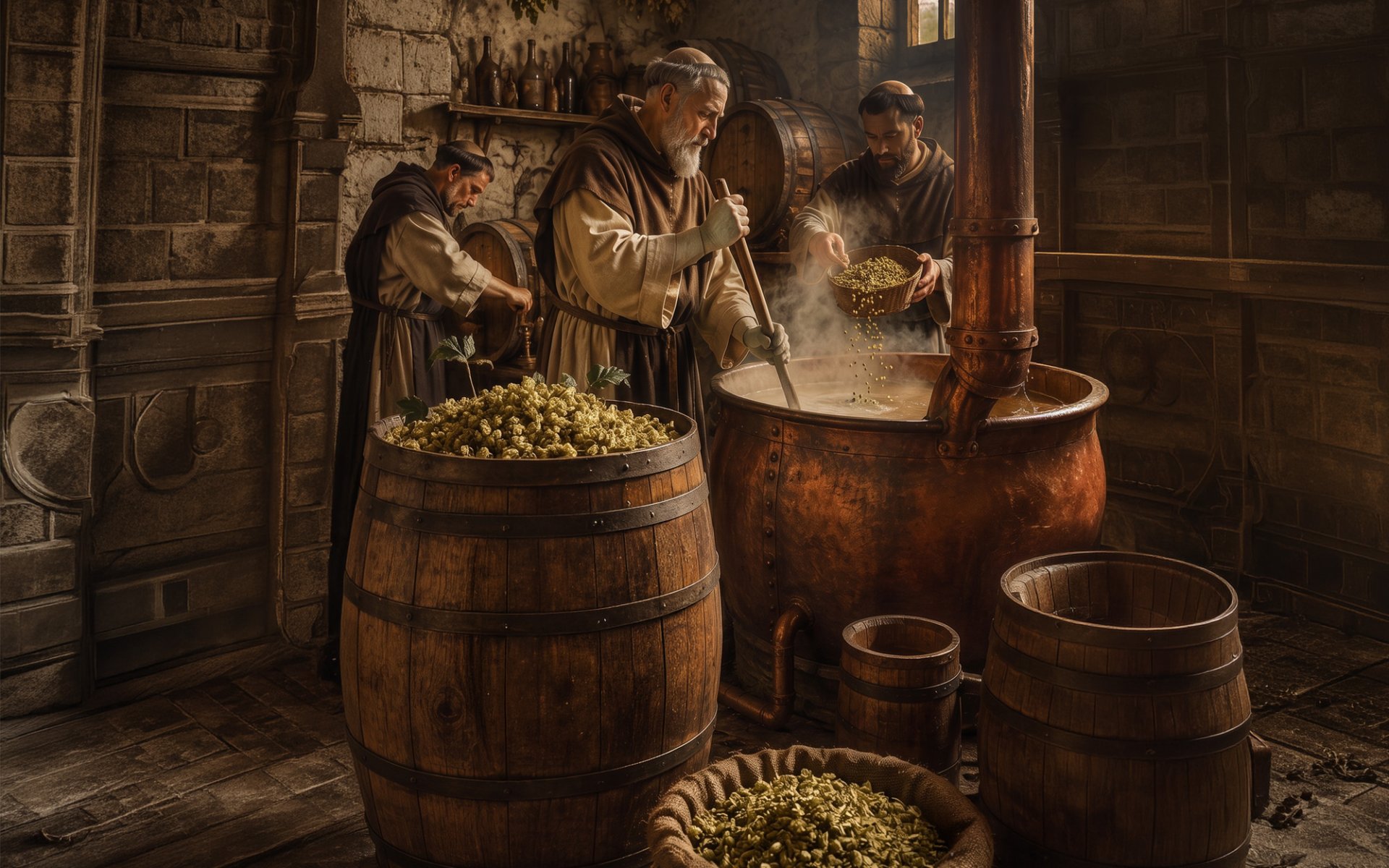
During the Middle Ages in Europe, beer assumed an even greater significance. With access to clean drinking water often limited, the brewing process—which required boiling the liquid—helped reduce the risk of waterborne diseases. As a result, beer became a daily beverage enjoyed by people from all walks of life, establishing itself as an indispensable part of European culinary culture and social life.
The Reinheitsgebot and the Evolution of Brewing Science
Over the centuries, the science and artistry of brewing continued to evolve. What began as the simple fermentation of locally available grains gradually advanced with the introduction of hops, which enhanced aroma, contributed pleasant bitterness, and naturally improved beer's shelf life. Later, scientific breakthroughs led to the discovery of the essential role of yeast, fundamentally transforming brewing by revealing the microorganism responsible for fermentation and the distinctive characteristics of different beer styles.One of the most significant milestones in brewing history came in 1516, when Duke Wilhelm IV of Bavaria enacted the Reinheitsgebot, or the German Beer Purity Law. The legislation stipulated that beer could be brewed using only water, barley, and hops—yeast was not included simply because its role in fermentation had not yet been scientifically understood. Far more than a regional regulation, the Reinheitsgebot established one of the world's earliest quality standards for beer production and has continued to influence brewing traditions and industry practices for more than five centuries.
The Craft Beer Revolution and the Future of Brewing
By the late twentieth century, the beer industry entered a new era with the emergence of the craft beer movement. Rather than focusing on large-scale industrial production, craft brewers emphasized quality, creativity, and small-batch brewing. The movement first gained momentum in the United States before spreading rapidly throughout Europe, Asia, and the rest of the world.Independent breweries began experimenting with an increasingly diverse range of ingredients—including fruits, herbs, spices, flowers, and locally sourced botanicals—to create beers that reflected their own regional identity and creative philosophy. This spirit of innovation gave rise to countless modern beer styles, including India Pale Ale (IPA), Sour Ale, Imperial Stout, Saison, and many contemporary interpretations that celebrate local ingredients and brewing traditions.
The rise of craft beer has also broadened the meaning of International Beer Day. Today, the occasion is not merely a celebration of drinking beer, but a global platform that highlights independent brewers, encourages consumers to explore brewing ingredients and production techniques, and deepens appreciation for the remarkable diversity of beer styles found around the world. Ultimately, it celebrates beer not simply as a beverage, but as a living expression of history, craftsmanship, creativity, and cultural heritage—one that continues to evolve with every new generation of brewers.
Tags :
Related Content

Tracing the History of Great French Wine Blight: A Serious Threat to French Vineyards

Tracing the History of Wolf Blass: The Globally Award-Winning Australian Wine Brand with Over 10,000 Accolades

The Origin Story of India Pale Ale (IPA) and the Differences Between Its Styles