Gravlax & New Potatoes
Last updated: 10 Aug 2026
Before the invention of refrigeration and modern food-preservation technologies, preserving enough food to survive the long winter months was essential to life in Scandinavia. As a result, Scandinavian communities developed a wide range of traditional preservation techniques, including salting, fermentation, drying, smoking, and burying food in the ground. These practices eventually gave rise to Gravlax, a traditional Scandinavian cured salmon that remains an important part of Nordic culinary heritage.
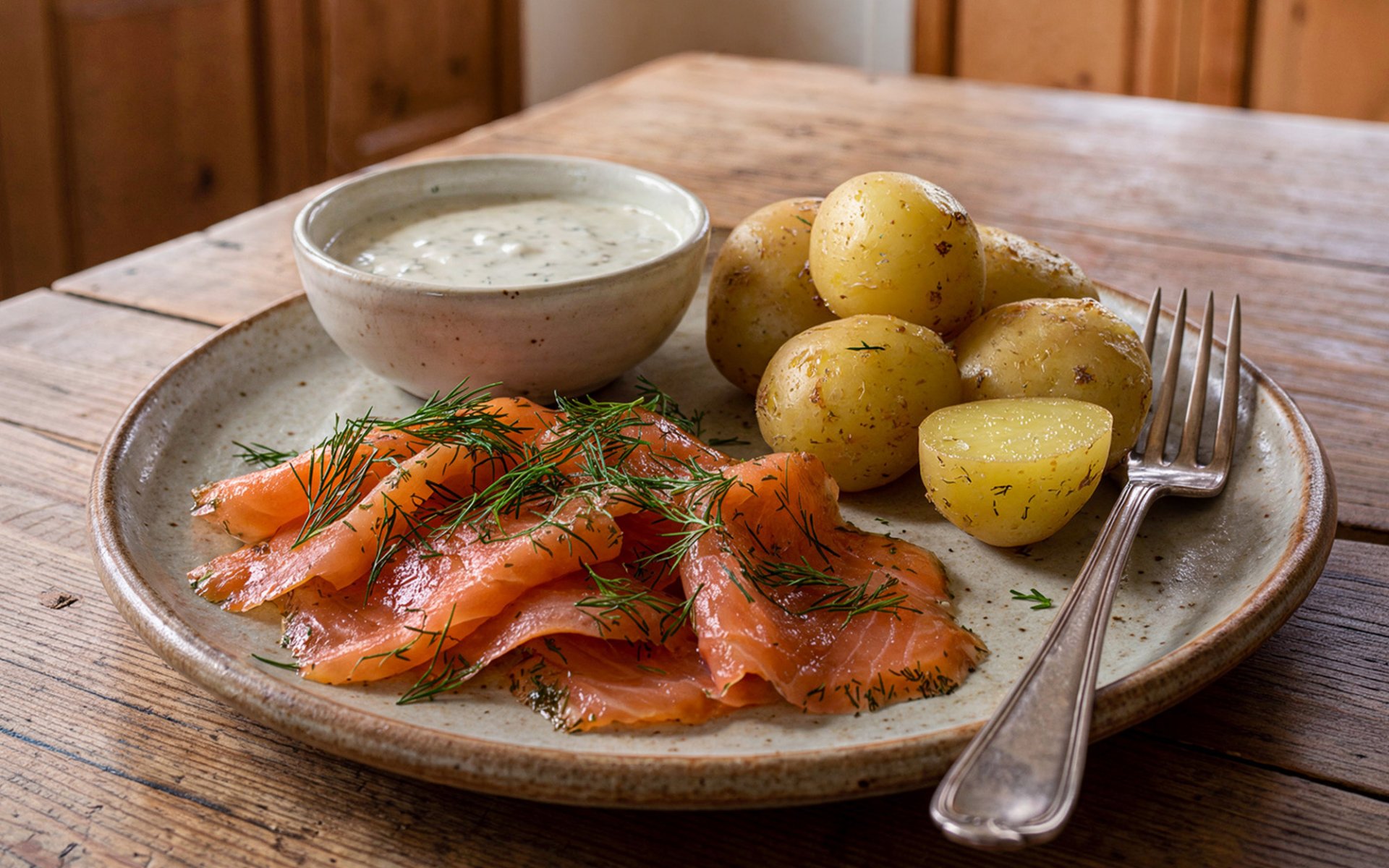
Today, Gravlax & New Potatoes remains a classic combination throughout Scandinavia, particularly during Midsummer and other seasonal celebrations. The dish demonstrates how traditional preservation methods, imported ingredients, and seasonal cooking traditions can come together to create a distinctive expression of Nordic culinary heritage.
The Etymology of “Gravlax” : The Buried Salmon
The word “Gravlax,” also written as “Gravad lax” in Swedish, has its roots in the North Germanic languages. It is composed of two words: “gräva,” meaning “to dig,” and “lax,” meaning “salmon.” Together, the term can be understood as “buried salmon,” reflecting the traditional preservation method in which salmon was cured and buried in the ground.Ancient Methods: Preserving the Abundant Salmon Harvest
Food historians trace the origins of Gravlax back to the Middle Ages, around the 14th century, when fishermen in northern Scandinavia faced the challenge of preserving large quantities of salmon during the spawning season. At this time, salmon migrated upstream in enormous numbers, allowing fishermen to catch far more fish than they could consume within a short period. Salt, meanwhile, was an expensive and relatively scarce commodity, particularly in remote areas. Fishermen therefore needed to develop preservation methods that required only limited amounts of salt.The Traditional Burial Technique of Nordic Fishermen
One method that emerged was to bury the fish in the ground. Fishermen would clean the salmon and cure it with a small amount of salt, using whatever quantity they could obtain. The fish was then buried in a pit filled with sand or soil in a cool location above the highest tide level. Natural materials, such as bark, could be used to cover the fish, while heavy stones were placed on top to press the fish and encourage excess water and liquid to drain from the flesh.The Fermentation Process and Original Flavors
This process relied on the naturally low temperature of the environment, together with fermentation, to extend the shelf life of the fish. However, the traditional form of Gravlax was considerably different from the version commonly enjoyed today. Natural fermentation could give the salmon a strong aroma and a particularly intense flavor.The Evolution to Dry-Curing with Salt and Dill
As salt became less expensive and more readily available, the preparation of Gravlax gradually evolved. The lengthy process of burying fish in the ground was replaced by a more controlled dry-curing method using salt, sugar, and fresh dill. This approach made the curing process easier to control while transforming the texture and flavor of the salmon without requiring any heat-based cooking.The Science Behind Modern Gravlax
The fundamental principle of this process is to draw moisture out of the fish, resulting in a firmer texture. Salt reduces moisture and alters the structure of the proteins in the salmon, while sugar balances the flavor and softens the intensity of the salt. Fresh dill contributes the distinctive herbal aroma and refreshing character associated with Gravlax.The Arrival of Potatoes in Northern Europe
While Gravlax represents a food-preservation tradition deeply rooted in Nordic culinary culture, potatoes originated thousands of kilometers away on the other side of the world. The potato originated in the Andes Mountains of South America before being introduced to Europe by the Spanish during the 16th century.What are “New Potatoes”?
As potatoes became increasingly popular, they began to appear in a wide variety of dishes. One particularly popular form is the New Potato, sometimes described as a “summer potato.” These potatoes are harvested during the summer while they are still relatively immature. They are typically small, with thin and delicate skins that are soft enough to be cleaned by hand or with a soft brush rather than peeled with a knife.A Midsummer Tradition : Combining Salmon and Potatoes
Serving New Potatoes alongside Gravlax became a popular culinary tradition, particularly during Midsummer celebrations. Midsummer is one of the most important seasonal celebrations across the Nordic countries, marking the middle of summer and the period when daylight reaches its longest duration of the year. A traditional preparation is to boil the potatoes in salted water together with fresh dill stems, allowing the potatoes to absorb their delicate herbal aroma before serving them alongside Gravlax.Elevating the Dish with Hovmästarsås Mustard Sauce
The combination becomes even more complex when served with Hovmästarsås, a traditional Swedish mustard-and-dill sauce. Its combination of sweetness, acidity, mild mustard heat, and the fresh aroma of dill complements both the cured salmon and the potatoes. Rather than overpowering the ingredients, the sauce enhances their natural flavors and brings the elements of the dish together.A Culinary Symbol of the Nordic Summer
Together, Gravlax and New Potatoes represent more than simply a combination of salmon and potatoes. They reflect the evolution of Nordic cuisine from traditional food-preservation techniques to a culinary culture that celebrates seasonal ingredients, simplicity, and the natural character of food. Gravlax carries the history of Scandinavian fishermen and their ingenuity in preserving the abundant salmon harvest, while New Potatoes symbolize the importance of seasonal produce and the Nordic appreciation of the short but highly anticipated summer season.Today, Gravlax & New Potatoes remains a classic combination throughout Scandinavia, particularly during Midsummer and other seasonal celebrations. The dish demonstrates how traditional preservation methods, imported ingredients, and seasonal cooking traditions can come together to create a distinctive expression of Nordic culinary heritage.
Tags :
Related Content