Okroshka
Last updated: 14 Aug 2026
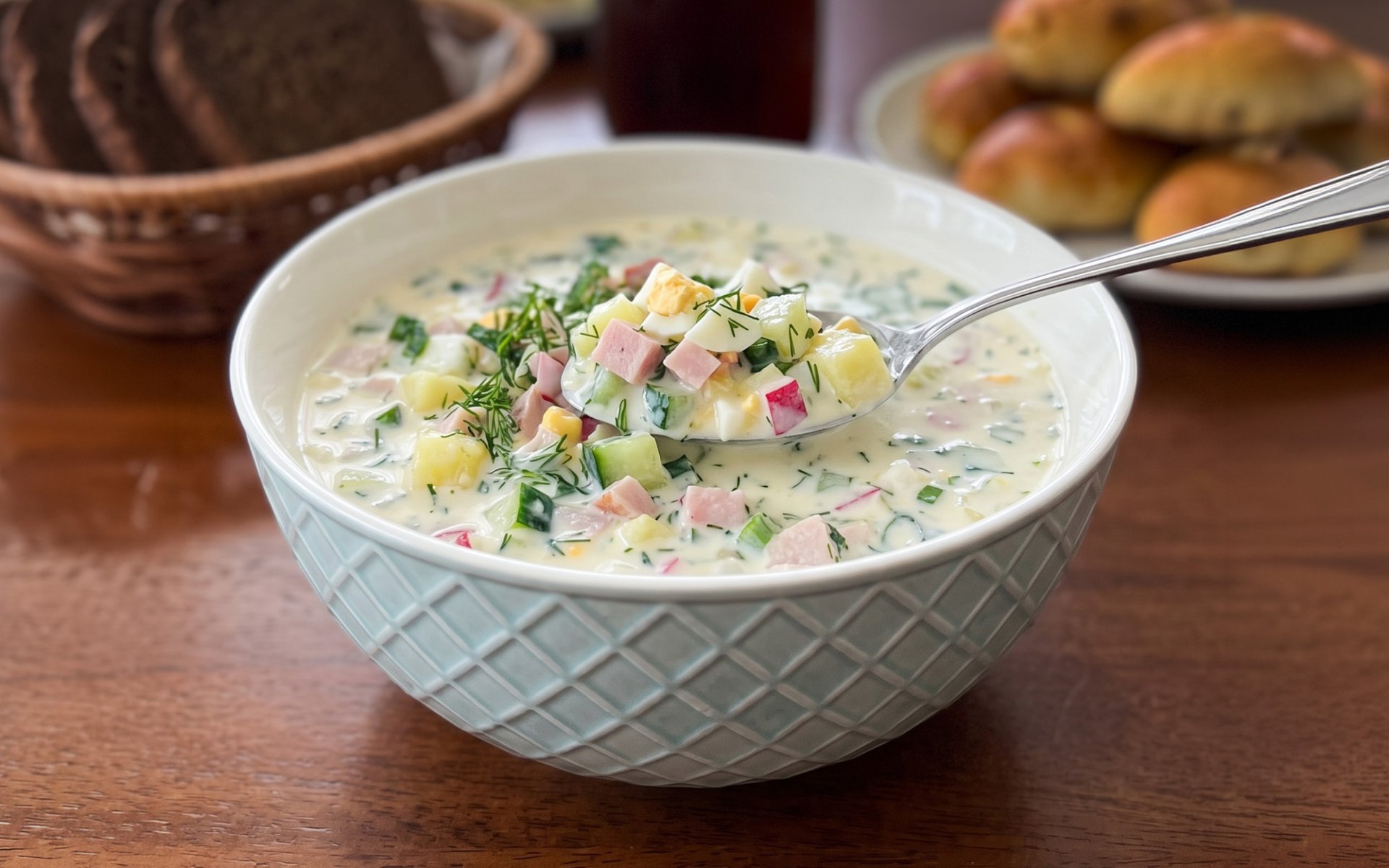
Okroshka is a traditional Russian cold soup that is commonly enjoyed during spring and summer as a refreshing way to beat the heat. Its distinctive character comes from combining fresh vegetables, cooked vegetables, boiled eggs, and meat such as ham or sausage, all cut into small cubes and mixed together. When served, the ingredients are covered with a chilled liquid base made from a fermented beverage such as Kvass, or from Kefir diluted with mineral water, creating a mildly tangy and refreshing flavor.
Kvass is a traditional fermented beverage made from rye bread. It has a mildly sweet and sour flavor and contains only a small amount of alcohol. The beverage has been closely associated with everyday life in Russia for centuries, with historical records mentioning Kvass as early as the late 10th century.
Over time, this type of dish evolved according to local living conditions and the ingredients available in different regions. Seasonal vegetables, herbs, and boiled eggs were gradually incorporated, while meat eventually became a more prominent ingredient. As a result, Okroshka developed greater variety in terms of flavor, texture, and nutritional value.
This story is sometimes associated with the famous painting Barge Haulers on the Volga by Ilya Repin, which portrays the difficult lives of laborers working along the Volga River. The painting has become one of the best-known representations of working-class life in 19th-century Russia. However, it should not be regarded as direct evidence that Okroshka originated among the Burlaks.
Other food historians suggest that Okroshka may instead have developed among agricultural workers in rural communities. The characteristics of the dish are highly compatible with the lifestyle of manual laborers: it uses seasonal ingredients, requires relatively simple preparation, and does not require heating during the final stage of preparation. Such a meal would therefore have been particularly practical for people working outdoors who needed something easy to prepare and refreshing to eat.
The use of pickle brine and Kvass not only added flavor and freshness to the dish but also made practical use of preserved ingredients. These acidic liquids could help soften preserved or cooked meat, making it easier to eat while adding a refreshing contrast to its richness.
However, the appearance of an Okroshka recipe in Nikolay Osipov’s book does not mean that the dish was invented in 1790. Food historians generally believe that Okroshka had existed for considerably longer. During earlier periods, it was likely a traditional dish of rural communities and working people and therefore was not frequently documented in formal cookbooks. The 1790 reference should therefore be understood as an early written record confirming the existence and form of Okroshka, rather than definitive evidence of the year in which the dish originated.
Kefir is a fermented milk beverage that originated in the Caucasus region and was not originally a widespread beverage in Russian society. Its popularity in Russia began to increase during the 19th century, when the medical community became increasingly interested in its perceived health properties.
In addition to Kvass and Kefir, modern versions of Okroshka can use a variety of other liquids depending on regional traditions and personal preferences. These may include whey, diluted vinegar, as well as Ayran and Tan, fermented dairy beverages commonly consumed in the Caucasus and Central Asia. Some recipes also use mineral water as a base, resulting in a lighter, more refreshing, and easy-to-drink version of the dish.
The Meaning Behind the Name "Okroshka"
The name “Okroshka” derives from the Russian verb крошить (kroshit'), meaning “to chop,” “to cut,” or “to crumble into small pieces.” The name directly reflects one of the defining characteristics of the dish, as its ingredients—including vegetables, eggs, and meat—are cut into small pieces before being combined and covered with the chilled soup.Medieval Origins and the Role of Kvass
Food historians generally agree that the exact origins of Okroshka cannot be traced to a single specific period or place. Instead, the dish is believed to have gradually evolved from traditional Russian food culture during the medieval period. Early forms of the dish are thought to have consisted of a simple combination of Kvass with black radish and chopped onions.Kvass is a traditional fermented beverage made from rye bread. It has a mildly sweet and sour flavor and contains only a small amount of alcohol. The beverage has been closely associated with everyday life in Russia for centuries, with historical records mentioning Kvass as early as the late 10th century.
Over time, this type of dish evolved according to local living conditions and the ingredients available in different regions. Seasonal vegetables, herbs, and boiled eggs were gradually incorporated, while meat eventually became a more prominent ingredient. As a result, Okroshka developed greater variety in terms of flavor, texture, and nutritional value.
The Legend of the Volga River Barge Haulers
One of the most widely circulated legends surrounding the origins of Okroshka connects the dish with the Burlaks, laborers who pulled cargo boats along the Volga River. According to the traditional story, Burlaks often ate dried fish with Kvass as a simple meal during the working day. Kvass could be stored for a relatively long period and was particularly effective at quenching thirst. One version of the story suggests that some laborers may have soaked dried fish in Kvass to soften the meat and make it easier to eat. Other ingredients, such as boiled potatoes, radishes, and cucumbers, were later added to create a more varied and nutritious meal.This story is sometimes associated with the famous painting Barge Haulers on the Volga by Ilya Repin, which portrays the difficult lives of laborers working along the Volga River. The painting has become one of the best-known representations of working-class life in 19th-century Russia. However, it should not be regarded as direct evidence that Okroshka originated among the Burlaks.
Other food historians suggest that Okroshka may instead have developed among agricultural workers in rural communities. The characteristics of the dish are highly compatible with the lifestyle of manual laborers: it uses seasonal ingredients, requires relatively simple preparation, and does not require heating during the final stage of preparation. Such a meal would therefore have been particularly practical for people working outdoors who needed something easy to prepare and refreshing to eat.
The Earliest Written Records of Okroshka
Although many theories and legends surround the origins of Okroshka, the earliest known written reference to the dish appeared in a book by Russian writer Nikolay Osipov, published in 1790. The book describes an Okroshka recipe made with several types of roasted meat chopped together with onions, cucumbers, and sour cream. The mixture was seasoned with salt before being combined with pickle brine or Kvass.The use of pickle brine and Kvass not only added flavor and freshness to the dish but also made practical use of preserved ingredients. These acidic liquids could help soften preserved or cooked meat, making it easier to eat while adding a refreshing contrast to its richness.
However, the appearance of an Okroshka recipe in Nikolay Osipov’s book does not mean that the dish was invented in 1790. Food historians generally believe that Okroshka had existed for considerably longer. During earlier periods, it was likely a traditional dish of rural communities and working people and therefore was not frequently documented in formal cookbooks. The 1790 reference should therefore be understood as an early written record confirming the existence and form of Okroshka, rather than definitive evidence of the year in which the dish originated.
The Rise of Kefir and Modern Variations
Although traditional recipes commonly use Kvass as the liquid base, the dish later evolved as culinary traditions and ingredients were exchanged across different regions. Kefir began to be used as an alternative base in some versions of Okroshka. Kefir has a mild sourness and a thicker consistency, giving the dish a smoother and creamier character compared with traditional Kvass-based versions.Kefir is a fermented milk beverage that originated in the Caucasus region and was not originally a widespread beverage in Russian society. Its popularity in Russia began to increase during the 19th century, when the medical community became increasingly interested in its perceived health properties.
In addition to Kvass and Kefir, modern versions of Okroshka can use a variety of other liquids depending on regional traditions and personal preferences. These may include whey, diluted vinegar, as well as Ayran and Tan, fermented dairy beverages commonly consumed in the Caucasus and Central Asia. Some recipes also use mineral water as a base, resulting in a lighter, more refreshing, and easy-to-drink version of the dish.
Tags :
Related Content


Unveiling the Legend of Candy Cane: The Popular Cane-Shaped Sweet of the Christmas Season