Surviving Through Change
Last updated: 31 Aug 2026
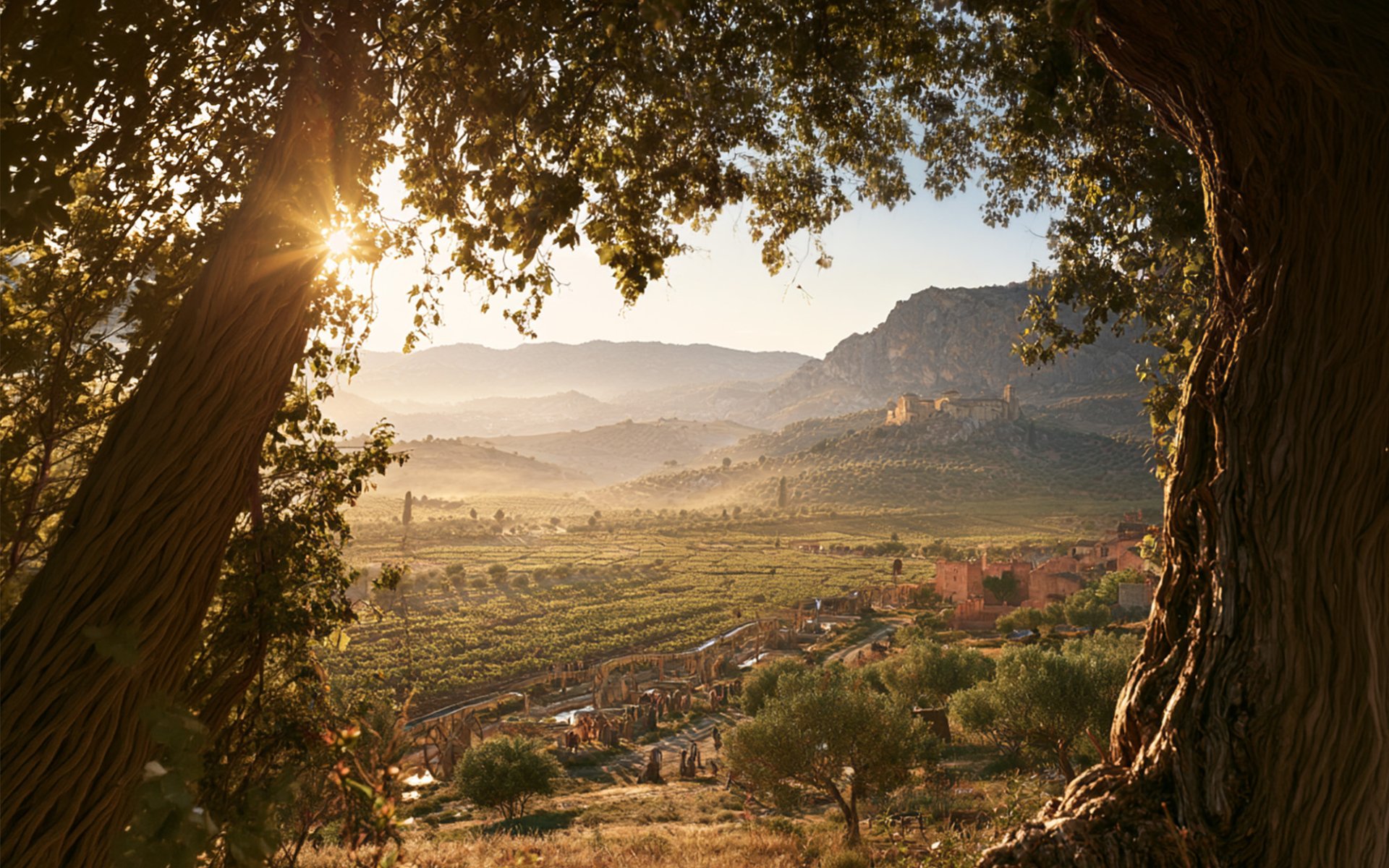
When discussing the history of Spanish wine, many people may think of the Roman era, the vineyards of Rioja, or Sherry from Jerez. Yet another period is equally important and fascinating: the centuries when much of the Iberian Peninsula came under the rule of the Moors, a period known as Al-Andalus, beginning in the 8th century.
At first glance, this period may appear to have been a “dark age” for the history of Spanish wine, as Islamic teachings prohibited the consumption of intoxicating beverages. However, historical and archaeological evidence reveals a far more complex picture. The arrival of Muslim rule did not bring grape cultivation in the Iberian Peninsula to an end, nor did wine disappear completely from the region.
Meanwhile, in the northern parts of the Iberian Peninsula that remained under Christian rule, the tradition of winemaking continued to be preserved, particularly within monasteries, where wine played an important role in religious ceremonies as well as in the daily life of monastic communities.
Research into agriculture in Al-Andalus has uncovered evidence from archaeological grape seeds as well as agricultural treatises written by scholars in Andalusia. These sources indicate that grape cultivation remained part of the agricultural system between the 10th and 14th centuries. They contain detailed information about grape varieties, cultivation techniques, vineyard management, and the various ways grapes were used.
Furthermore, studies by scholars from the Spanish National Research Council (CSIC) suggest that agricultural treatises from the Al-Andalus period reveal the development of increasingly sophisticated agricultural systems. These included the expansion of cultivated land, production to meet market demand, and the management of large agricultural estates known as Almunia, which incorporated gardens, farmland, and carefully planned irrigation systems.
One episode that illustrates the tension between religious teachings and social and cultural realities took place during the rule of Al-Mansur, the powerful regent of the Caliphate of Córdoba in the late 10th century. Although Al-Mansur was renowned as a military commander who played a major role in campaigns against the Christian kingdoms of northern Iberia, his attitude toward wine appears to have been more complex than his image as a religious and political leader might suggest.
According to one account, when religious conservatives called for vineyards across the territory to be destroyed in order to eliminate sources of wine, which they regarded as a cause of behavior contrary to Islamic principles, Al-Mansur did not order all vineyards to be destroyed, but instead took more limited action.
There have also been suggestions that Al-Mansur may personally have held a more tolerant attitude toward wine, with references to wine poetry attributed to him. However, the details of this episode and Al-Mansur’s personal motivations should be treated with caution, as direct historical evidence confirming these claims remains limited.
The story nevertheless illustrates the complexity of Al-Andalus society. Although religious prohibitions influenced state laws and policies, completely eliminating vineyards could have had significant consequences for agriculture, the economy, and the daily lives of local communities. The survival of grape culture in the Iberian Peninsula therefore depended not only on the popularity of wine consumption, but also on economic interests, the agricultural importance of grapes, and the complex social realities of different periods.
This became particularly evident in the 12th century, when the Almohad dynasty, a religious and political movement originating in North Africa, came to power. Religious policies and the enforcement of behavior considered contrary to Islamic principles became stricter, resulting in greater restrictions on the consumption and sale of intoxicating beverages.
These stricter policies affected both Muslim communities and religious minorities living under Almohad rule, particularly Christians and Jews. In some areas, they faced increasing religious and social pressure, prompting some groups to migrate toward northern parts of the Iberian Peninsula, where Christian kingdoms held power.
This period may therefore be regarded as one of the “dark ages” in the history of Spanish wine. Strict religious controls and restrictions significantly reduced the role of wine in many areas. However, these measures could not completely eradicate grape cultivation and winemaking from the Iberian Peninsula.
In the northern regions that remained under Christian rule, wine traditions continued to be preserved, particularly within monasteries and religious institutions, where grapes were still cultivated and wine continued to be produced for religious ceremonies.
After the medieval period, Spanish winemaking underwent further transformation. Previously, wine production had primarily focused on local consumption and religious purposes. However, as towns expanded, populations grew, and regional trade networks became increasingly interconnected, demand for wine also increased.
As a result, producers began placing greater emphasis on commercial production and improving the quality of their wines.
This transformation marked an important turning point in Spanish wine culture. Wine was no longer simply part of local traditions and cultural heritage; it increasingly became an economic commodity capable of generating income, connecting producers with wider markets, and encouraging continued improvements in production methods and quality control.
The history of Spanish wine during the Al-Andalus period therefore reveals a story not simply of decline, but of adaptation and survival. Despite religious restrictions and political changes, grape cultivation and winemaking persisted in different forms across the Iberian Peninsula. These traditions would later provide an important foundation for the development of Spain’s diverse and influential wine culture.
At first glance, this period may appear to have been a “dark age” for the history of Spanish wine, as Islamic teachings prohibited the consumption of intoxicating beverages. However, historical and archaeological evidence reveals a far more complex picture. The arrival of Muslim rule did not bring grape cultivation in the Iberian Peninsula to an end, nor did wine disappear completely from the region.
Agricultural Continuity and Monastic Winemaking
On the contrary, grape cultivation continued in many areas, with grapes being used in a variety of ways, including for fresh consumption, raisin production, and vinegar making.Meanwhile, in the northern parts of the Iberian Peninsula that remained under Christian rule, the tradition of winemaking continued to be preserved, particularly within monasteries, where wine played an important role in religious ceremonies as well as in the daily life of monastic communities.
Research into agriculture in Al-Andalus has uncovered evidence from archaeological grape seeds as well as agricultural treatises written by scholars in Andalusia. These sources indicate that grape cultivation remained part of the agricultural system between the 10th and 14th centuries. They contain detailed information about grape varieties, cultivation techniques, vineyard management, and the various ways grapes were used.
Furthermore, studies by scholars from the Spanish National Research Council (CSIC) suggest that agricultural treatises from the Al-Andalus period reveal the development of increasingly sophisticated agricultural systems. These included the expansion of cultivated land, production to meet market demand, and the management of large agricultural estates known as Almunia, which incorporated gardens, farmland, and carefully planned irrigation systems.
Social Contradictions: Wine Consumption Among the Elite
One of the most intriguing contradictions of the Al-Andalus period is that although Islamic teachings prohibited the consumption of intoxicating beverages, historical evidence suggests that some rulers and members of the elite continued to consume wine.One episode that illustrates the tension between religious teachings and social and cultural realities took place during the rule of Al-Mansur, the powerful regent of the Caliphate of Córdoba in the late 10th century. Although Al-Mansur was renowned as a military commander who played a major role in campaigns against the Christian kingdoms of northern Iberia, his attitude toward wine appears to have been more complex than his image as a religious and political leader might suggest.
According to one account, when religious conservatives called for vineyards across the territory to be destroyed in order to eliminate sources of wine, which they regarded as a cause of behavior contrary to Islamic principles, Al-Mansur did not order all vineyards to be destroyed, but instead took more limited action.
There have also been suggestions that Al-Mansur may personally have held a more tolerant attitude toward wine, with references to wine poetry attributed to him. However, the details of this episode and Al-Mansur’s personal motivations should be treated with caution, as direct historical evidence confirming these claims remains limited.
The story nevertheless illustrates the complexity of Al-Andalus society. Although religious prohibitions influenced state laws and policies, completely eliminating vineyards could have had significant consequences for agriculture, the economy, and the daily lives of local communities. The survival of grape culture in the Iberian Peninsula therefore depended not only on the popularity of wine consumption, but also on economic interests, the agricultural importance of grapes, and the complex social realities of different periods.
The Almohad Dynasty: A True "Dark Age" for Wine
Although Moorish rule across the Iberian Peninsula varied considerably from one period to another, and restrictions on wine could be enforced more strictly at certain times, such policies were not consistent throughout the entire history of Al-Andalus.This became particularly evident in the 12th century, when the Almohad dynasty, a religious and political movement originating in North Africa, came to power. Religious policies and the enforcement of behavior considered contrary to Islamic principles became stricter, resulting in greater restrictions on the consumption and sale of intoxicating beverages.
These stricter policies affected both Muslim communities and religious minorities living under Almohad rule, particularly Christians and Jews. In some areas, they faced increasing religious and social pressure, prompting some groups to migrate toward northern parts of the Iberian Peninsula, where Christian kingdoms held power.
This period may therefore be regarded as one of the “dark ages” in the history of Spanish wine. Strict religious controls and restrictions significantly reduced the role of wine in many areas. However, these measures could not completely eradicate grape cultivation and winemaking from the Iberian Peninsula.
In the northern regions that remained under Christian rule, wine traditions continued to be preserved, particularly within monasteries and religious institutions, where grapes were still cultivated and wine continued to be produced for religious ceremonies.
The Reconquista and the Rise of Commercial Winemaking
These monasteries effectively served as repositories of knowledge about viticulture and winemaking during a period when wine culture faced considerable restrictions elsewhere. This foundation became an important form of cultural heritage. As the Reconquista, or the gradual expansion of Christian kingdoms into southern Iberia, progressed, the traditions of grape cultivation and winemaking had opportunities to recover and expand once again in territories that had previously been under Moorish rule.After the medieval period, Spanish winemaking underwent further transformation. Previously, wine production had primarily focused on local consumption and religious purposes. However, as towns expanded, populations grew, and regional trade networks became increasingly interconnected, demand for wine also increased.
As a result, producers began placing greater emphasis on commercial production and improving the quality of their wines.
This transformation marked an important turning point in Spanish wine culture. Wine was no longer simply part of local traditions and cultural heritage; it increasingly became an economic commodity capable of generating income, connecting producers with wider markets, and encouraging continued improvements in production methods and quality control.
The history of Spanish wine during the Al-Andalus period therefore reveals a story not simply of decline, but of adaptation and survival. Despite religious restrictions and political changes, grape cultivation and winemaking persisted in different forms across the Iberian Peninsula. These traditions would later provide an important foundation for the development of Spain’s diverse and influential wine culture.
Tags :
Related Content