Larsen Cognac
Last updated: 17 Sept 2026
In the world of cognac, Larsen is a brand with a particularly fascinating story. Unlike many cognac houses whose origins can be traced back through generations of French winemaking families, Larsen began with the journey of a Norwegian man who set out by sea for the United States in search of new opportunities and challenges.
Yet his journey took an unexpected turn. The ship on which he was travelling was forced to stop in Bordeaux, France, for repairs. While waiting for the repairs to be completed, Jens Reidar had the opportunity to experience France, its people, and its wine culture. What began as a temporary stop gradually sparked a new interest and a different vision for his future. Instead of continuing on to America, he decided to remain in France—and never returned to that ship.
After spending time exploring different parts of France, Jens Reidar eventually arrived in Cognac, in the Charente region. This small town was already renowned as the birthplace of one of the world's most celebrated forms of brandy. It was here that he found love, inspiration, and a new opportunity in life, eventually deciding to make Cognac his permanent home.
In 1926, Jens Reidar decided to acquire the business of Joseph Gautier, a cognac producer in Cognac, and established his own company under the family name “Larsen.” This marked the official beginning of Larsen Cognac.
The early years of the business were not without challenges. However, Jens Reidar had a unique advantage: he understood the tastes and preferences of Scandinavian consumers and had established connections across the Nordic countries. He gradually expanded Larsen into Norway and other Nordic markets, allowing the brand to gain recognition and grow steadily.
During the 1960s, Jens Reidar passed the business on to his eldest daughter, Jean, who played an important role in expanding Larsen's presence in international markets. Responsibility was later passed down to the next generation, including Frédéric, Nicolas, and Anne, who continued the family's approach to craftsmanship and carried forward the knowledge of cognac production accumulated over generations.
Reflecting the family's Norwegian heritage and deep connection to its roots, Larsen adopted the name “Larsen – le cognac des Vikings,” or “The Cognac of the Vikings,” as part of its brand identity. The name pays tribute to the Norwegian origins of its founder and has remained closely associated with Larsen ever since.
Jens Reidar's journey became the foundation for the idea of the “Explorer,” one of the concepts Larsen continues to communicate today. The brand describes Larsen Cognac as being created for those with an explorer's spirit—people who are open to learning, eager to discover something new, and willing to seek experiences beyond the familiar.
For this reason, Larsen does not present cognac solely in terms of quality or flavour. Instead, it connects the experience of drinking cognac with the idea of discovery, a theme that has been part of the brand's story since its very beginning :
Discovering a new place.
Discovering a new flavour.
Discovering a new experience.
And sometimes, discovering a new perspective on ourselves through moments when we pause, slow down, and take the time to appreciate what is in front of us.
Larsen's production process also has its own distinctive approach. After the wine-making stage, the Eau-de-vie is distilled twice without the use of lees. This approach helps preserve the natural aromatic character and fruit-driven qualities of the grapes, resulting in an Eau-de-vie with a refined, smooth, and elegant character.
During distillation, particular attention is given to the stage known as “Coeur de la bonne chauffe,” or the heart of the distillation. This is the portion of the spirit that must be carefully selected before the Eau-de-vie is transferred for further maturation in oak casks. This stage demonstrates that producing cognac is not simply a matter of following a technical process. It also requires the experience and judgement of the producer to identify and select the Eau-de-vie with the right quality and character for further maturation. While technology can help control and monitor the production process, the expertise and sensory judgement of the cellar master remain essential.
Once the Eau-de-vie is transferred into oak casks, the production process enters another important stage, where its flavours, aromas, and colour gradually develop over time. Ageing is one of the most important stages in cognac production because freshly distilled Eau-de-vie is clear and does not yet resemble the cognac we are familiar with. Developing its full colour, aroma, and flavour requires time.
Under the regulations governing cognac, Eau-de-vie must be aged in oak casks for a minimum of two years before it can be sold as cognac. The age designation of a cognac is determined by the youngest Eau-de-vie used in the blend.
For Larsen, the ageing process is an aspect to which the brand pays particular attention. Larsen states that it uses casks made from fine-grained oak sourced from the Tronçais forest in France. The wood has relatively low tannin levels and is lightly toasted, allowing the oak to complement the character of the Eau-de-vie without overpowering Larsen's distinctive fruit flavours and aromas.
Throughout its time in the cask, gradual changes take place. The Eau-de-vie develops from clear to golden and amber hues, while its fruit aromas become increasingly complex. The oak contributes notes of vanilla, spice, and warm, comforting tones. As time passes, the flavours and aromas gain greater depth and dimension.
A single bottle of cognac may contain Eau-de-vie from a variety of sources and different ages. Bringing all these components together into one balanced flavour profile is therefore far from simple.
Larsen often compares the Master Blender to a musician or conductor who must bring numerous elements together in harmony. Today, David Croizet serves as Larsen's Master Blender, bringing more than 35 years of experience in cognac production and in blending Eau-de-vie to create Larsen's distinctive character.
The role is not simply about selecting the “best” cognac. It is about understanding which Eau-de-vie should be brought together, in what proportions, and how to create a balance between fruit, freshness, smoothness, and the influence of oak. This is why cognac is not simply a matter of age, but a matter of balance.
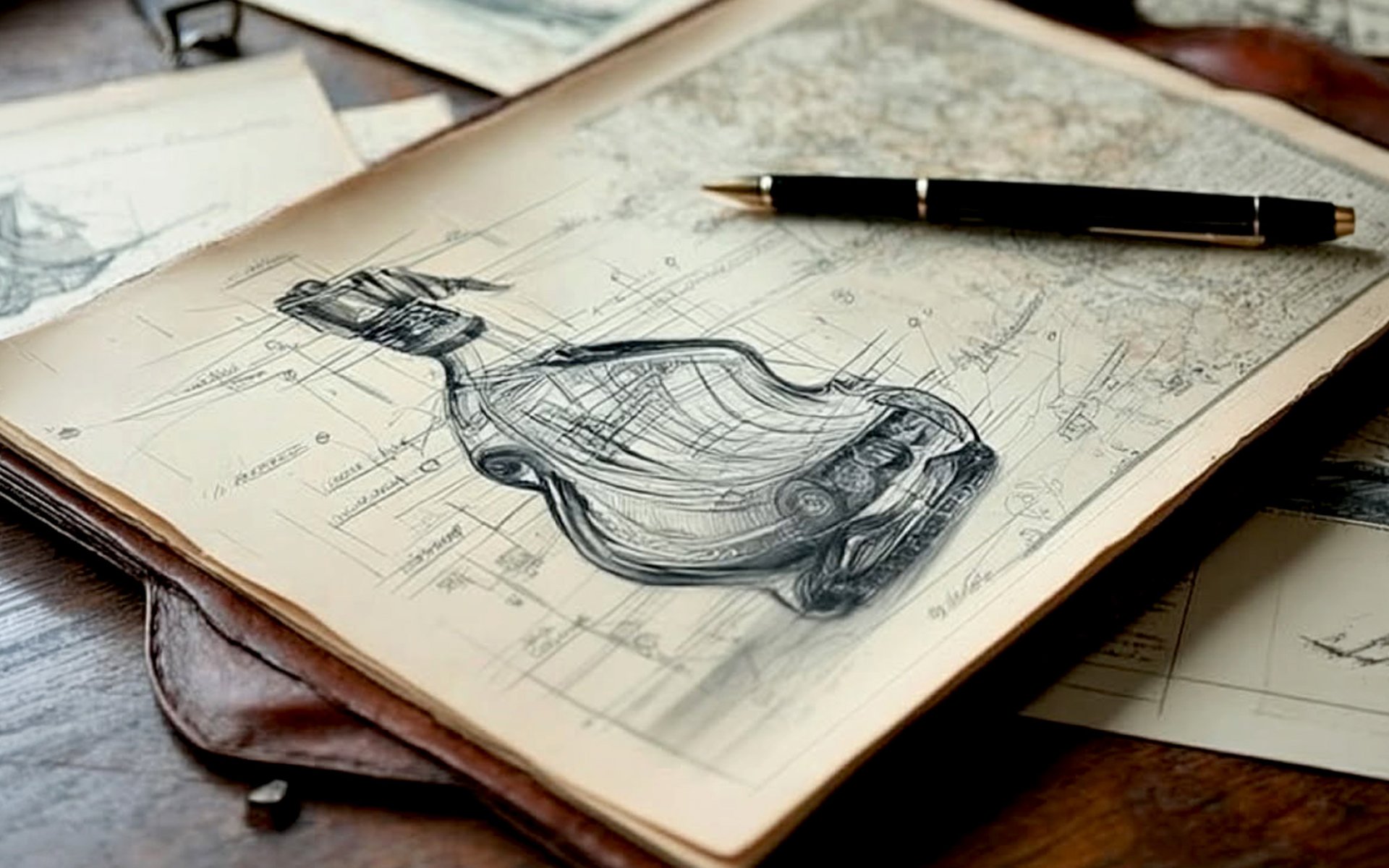
The ship-shaped bottle is more than simply a vessel for holding cognac. It is also part of the story the brand seeks to tell—a story of travel, discovery, and venturing onto new paths. With its distinctive appearance and clear connection to the brand's heritage, the Larsen bottle has become recognisable not only as a container for a spirit, but also as a collectible object with its own design appeal.
The story of Jens Reidar Larsen reminds us that sometimes an unplanned journey can lead us to discover some of the best things in life.
The Unexpected Journey of a Norwegian Explorer
The story of Larsen began with Jens Reidar Larsen, a Norwegian man born in 1895 in Kristiansand and raised in Tromsø, a port city in northern Norway. Growing up in a family of seafarers, Jens Reidar became familiar with a life shaped by travel from an early age. In 1919, at around 24 years old, he decided to leave his homeland in search of new opportunities and a new life across the Atlantic.Yet his journey took an unexpected turn. The ship on which he was travelling was forced to stop in Bordeaux, France, for repairs. While waiting for the repairs to be completed, Jens Reidar had the opportunity to experience France, its people, and its wine culture. What began as a temporary stop gradually sparked a new interest and a different vision for his future. Instead of continuing on to America, he decided to remain in France—and never returned to that ship.
After spending time exploring different parts of France, Jens Reidar eventually arrived in Cognac, in the Charente region. This small town was already renowned as the birthplace of one of the world's most celebrated forms of brandy. It was here that he found love, inspiration, and a new opportunity in life, eventually deciding to make Cognac his permanent home.
The Birth of "The Cognac of the Vikings"
Jens Reidar spent several years seriously studying and mastering the art of cognac production. He worked and gained valuable experience at Prunier, a well-known cognac house of the time. Through this experience, he gradually developed a deeper understanding of the production process and the craft behind cognac, building the knowledge and expertise he would eventually need to establish his own business.In 1926, Jens Reidar decided to acquire the business of Joseph Gautier, a cognac producer in Cognac, and established his own company under the family name “Larsen.” This marked the official beginning of Larsen Cognac.
The early years of the business were not without challenges. However, Jens Reidar had a unique advantage: he understood the tastes and preferences of Scandinavian consumers and had established connections across the Nordic countries. He gradually expanded Larsen into Norway and other Nordic markets, allowing the brand to gain recognition and grow steadily.
During the 1960s, Jens Reidar passed the business on to his eldest daughter, Jean, who played an important role in expanding Larsen's presence in international markets. Responsibility was later passed down to the next generation, including Frédéric, Nicolas, and Anne, who continued the family's approach to craftsmanship and carried forward the knowledge of cognac production accumulated over generations.
Reflecting the family's Norwegian heritage and deep connection to its roots, Larsen adopted the name “Larsen – le cognac des Vikings,” or “The Cognac of the Vikings,” as part of its brand identity. The name pays tribute to the Norwegian origins of its founder and has remained closely associated with Larsen ever since.
The Spirit of Discovery
Looking back, the story of Jens Reidar almost perfectly reflects the character of Larsen itself. He was a man who left Norway without knowing where his journey would ultimately lead. From Norway to France, from Bordeaux to Cognac, from sailor to cognac expert, and from an initial fascination with Eau-de-vie to creating a brand of his own.Jens Reidar's journey became the foundation for the idea of the “Explorer,” one of the concepts Larsen continues to communicate today. The brand describes Larsen Cognac as being created for those with an explorer's spirit—people who are open to learning, eager to discover something new, and willing to seek experiences beyond the familiar.
For this reason, Larsen does not present cognac solely in terms of quality or flavour. Instead, it connects the experience of drinking cognac with the idea of discovery, a theme that has been part of the brand's story since its very beginning :
Discovering a new place.
Discovering a new flavour.
Discovering a new experience.
And sometimes, discovering a new perspective on ourselves through moments when we pause, slow down, and take the time to appreciate what is in front of us.
The Art of Crafting Flavour: Distillation and Ageing
One of the characteristics that gives Larsen its distinctive identity is its emphasis on freshness, expressive fruit aromas, and balance.Larsen's production process also has its own distinctive approach. After the wine-making stage, the Eau-de-vie is distilled twice without the use of lees. This approach helps preserve the natural aromatic character and fruit-driven qualities of the grapes, resulting in an Eau-de-vie with a refined, smooth, and elegant character.
During distillation, particular attention is given to the stage known as “Coeur de la bonne chauffe,” or the heart of the distillation. This is the portion of the spirit that must be carefully selected before the Eau-de-vie is transferred for further maturation in oak casks. This stage demonstrates that producing cognac is not simply a matter of following a technical process. It also requires the experience and judgement of the producer to identify and select the Eau-de-vie with the right quality and character for further maturation. While technology can help control and monitor the production process, the expertise and sensory judgement of the cellar master remain essential.
Once the Eau-de-vie is transferred into oak casks, the production process enters another important stage, where its flavours, aromas, and colour gradually develop over time. Ageing is one of the most important stages in cognac production because freshly distilled Eau-de-vie is clear and does not yet resemble the cognac we are familiar with. Developing its full colour, aroma, and flavour requires time.
Under the regulations governing cognac, Eau-de-vie must be aged in oak casks for a minimum of two years before it can be sold as cognac. The age designation of a cognac is determined by the youngest Eau-de-vie used in the blend.
For Larsen, the ageing process is an aspect to which the brand pays particular attention. Larsen states that it uses casks made from fine-grained oak sourced from the Tronçais forest in France. The wood has relatively low tannin levels and is lightly toasted, allowing the oak to complement the character of the Eau-de-vie without overpowering Larsen's distinctive fruit flavours and aromas.
Throughout its time in the cask, gradual changes take place. The Eau-de-vie develops from clear to golden and amber hues, while its fruit aromas become increasingly complex. The oak contributes notes of vanilla, spice, and warm, comforting tones. As time passes, the flavours and aromas gain greater depth and dimension.
The Master Blender's Symphony
But the production of cognac does not end with ageing. One more stage requires the knowledge and experience of skilled specialists: blending. This is the point at which Eau-de-vie from different sources and of different ages is carefully combined to create the distinctive character and flavour profile of each Larsen expression.A single bottle of cognac may contain Eau-de-vie from a variety of sources and different ages. Bringing all these components together into one balanced flavour profile is therefore far from simple.
Larsen often compares the Master Blender to a musician or conductor who must bring numerous elements together in harmony. Today, David Croizet serves as Larsen's Master Blender, bringing more than 35 years of experience in cognac production and in blending Eau-de-vie to create Larsen's distinctive character.
The role is not simply about selecting the “best” cognac. It is about understanding which Eau-de-vie should be brought together, in what proportions, and how to create a balance between fruit, freshness, smoothness, and the influence of oak. This is why cognac is not simply a matter of age, but a matter of balance.
The Iconic Viking Ship Bottle
Another feature that has made Larsen memorable is its bottle design, particularly the iconic “Viking Ship” bottle, which connects directly to the heritage of Jens Reidar and the story of his journey from Norway to France.The ship-shaped bottle is more than simply a vessel for holding cognac. It is also part of the story the brand seeks to tell—a story of travel, discovery, and venturing onto new paths. With its distinctive appearance and clear connection to the brand's heritage, the Larsen bottle has become recognisable not only as a container for a spirit, but also as a collectible object with its own design appeal.
The story of Jens Reidar Larsen reminds us that sometimes an unplanned journey can lead us to discover some of the best things in life.
Larsen Cognac Collections Available in Thailand
Larsen Cognac is available in Thailand in three SKUs :- Larsen VSOP Reserve: This Cognac clearly reflects the balanced style of Larsen. It is crafted from as many as 40 different Eaux-de-vie sourced from the Fins Bois and Petite Champagne growing areas, with ages ranging from 4 years to more than 10 years. On the nose and palate, this expression is characterised by notes of candied fruit, plum, vanilla, toasted bread, and orange marmalade. It has a smooth and rounded texture, making it easy to enjoy while retaining a level of complexity that remains approachable. Simply put, Larsen VSOP Reserve is an accessible Cognac that maintains a premium character, making it suitable for a wide range of occasions.
- Larsen XO Reserve: This takes complexity and premium character to another level. This expression is crafted from as many as 60 different Eaux-de-vie sourced from three principal growing areas: Fins Bois, Petite Champagne, and Grande Champagne, with some Eaux-de-vie aged for up to 30 years. Its extended ageing gives Larsen XO Reserve greater aromatic depth and complexity, ranging from notes of ripe fruit and prune to nuts, roasted cocoa, liquorice, and mocha. The palate remains smooth and refined, with flavours that linger and gradually unfold after each sip.
- Larsen Viking Ship: Last but certainly distinctive, this is recognised by its iconic Viking Ship-shaped bottle. With its striking design, Larsen Viking Ship is particularly suited to special occasions, whether presented as a gift, opened to celebrate, or enjoyed as part of a moment that reflects a sense of personal taste and style. Another interesting detail that many may not immediately notice is the gold-coloured stopper, engraved with the word “Invincible”. The word refers to the idea of invincibility and immortality, making it a fitting expression of the brand’s story. In terms of flavour, Larsen Viking Ship has a smooth and elegant character, with delicate floral and fruit aromas, including passion fruit, lychee, and vanilla. Its texture is soft and silky, accompanied by an elegant character that gives this expression its appeal in both taste and appearance.
Tags :
Related Content