Mimolette
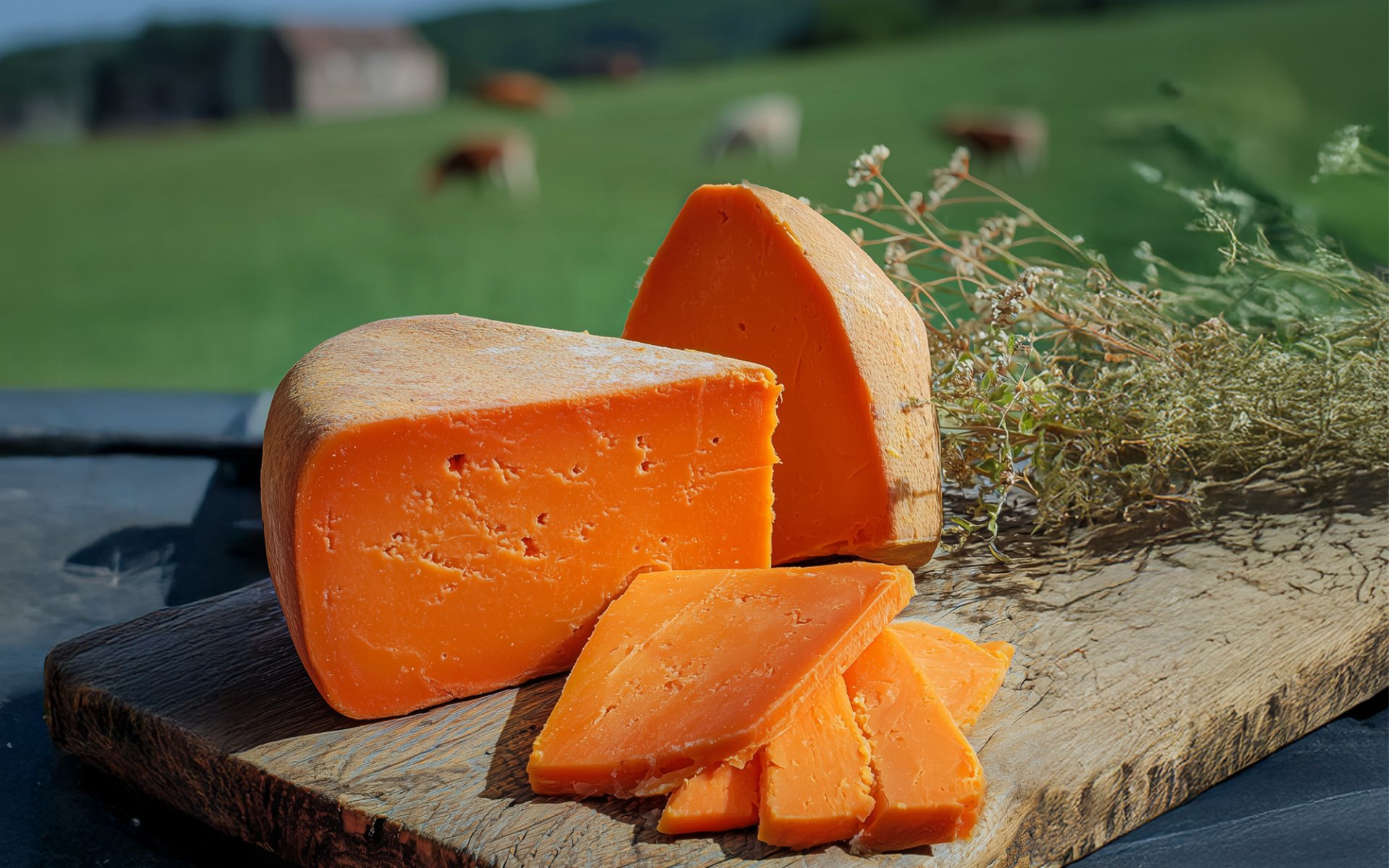
Mimolette: The Distinctive Cheese from Nord-Pas-de-Calais
"Mimolette" is a cheese that stands as a point of pride for northern France, particularly in the city of Lille and its surrounding areas in the Nord departmenta region renowned for its unique culinary culture. Mimolette cheese is made from pasteurized cow's milk and is distinguished by its unique appearance: a large, spherical cheese wheel, typically weighing around 2 kilograms. Its rind is hard, white or grey, with subtle brown markings, while its interior boasts a vibrant orange color with a semi-hard to semi-soft texture.
Its overall resemblance to a cantaloupe, both in its spherical shape and bright color, makes Mimolette easily recognizable. The vivid orange hue of the cheese comes from Annatto, a natural food coloring extracted from the seeds of the Achiote tree. Beyond its striking appearance, Mimolette was a favored cheese of a significant French president during World War II, Charles de Gaulle, further cementing its recognized status.
Born from Royal Mandate: A Creation for Economic Independence
The origins of Mimolette cheese can be traced back to the flourishing reign of King Louis XIV (16431715), a period when France was striving to become an economic and cultural superpower. At that time, Edam cheese from the Netherlands was widely popular, not only in France but across other continents as well.
However, under the policies of King Louis XIV and his trusted minister Jean-Baptiste Colbert, there was a strong push to bolster the domestic economy and local products, aiming to gain an advantage over key rivals like England and the Netherlands. A crucial strategy involved restricting imports of foreign goods, and Edam cheese was specifically targeted to be pushed out of the French market to make way for local products to thrive.
King Louis XIV harbored a strong desire to create a genuinely French cheese product to replace and compete with Edam. The task of crafting this new cheese fell to producers in northern France, a region with strong cultural ties to the Netherlands. These producers used Edam as a model, refining it to retain some of its original characteristics, such as its relatively large size, hard rind, and firm interior. Simultaneously, they incorporated new, distinctly French features, notably the addition of a vibrant orange color to the cheese's interior. Initially, carrot juice was used for this coloring, before transitioning to Annatto, which provided a more consistent and appealing hue.
The Unique Mimolette Rind: From Nature and Microbes
While the rind of Edam cheese is typically coated with wax before aging, Mimolette's rind exhibits a completely different and special characteristic. In the production process, after the milk has curdled, it is placed into spherical molds for aging. Mimolette's distinctive hard rind develops through a more complex natural process, involving the use of bacteria or cheese mitestiny microorganisms that live on the cheese surfaceto directly facilitate the aging process on the rind itself. A rind formed through such a natural process is constantly evolving with the age of each cheese wheel, giving each piece its unique character.
From Boule de Lille to Mimolette: The Revival of a Proud Cheese
Upon its initial launch, this cheese was known by various names, such as "vieux Hollande" (old Holland), reflecting its inspiration from Dutch cheese, or "Boule de Lille" (ball of Lille), a name still used today to honor its origin city.
Although it enjoyed considerable popularity upon its introduction, early Mimolette production was largely traditional, carried out by farmers and local producers. The rise of large-scale industry and an unfavorable economic climate for small-scale production led to a gradual decline in the cheese's popularity over time, almost causing it to fade from French culinary culture.
It wasn't until the major cheese producer "Isigny Sainte-Mère," founded in 1909 and located in Manche, not far northwest of Lille, decided to reintroduce this cheese in 1959. This decision marked a significant turning point. Subsequently, Isigny Sainte-Mère became a leader in industrial Mimolette production, alongside two other major companies, Lilactis and Savencia, helping Mimolette regain recognition and accessibility among consumers.
In the modern era, particularly after 1900, people commonly referred to this cheese as "Mimolette," as it is known today. The name derives from the French word "mollet," meaning "soft," referring to the cheese's texture in its initial stages before undergoing prolonged aging for decades. As commercial production flourished, small-scale farm cheesemakers and artisanal producers also rekindled their interest in Mimolette production. Eventually, this cheese escaped its forgotten status and once again became the pride of Lille and northern France, gaining peak popularity from 2010 onwards.
The Flavor of Time: Mimolette by Age
Mimolette is an aged cheese that can be enjoyed after aging for anywhere from 2 months to over 2 years. The longer it ages, the more unique each wheel becomes: the rind turns greyer with more prominent patterns, the texture hardens, the flavors and aromas become more intense and complex, and the orange color deepens. It is referred to by different names and has distinct serving suggestions based on its four main aging periods:
- Jeune Mimolette (Young): Aged for just 2-3 months, its texture remains soft and slightly elastic. It retains subtle sweet notes and a creamy mouthfeel. Perfect as a snack or part of a cheese board, often paired with white wine or light beers like Pilsner.
- Demi-Vieille Mimolette (Semi-Aged): This cheese is aged for 6-9 months. Its texture becomes firmer and denser. The flavor balances sweetness with nutty notes, accompanied by a slightly stronger aroma. Popular with red wines, fruit wines, or Ales (beers fermented with top-fermenting yeast at warmer temperatures). It's also excellent for grating over salads or pasta.
- Vieille Mimolette (Aged): Aged for 12-18 months, this cheese is firm and brittle. Its flavor loses sweetness, emphasizing nutty, salty, and earthy characteristics. The aroma is intense and spice-like. The rind becomes rough and pitted, a unique hallmark of this Mimolette type. Best for grating over dishes or pairing with robust red wines or various bitter beers.
- Extra-Vieille Mimolette (Extra-Aged): Aged for 2 years or more, this is the most popular variety. Its texture is crumbly and firm to the bite. The flavor and aroma reach their peak intensity and complexity, resembling hazelnuts combined with spices. The cheese boasts the most vibrant orange hue. It is best enjoyed on its own, in small portions, to fully appreciate its profound taste. Occasionally, it is also paired with the most intense wines, like Bordeaux, or even aged spirits.
Mimolette is thus more than just cheese; it is an edible work of art that reflects history, determination, and the exquisite beauty of aging flavors. It is a true French pride ready to impress all who taste it.