Pangasius Fish
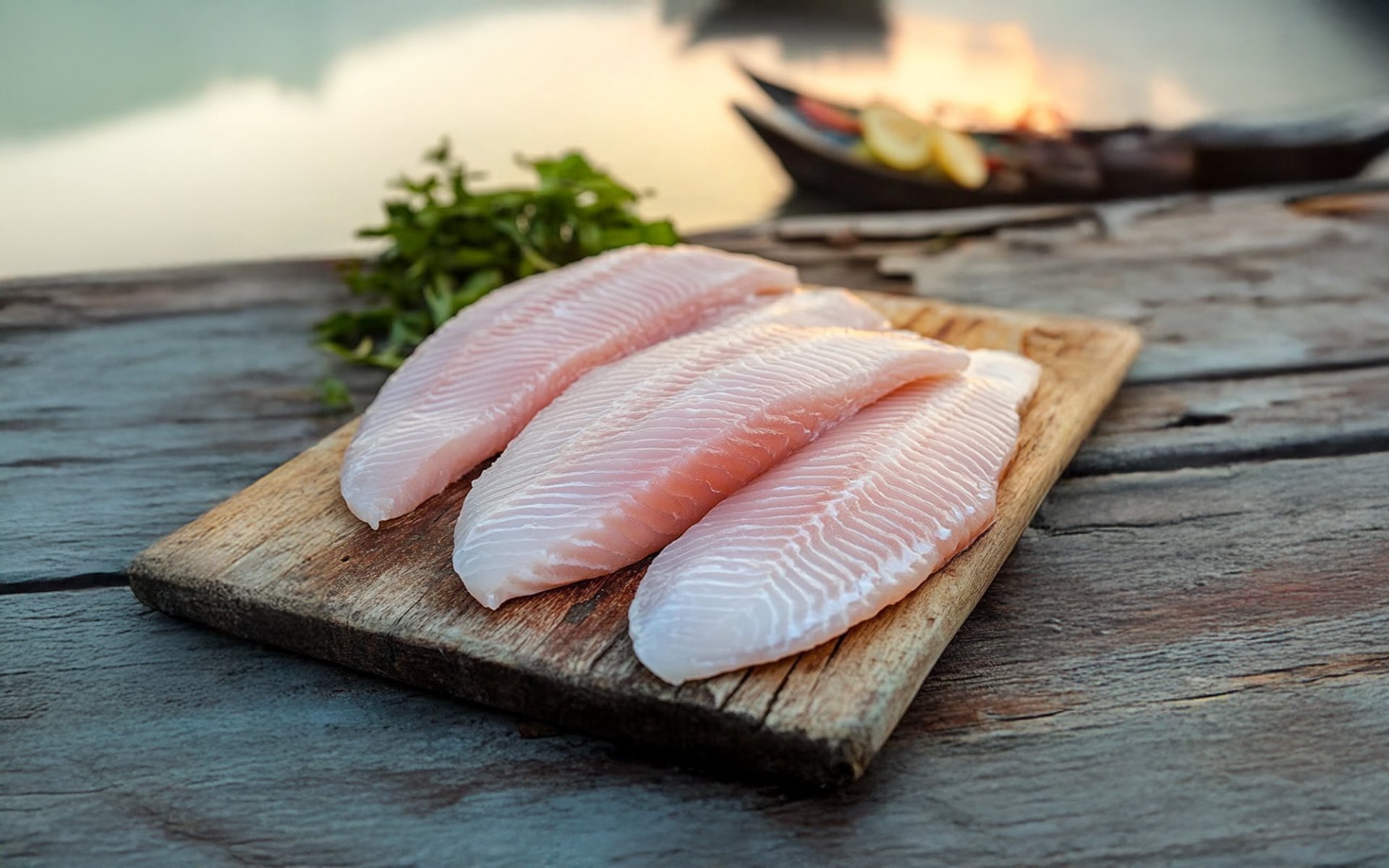
Pangasius: The Indigenous Fish of Southeast Asia
"Pangasius" refers to a group of freshwater fish belonging to the Pangasiidae family, encompassing approximately 30 species, including the Striped Catfish (Pla Sawai) familiar to Thais. These fish are native to the major river systems of Southeast Asia, particularly the vast Mekong River basin. Pangasius fish are characterized by their scaleless skin, slender bodies, two pairs of barbels around the mouth, and a long anal fin, making them distinct from other fish species.
Pangasius has been culturally significant in the diets of people living along the Mekong River for centuries, especially in southern Vietnam, notably around Cần Thơ city and An Giang province along the Mekong. Pangasius fish have been caught for household consumption and widely processed into various forms, such as dried or smoked fish, since pre-colonial times, reflecting their deep connection to the livelihoods of the region's inhabitants.
From Local Fish to Global Culinary Star
Pangasius fish possess a remarkable ability to adapt well to low-oxygen environments and exhibit an impressively rapid growth rate. These qualities have made Pangasius a popular choice for local fishermen and fish farmers.
Beginning in the 1990s (1990-1999), the Vietnamese government actively began supporting the aquaculture of this fish in cages and earthen ponds, elevating production from traditional methods to a large-scale industry. This support led to Pangasius becoming one of Vietnam's primary export commodities, generating substantial revenue for the country.
In the 2000s (2000-2009), Pangasius fish, particularly the Bas (Pangasianodon hypophthalmus) and Tra (Pangasius bocourti) varieties, were aggressively promoted into the global market, with Vietnam rapidly becoming the world's largest exporter. Today, Vietnam exports this group of fish to numerous countries worldwide, including the United States, the European Union, Australia, and Middle Eastern nations, showcasing its success in elevating a local fish to an international culinary ingredient.
The "Pangasius Dory" Strategy and Factors for Success
Interestingly, Vietnam adopted the commercial name Pangasius Dory for its exported Pangasius fish. This strategy aimed to present this group of fish as a high-quality product capable of competing with John Dory, a premium and high-priced white fish. This naming strategy proved to be rapidly successful, effectively boosting the popularity of Pangasius in the global market.
Pangasius fish's widespread popularity in the global market stems from several key factors:
- Good Quality Flesh: The fish has a soft, delicate flesh with no prominent fishy odor, a quality highly favored by consumers.
- High Production Volume and Accessible Price: It can be farmed in large quantities within limited areas, leading to low production costs and making it cheaper than other popular white fish such as cod or halibut. This makes it a cost-effective choice for consumers and the food industry.
- Versatility in Cooking: Pangasius fish has a mild flavor, making it highly adaptable to a wide range of international cuisines. It can be prepared in both Western and Asian dishes.
In Western countries, Pangasius is commonly used in popular dishes like Fish and Chips, Fish Burgers, and various fried preparations where a firm texture and good mouthfeel are desired. In Thailand, this group of fish is often used in familiar traditional and local dishes such as Gaeng Tay Po (Curry with Water Mimosa and Fish), Tom Yum (Spicy Thai Soup), dried fish, sun-dried fish, fried fish, and grilled fish, all reflecting the versatility of this species.
Nutritional Value and Sustainable Production Standards
Beyond its delicious taste and accessible price, Pangasius fish also boasts high nutritional value. It is particularly rich in Omega-3 fatty acids, which are highly beneficial for heart and brain health. Additionally, it is an excellent source of high-quality protein, Vitamin B2, Vitamin D, and essential minerals such as calcium, phosphorus, iron, and zinc, all crucial for various bodily functions.
Pangasius fish is low in calories, high in protein, and low in saturated fat, making it an excellent choice for individuals managing their weight or maintaining heart health. On average, 100 grams of Pangasius fish provides approximately 90120 kcal, 1520 grams of protein, and only 24 grams of fat. It also contains important vitamins like D and B12, and minerals such as phosphorus and selenium, which are essential for immune system function and overall cellular health.
Due to consistently high demand, Pangasius farming has evolved into a large-scale industry with serious commitments to quality control and environmental impact. Numerous Pangasius farms in Vietnam and other countries have received certifications from reputable international organizations such as ASC (Aquaculture Stewardship Council), which certifies sustainable and responsible aquaculture practices towards communities and the environment, and GlobalG.A.P. (Good Agricultural Practices), an international standard for food safety and farm management.
These certifications have transformed Pangasius into a more trustworthy fish in the premium market and have helped enhance the image of freshwater fish on the global stage, proving that it can be produced safely and sustainably.
Although Pangasius has gained widespread popularity, there was a period when negative rumors circulated regarding farming methods and water quality in Vietnamese farms. Many of these claims were later proven to be misleading or lacked proper context. To build consumer confidence, many farms have since improved their production processes to be transparent, traceable, and rigorously certified according to international standards. As a result, Pangasius continues to be one of the most exported fish globally, maintaining the trust of customers in the food industry.