Pasta Salad
Origins and Theories
The history of pasta salad is tied to several interesting theories. One notable theory connects it to the Jewish community in Italy. Food writer Claudia Roden has suggested that Italian Jews began making pasta salad centuries before other Italians. This was largely due to Jewish Sabbath laws, which prohibit cooking on the Sabbath. As a result, the need to prepare food in advance and consume it cold became a driving force behind the creation of pasta salad.
Following these religious practices not only inspired a new dish but also led to the development of unique culinary techniques. The Jewish communities in Italy became pioneers in serving pasta cold, which contrasted with the traditional Italian practice of eating pasta hot.
Another theory suggests that pasta salad may have evolved from chilled rice salads, which date back to the 16th century. These early recipes contained vegetables and seasonings similar to those found in modern pasta salads. As pasta varieties became more diverse, people began replacing rice with pasta in such dishes.
Arrival in the United States and Growing Popularity
In the early 20th century, as Italian immigrants arrived in the New World, pasta salad began to gain recognition in the United States. Its popularity grew rapidly, especially with the invention and spread of household refrigerators, which made it easier to store food and prepare meals ahead of time. The commercial availability of mayonnaise also contributed to its rise, as it became a key ingredient that gave pasta salad its rich, creamy flavor.
After World War II, American society entered an era of prosperity and social change. During this time, pasta salad gained even more popularity, particularly among middle-class families who sought simple, convenient dishes suitable for social gatherings. Economic growth meant people had greater purchasing power and more leisure time for recreational activities, making pasta salad a popular choice for picnics, parties, and community events.
The Rise of Macaroni Salad and Creative Variations
During the 1950s and 1960s, one of the most popular forms of pasta salad in the United States was Macaroni Salad. This version typically consisted of elbow macaroni, carrots, onions, bell peppers, and mayonnaise. It became a household staple and was a common sight at social gatherings and celebrations.
In the 1980s, chefs and home cooks began experimenting with new ingredients, incorporating leafy greens, premium cheeses, and specialty dressings. These innovations not only enhanced the flavor but also elevated pasta salads status in the culinary world.
Modern Styles and Health-Conscious Adaptations
Today, pasta salad comes in a variety of styles:
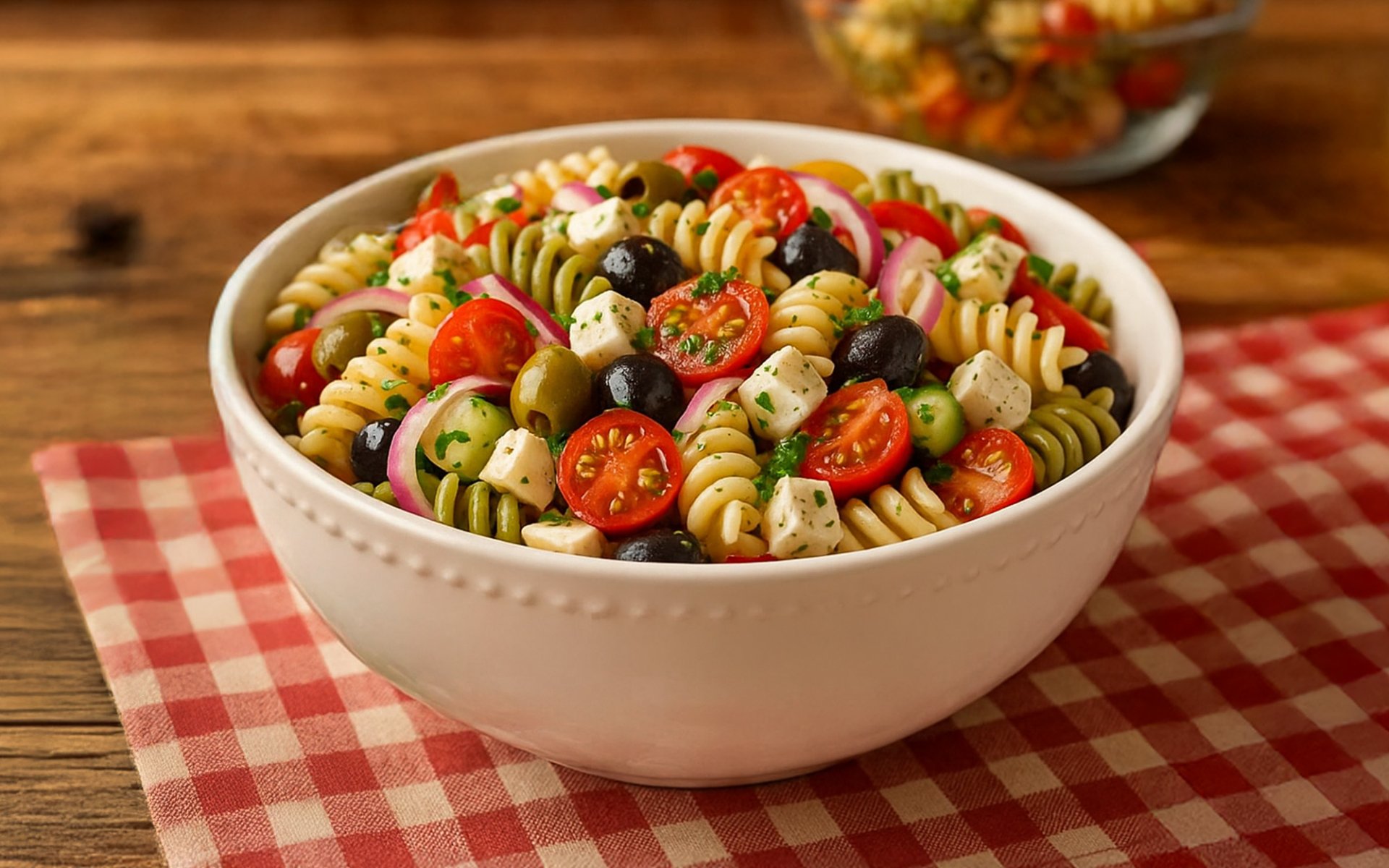
Italian-American Style Often made with short pasta like penne or fusilli, cherry tomatoes, mozzarella, olives, and Italian herbs, dressed with olive oil or herb-seasoned vinaigrette.
Classic American Macaroni Salad Typically uses elbow macaroni or tubular pasta, mayonnaise, and vegetables such as carrots, celery, and onions, with optional additions like boiled eggs or ham for extra protein.
Mediterranean Variations Highlight local ingredients like olives, sun-dried tomatoes, feta cheese, fresh herbs, and high-quality olive oil, along with spices such as oregano and rosemary.
In todays health-conscious era, pasta salads have been adapted to suit modern nutritional preferences. This includes using whole grain pasta, adding more leafy greens and colorful vegetables, reducing or replacing mayonnaise with olive oil, and incorporating protein sources such as beans, seeds, whole grains, or lean meats. These changes have transformed pasta salad from a simple appetizer or side dish into a wholesome main course.