Turrón
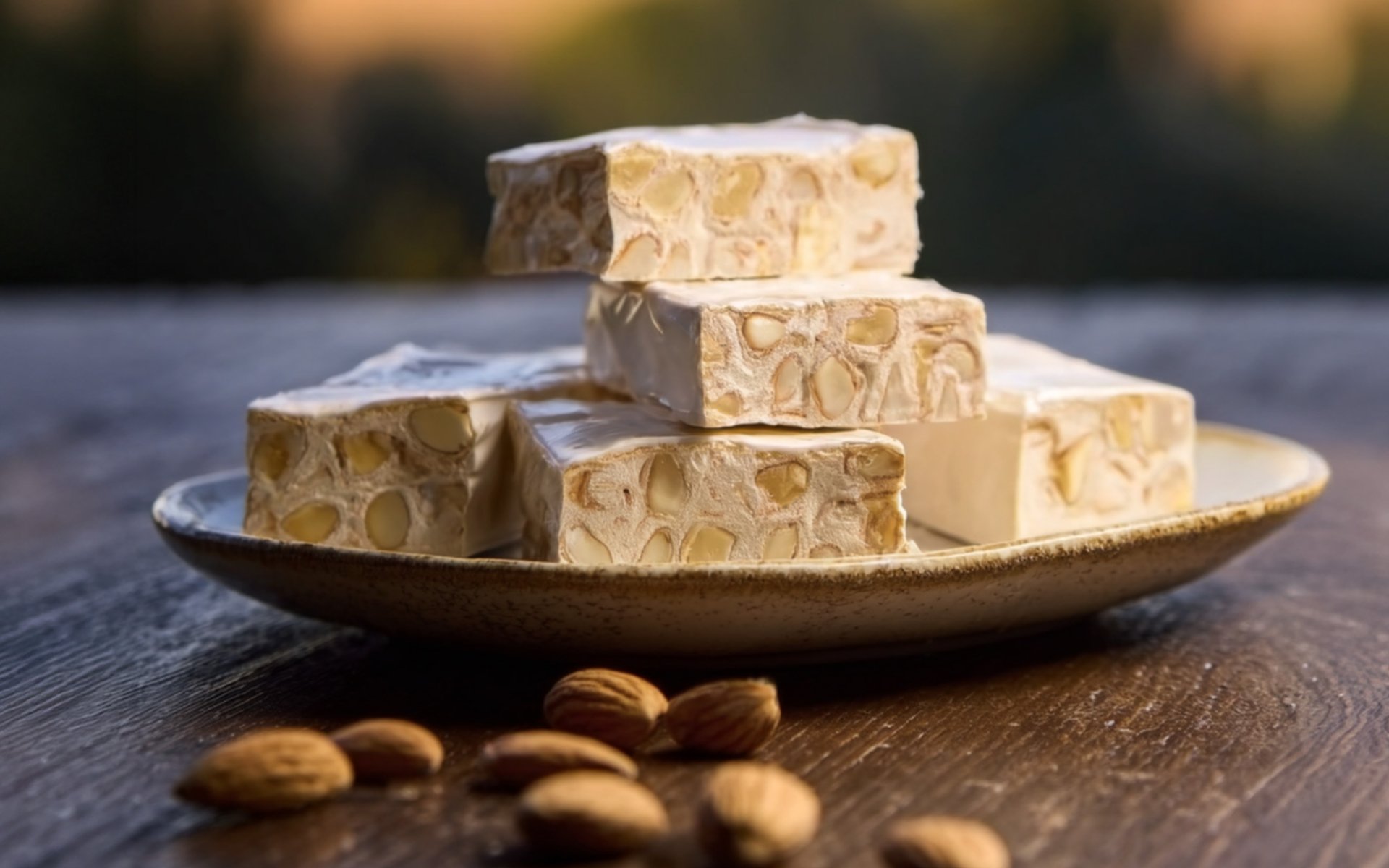
Turrón, known in Catalan and Valencian as Torró, is a traditional Spanish nougat that is especially popular during the Christmas season. It is made from key ingredients including roasted almonds, honey, sugar, and egg whites.
Ancient Origins: Greek and Roman Influences
The origins of Turrón can be traced back to ancient times. Historical evidence suggests that similar confections existed during the Greek and Roman eras. The ancient Greeks prepared sweets made from nuts and honey to provide energy for athletes competing in the Olympic Games. Meanwhile, the Romans had a confection called Cupedia or Cupeto, which was similar in nature and mentioned in Roman poetry.The Latin Root of the Name Turrón
The name Turrón is derived from the Latin word Torrere, meaning to toast or to roast, reflecting the method of preparing the nuts and other ingredients.Arab and Berber Influence on Iberian Confectionery
Around the year 1000, Arabs and Berbers occupied large parts of the Iberian Peninsula and introduced their tradition of making honey-and-almond-based confections to Spain. This influence led to the creation of many early recipes similar to what we now know as Turrón.The Earliest Recorded Mention (Year 1484)
Although the use of honey and almonds in sweets began during this period, the earliest recorded mention of Turrón dates back to 1484, in historical documents from Valenciamarking the earliest confirmed evidence of its existence in the region.Turrón in the Royal Court of King Philip II
Fernando Galiana Carbonell, a historian and chronicler from the town of Jijona, noted that after the royal chef of King Philip II (reigned 15261598) introduced Turrón to the Spanish court, the confection quickly became a royal favorite. Later, in 1610, the historian Gaspar Escolano wrote that Turrón was often given as a gift to princes and kings.Nationwide Popularity Across Spain
The popularity of Turrón increased greatly after receiving praise from King Philip II, leading to widespread demand across Spain.20th Century: Jijona as the Modern Production Hub
During the 20th century, the town of Jijona developed into a major economic center for Turrón production, especially after the Spanish Civil War. Producers modernized their manufacturing processes, allowing for industrial-scale production, increased output, and widespread exportparticularly to Latin American countries.Economic Significance of Turrón in Spain
According to El País, Turrón generates approximately 400 million (roughly 14.9 billion Thai baht) in annual revenue for Spain, highlighting its strong market potential and significance within the country's food economy.Traditional Turrón Recipe
Traditional Turrón consists of honey, egg whites, and roasted almonds. The preparation begins with boiling honey until thickened, then mixing it with stiffly beaten egg whites, followed by the addition of almonds. The mixture is then poured into molds, covered with thin wafers, and cut into bars.Main Types of Turrón
Turrón is divided into two main varieties:
Turrón de Alicante (Hard Turrón):
Hard and brittle, featuring whole almonds clearly visible throughout.
Turrón de Jijona (Soft Turrón):
Made from finely ground almonds, giving it a soft and chewy texture.
PGI Certification by the European Union
To preserve tradition and unique flavor, the European Union granted Protected Geographical Indication (PGI) status to both Turrón de Alicante and Turrón de Jijona in 1996.
Strict PGI Requirements and Quality Standards
PGI certification requires at least one stage of production, processing, or preparation to take place in the designated region. For Turrón, this means it must be produced and packaged in Jijona, located in the province of Alicante, in order to maintain traditional standards, quality, and authenticity.
The PGI also sets strict guidelines for Turrón de Alicante: it must contain at least 46% Marcona almonds and no less than 10% honey, ensuring the use of premium local ingredients. These requirements preserve not only the distinctive flavor and texture but also the confections historical and cultural significance.
Traditional Methods Preserved in Modern Jijona
Today, Turrón producers in Jijona continue to follow the traditional standards and methods passed down through generations. At least 10% of the honey used must be pure local honey, while the almonds must be high-quality Mediterranean-grown almonds, ensuring the authentic aroma, flavor, and quality of traditional Turrón.