Pandoro
Last updated: 9 Dec 2025
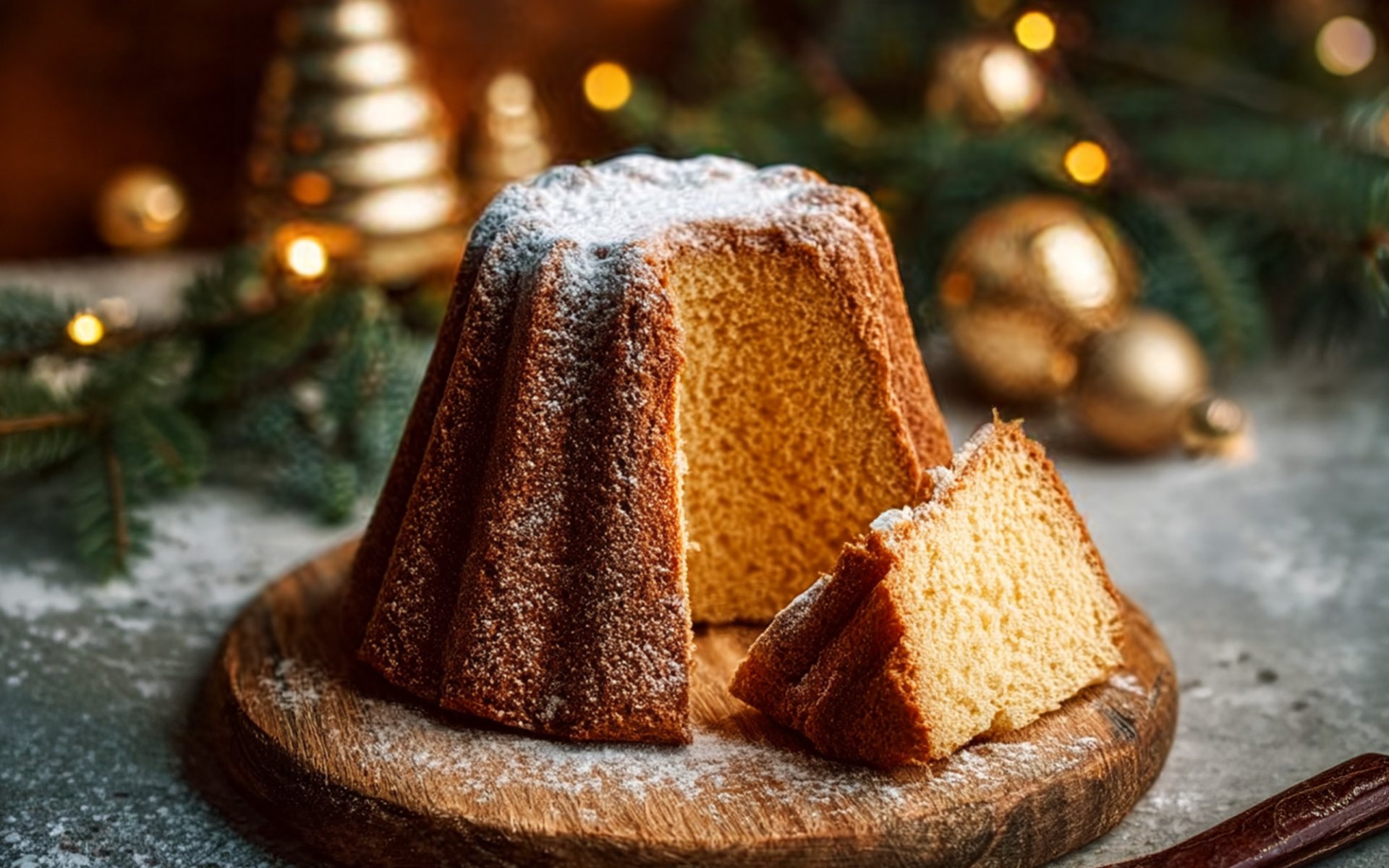
Pandoro is a sweet, star-shaped bread originating from Verona, Italy. It is traditionally enjoyed during Christmas and New Year celebrations. The hallmark of this dessert lies in its eight-pointed star shape and its golden color derived from butter and eggs. Pandoro is known for its soft, airy, and fluffy texture. Typically, it is dusted with vanilla-scented icing sugar, giving it a snowy appearance reminiscent of Alpine peaks.
Lè proprio un pan de oro! It truly is a golden bread!
This remark is believed to have inspired the name Pandoro, which literally means golden bread.
Historical Origins in the Veneto Region
The history of Pandoro is closely tied to the long-standing tradition of sweet bread making in the Veneto region, dating back to the Middle Ages. During that era, Venetians created sweetened breads for special festivals, although the exact recipe for Pandoro had not yet been established. These early festive breads are believed to have later evolved into the Pandoro we know today.Development of the Modern Pandoro in the 19th Century
The modern version of Pandoro was developed in the late 19th century. Records indicate that Domenico Melegatti, a pastry chef in Verona, was granted an official patent for the production process of Pandoro in 1894, marking the formal recognition of this celebrated dessert.Inspiration from Nadalin, a Medieval Sweet Bread
Food historians believe that Pandoro was inspired by Nadalin, a traditional sweet bread from Verona dating back to the late 13th century. Domenico refined the old recipe by adding more eggs and butter to create a softer, richer texture. He also removed the hard crust to achieve a smooth exterior and the signature golden color.The Legend Behind the Star-Shaped Mold and the Name Pandoro
The iconic eight-pointed star shape of Pandoro is said to have originated from a sketch by Angelo DallOca Bianca, a painter from Verona and a close friend of Domenico. According to legend, when the first trial loaf came out of the mold, its golden surface reflected the sunlight so brilliantly that a passerby exclaimed,Lè proprio un pan de oro! It truly is a golden bread!
This remark is believed to have inspired the name Pandoro, which literally means golden bread.
Ingredients and Characteristics of Traditional Pandoro
The primary ingredients of Pandoro include eggs, butter, milk, flour, sugar, honey, and vanilla. Traditional recipes use unsalted butter, and the baking process is lengthy to ensure maximum rise and an exceptionally fragrant aroma.A Time-Intensive Craft Requiring Skill and Precision
Making Pandoro is a labor-intensive and time-consuming craft, typically requiring around 36 hours. This includes at least 10 hours of dough fermentation and 67 rounds of kneading. The result is a fine, soft crumb and an exquisite melt-in-the-mouth texture.Traditional Ways of Serving Pandoro
By tradition, Pandoro should be slightly warmed before serving to fully release its delicate aroma. A popular way to serve it is by slicing the cake horizontally, then stacking the slices in a staggered pattern to resemble a Christmas tree.Comparing Pandoro and Panettone
Pandoro is often compared with Panettone, another classic Italian holiday bread. The key difference is that Pandoro contains no dried fruits, whereas Panettone usually includes raisins, candied orange peel, and citron. As a result, the flavors and textures of the two breads are distinctly different.Pandoro in Modern Europe and Contemporary Variations
Today, Pandoro has become an iconic symbol of Christmas in Italy and throughout Europe. Renowned brands such as Melegatti, Bauli, and Motta continue to produce Pandoro following traditional methods while also offering modern variations, including lemon-cream-filled Pandoro, chocolate-filled Pandoro, and reduced-sugar versions. Tags :
Related Content

Tracing the History of Panna Cotta: The Beloved Italian Dessert Winning Hearts Worldwide
Getting to Know Potato Dumplings A Dish Highly Popular Across Central and Eastern Europe