St. Basils Cake
Last updated: 16 Dec 2025
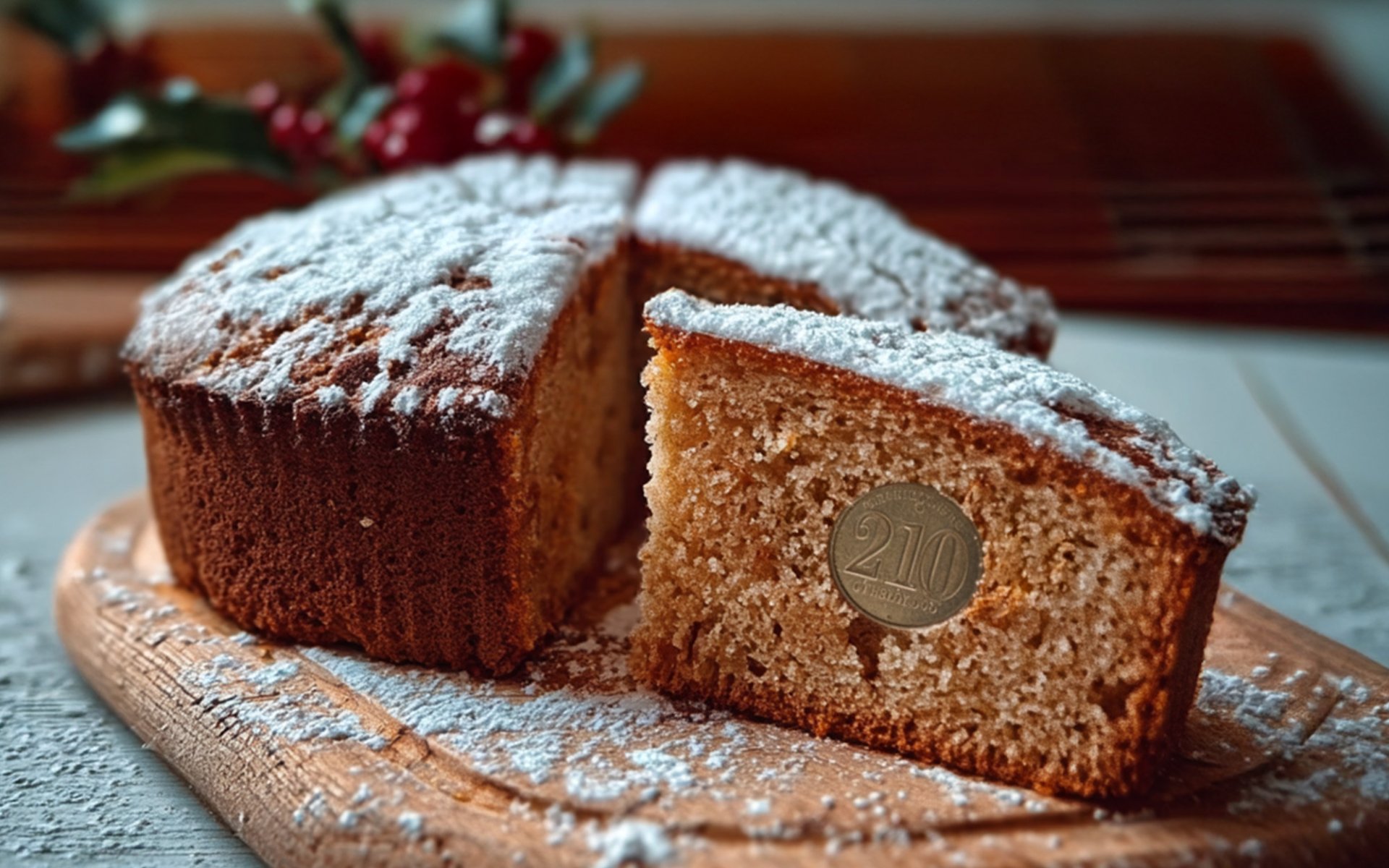
St. Basils Cake, or Vasilopita, is a traditional Greek cake served on New Years Day (January 1st) in honor of Saint Basil the Great, one of the most important saints in Eastern Orthodox Christianity.
The Lucky Coin Tradition on New Years Day
On the first day of the New Year, a beloved Greek tradition takes place: the cake is cut and everyone looks for a lucky coin or small ornament hidden inside the cake. It is believed that whoever receives the slice containing the coin will be blessed with good fortune, happiness, and prosperity throughout the coming year.Origins in 4th-Century Caesarea
The origins of St. Basils Cake date back to the 4th century in the city of Caesarea in Cappadocia (in present-day Turkey). According to legend, during that time the emperor imposed heavy taxes on the people of Caesarea, placing an enormous burden on an already impoverished population. Many citizens were forced to surrender their valuables, jewelry, and family heirlooms to avoid imprisonment, causing widespread hardship.Saint Basil the Great Confronts Injustice
When Saint Basil the Great, who served as Archbishop of Caesarea, learned of this injustice, he bravely confronted the emperor, urging him to repent and put an end to the oppression. Because Saint Basil was widely respected, the emperor eventually agreed to abolish the tax and ordered all the confiscated coins and valuables to be returned to him so they could be given back to the people.The Challenge of Returning the Valuables
However, Saint Basil faced a challenge: there were so many coins and pieces of jewelry that it was impossible to determine which items belonged to which individuals. With wisdom and compassion, he devised a solution by hiding all the coins and jewelry inside freshly baked loaves of bread. He then invited the citizens of Caesarea to gather at the cathedral for prayer. After the service, the bread was cut into equal portions and distributed among the people.A Miraculous Outcome for the People of Caesarea
Miraculously, each person received their rightful possessions. The citizens rejoiced and gave thanks to Saint Basil the Great, who had freed them from suffering and poverty through his kindness and faith.January 1st and the Legacy of Saint Basil
To commemorate Saint Basils love and compassion, the tradition of baking St. Basils Cake and hiding a coin inside has been passed down through generations. January 1st, which also marks the anniversary of Saint Basils death in 379 A.D., became the day this meaningful custom is observed.Symbolism of Generosity and Blessings
This tradition is not only a New Year celebration but also a reminder of generosity, selflessness, and mercy. It symbolizes good luck, hope, and blessings for the year ahead.Traditional Cake-Cutting Ritual
According to custom, after the cake is baked, it is cut ceremonially. The first slices are dedicated to Jesus Christ, the Virgin Mary, and Saint Basil the Great. The remaining slices are then distributed among family members and guests. The slice designated for Saint Basil is often donated to those in need, continuing the spirit of charity that defines his legacy.The Cross Marking and Good Fortune Belief
It is also believed that whoever finds the hidden coin will receive special blessings and good fortune throughout the year. Before cutting the cake, the head of the household or the eldest family member traditionally makes the sign of the cross on top of the cake to invoke blessings and emphasize the sacred nature of the ritual.Regional Variations and Recipe Evolution
Over the centuries, the tradition of baking St. Basils Cake has become deeply rooted, especially in Greece. The recipe has evolved, with many families adding orange zest, spices, almonds, or various nuts to reflect regional flavors and personal traditions.St. Basils Cake as a Living New Year Tradition
Today, baking and sharing St. Basils Cake remains a cherished New Years custom. It is more than just a dessertit is a meaningful ritual that expresses faith, generosity, warmth, and unity among family members, friends, and communities. As the New Year begins, people eagerly gather to share Vasilopita, celebrate together, and welcome the year ahead with joy, hope, and goodwill. Tags :
Related Content


Understanding USA Pulses and the U.S. Dry Bean Council (USDBC) Organizations Established to Support and Promote the U.S. Pulse and Dry Bean Industry