Khichdi
Last updated: 7 Jan 2026
What Is Khichdi and Why It Is Loved Across India
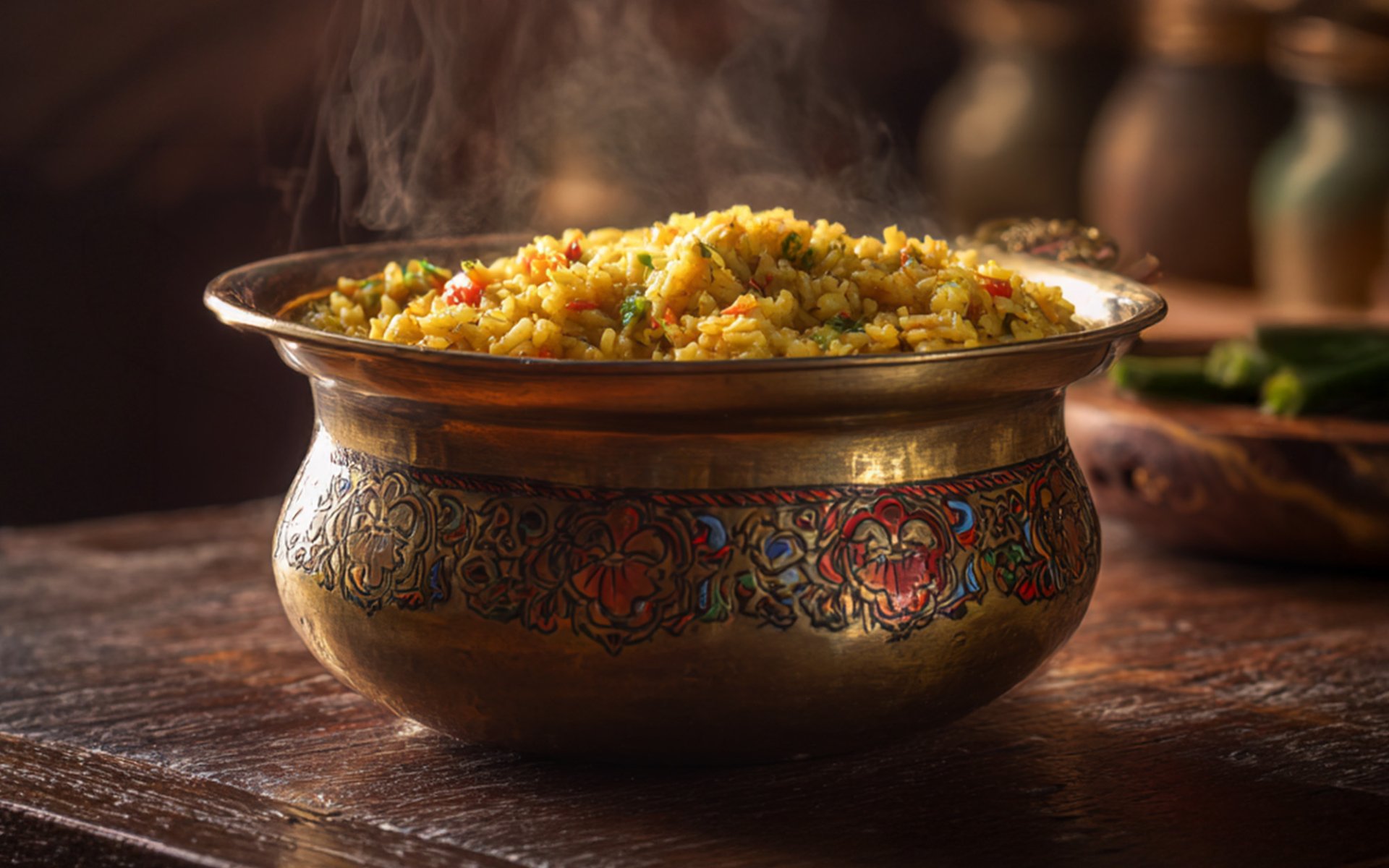
Khichdi is a traditional dish of the Indian subcontinent, widely recognized as one of the world’s oldest continuously consumed foods. In India, Khichdi is cherished as a health-focused meal and a beloved comfort food. It is made by cooking rice and lentils together in a single pot, gently seasoned with spices and herbs such as turmeric and cumin.Nutritional Value and Everyday Uses of Khichdi
Khichdi is nutritionally complete and easy to digest, making it ideal as a recovery meal for those who are ill, a first solid food for infants, or a simple, soothing dish for everyday consumption. It is commonly enjoyed with ghee (clarified butter), yogurt, and Indian-style pickles.The Origin and Meaning of the Word “Khichdi”
The word “Khichdi” originates from the Sanskrit term “Khicca,” meaning a dish in which ingredients are mixed and cooked together. This reflects the fundamental nature of the dish—combining staple ingredients into a single, harmonious meal.Early Historical References in Ayurvedic Texts
The earliest recorded references to Khichdi appear in the Charaka Samhita, one of the most important foundational texts of Ayurveda, compiled between the 2nd century BCE and the 2nd century CE. This text describes foods similar to Khichdi made from rice and various legumes, highlighting them as easy-to-digest, energy-giving meals suitable for the sick or those with weakened digestive systems.Khichdi in Ayurvedic Philosophy and Body Balance
In Ayurvedic philosophy, food is evaluated not only by taste but also by its effect on bodily balance. Khichdi is therefore regarded as a highly balancing dish, especially when prepared simply without strong spices. It is often recommended for bodily recovery, digestive rest, and detoxification processes aimed at restoring internal harmony according to Ayurvedic principles.Khichdi in Ancient Indian Society
In ancient Indian society, Khichdi was consumed across all social classes—from farmers to royal households—thanks to its basic ingredients, rice and lentils, which were widely cultivated, easy to store, and rich in nutrition.Khichdi in Medieval Travel Records
During the medieval period, Khichdi appeared frequently in the writings of foreign travelers and chroniclers, particularly Arab and Persian visitors, who described it as a staple food widely consumed by the Indian population.Mughal Influence and the Evolution of Khichdi
At the same time, within the Mughal courts, Khichdi evolved into a more elaborate and luxurious dish through the addition of ghee, premium spices, and meats. These richer versions eventually developed into dishes such as Khichra and Haleem, which remain popular today and reflect the lasting culinary influence of Mughal culture in South Asia.Khichdi as a Ritual and Festival Food
In many regions of India, Khichdi is also considered an auspicious dish served during important festivals and rituals. One notable example is Makar Sankranti, a festival celebrating the sun’s transition and the beginning of the harvest season. During this time, Khichdi is traditionally prepared using newly harvested rice and lentils, symbolizing abundance, renewal, and hope for the coming cycle of life.Regional Adaptations of Khichdi
Over time, Khichdi spread throughout the Indian subcontinent and neighboring regions. Each area adapted the recipe to local ingredients, tastes, and cultural contexts, resulting in a wide variety of regional interpretations while preserving the dish’s core values of simplicity and nourishment.Khichdi in Northern India
Northern India: Khichdi is typically made with basmati rice and split mung beans, enriched with ghee and mild spices. It has a gentle flavor and is commonly served with yogurt and pickles for added depth.Khichdi in Bengal
Bengal: Khichdi often includes seasonal vegetables such as pumpkin, eggplant, or cauliflower, and features aromatic spices with a softer, fragrant profile.Khichdi in Western India
Western India (e.g., Gujarat): Khichdi tends to be more boldly seasoned with a variety of spices, and some versions incorporate mild sour notes from yogurt or lemon juice.Khichdi in Pakistan and Bangladesh
Pakistan and Bangladesh: Khichdi is often prepared in a heartier form, with the addition of meats such as beef or lamb and more robust spice blends, resulting in a stew-like dish that serves as a substantial main meal.Khichdi-Like Dishes in Southeast Asia
Southeast Asia: Although similar dishes may not be explicitly called “Khichdi,” the concept of cooking rice together with legumes or grains appears widely in traditional cuisines. This reflects a shared culinary wisdom—using simple ingredients to create filling, easily digestible meals well suited to everyday life in the region.The Enduring Legacy of Khichdi
Khichdi remains a timeless example of how humble ingredients, when thoughtfully combined, can create food that nourishes both body and soul. Tags :
Related Content