San Miguel
Last updated: 23 Feb 2026
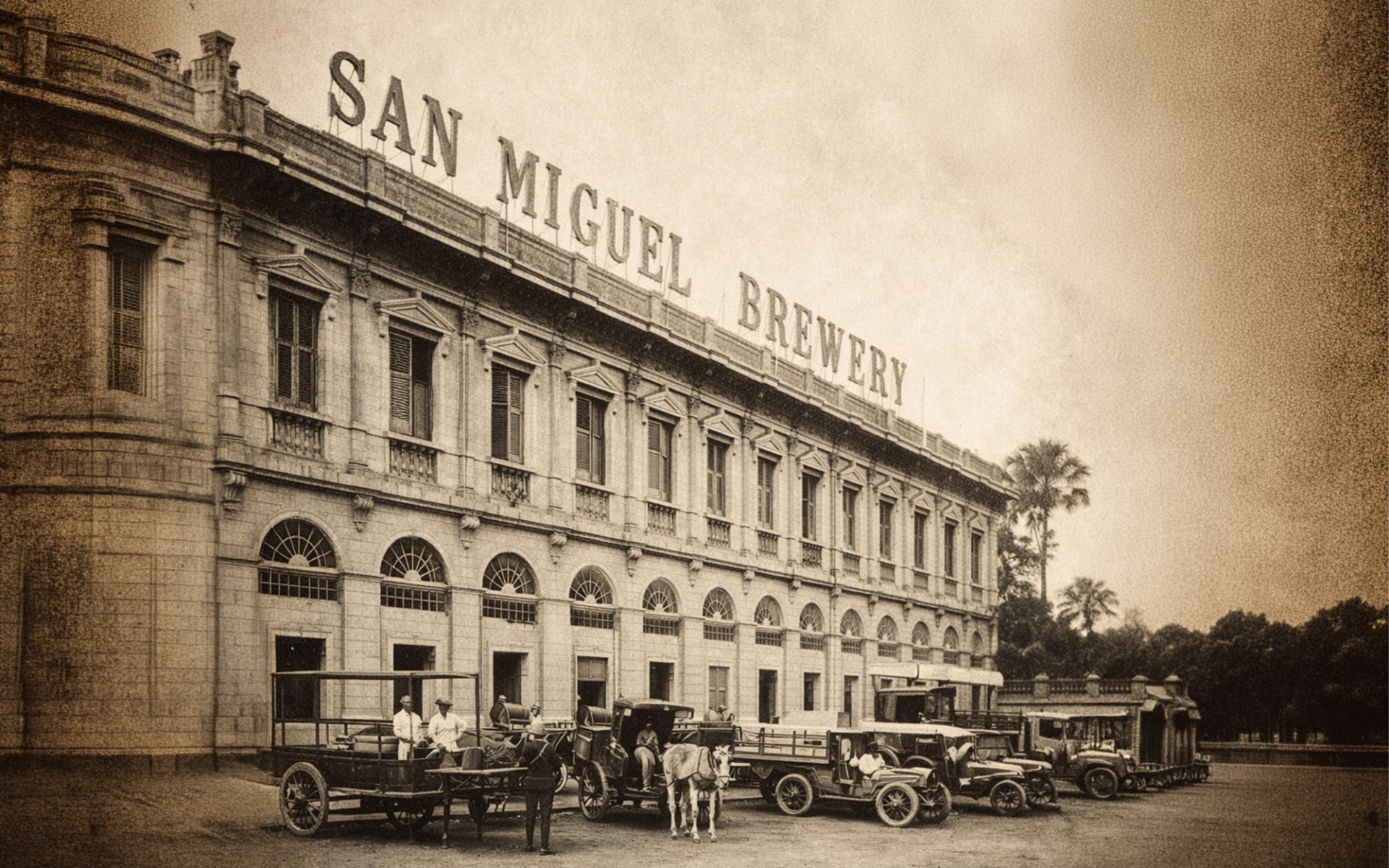
San Miguel was founded in 1890 in Manila, Philippines. Although the brand name is Spanish—reflecting the country’s colonial history—San Miguel’s true roots began in the Philippines before later expanding production and business operations to Spain.
The brewery officially began operations on September 29, 1890, at Calzada de Malacañan Street in the San Miguel district of Manila—giving rise to the brand name “San Miguel.”
Shortly after its establishment, Filipino businessman and industrialist Pedro Pablo Roxas joined as a partner and brought in Ludwig Kiene, a German brewing expert, to oversee production.
The involvement of a specialist from Germany—a country renowned for its brewing heritage—was instrumental in elevating the brewery’s production standards and quality from the beginning. The brewery used key ingredients such as barley, malt, and hops, combining Spanish and German brewing expertise effectively.
Despite being a local brewery, it rapidly proved its quality by winning its first award at the Exposición Regional de Filipinas in 1895. By 1896, its sales had surpassed all imported beer brands, exceeding them by five times—demonstrating strong consumer confidence and recognition.
In the early 20th century, under Pedro Pablo Roxas’s leadership, the brewery underwent major modernization, installing electric conveyor systems and automated machinery. By 1910, the entire facility had been fully upgraded.
Following Roxas’s death in 1913, a group of businessmen led by Benito Legarda and Gonzalo Tuasón restructured the organization from a partnership into a corporation under the name San Miguel Brewery, Inc.
Antonio Roxas de Ayala, son of Pedro Pablo Roxas, was appointed president—marking the beginning of modern corporate governance and long-term expansion planning.
In 1914, the company began exporting its products internationally for the first time, entering markets such as Hong Kong and Shanghai. This made San Miguel one of the earliest Asian companies to export beer overseas.
In 1953, the company signed the Manila Agreement with Spain’s La Segarra S.A., allowing San Miguel beer to be produced and distributed in Spain. Production began in Lérida, marking the brand’s first manufacturing presence in Europe. The Spanish entity later became San Miguel Fábricas de Cerveza y Malta S.A., eventually operating independently from the Philippine parent company. Today, it is part of the Mahou-San Miguel Group, one of Spain’s leading beverage companies.
In 1963, San Miguel Brewery, Inc. was renamed San Miguel Corporation (SMC) to broaden its scope beyond beer into food, non-alcoholic beverages, packaging, and other industries—eventually becoming one of the Philippines’ largest conglomerates.
In 2007, the beer business was separated into a dedicated entity once again under San Miguel Brewery, Inc. (SMBI), operating as a subsidiary of San Miguel Corporation.
Because of this enduring reputation, San Miguel Pale Pilsen is widely regarded culturally as the “national beer” of the Philippines.
The Founding of La Fábrica de Cerveza de San Miguel (1890)
San Miguel was originally established under the name La Fábrica de Cerveza de San Miguel in Manila, which was then under Spanish rule. The founder, Don Enrique María Barretto de Ycaza, a Spanish-Filipino businessman, secured a royal grant from the Spanish crown to establish the first brewery in the Philippines.The brewery officially began operations on September 29, 1890, at Calzada de Malacañan Street in the San Miguel district of Manila—giving rise to the brand name “San Miguel.”
The First Brewery in Southeast Asia
La Fábrica de Cerveza San Miguel became the first brewery in Southeast Asia and played a significant role in systematically introducing European beer culture and brewing techniques to the region. From the outset, the company imported the most advanced brewing machinery of the time from Europe.Shortly after its establishment, Filipino businessman and industrialist Pedro Pablo Roxas joined as a partner and brought in Ludwig Kiene, a German brewing expert, to oversee production.
The involvement of a specialist from Germany—a country renowned for its brewing heritage—was instrumental in elevating the brewery’s production standards and quality from the beginning. The brewery used key ingredients such as barley, malt, and hops, combining Spanish and German brewing expertise effectively.
San Miguel Pale Pilsen and Early Popularity
Initially, the brewery focused on producing European-style beers, particularly lager. Its first product, San Miguel Pale Pilsen, quickly gained popularity among Europeans living in Manila and later among the local population, eventually becoming a widely consumed beverage and an integral part of Filipino society.Despite being a local brewery, it rapidly proved its quality by winning its first award at the Exposición Regional de Filipinas in 1895. By 1896, its sales had surpassed all imported beer brands, exceeding them by five times—demonstrating strong consumer confidence and recognition.
Growth Through Political and Economic Change
After the Spanish-American War in 1898, the Philippines came under American rule. This major political shift directly affected the country’s economic structure and influenced the brewery’s business direction.In the early 20th century, under Pedro Pablo Roxas’s leadership, the brewery underwent major modernization, installing electric conveyor systems and automated machinery. By 1910, the entire facility had been fully upgraded.
Following Roxas’s death in 1913, a group of businessmen led by Benito Legarda and Gonzalo Tuasón restructured the organization from a partnership into a corporation under the name San Miguel Brewery, Inc.
Antonio Roxas de Ayala, son of Pedro Pablo Roxas, was appointed president—marking the beginning of modern corporate governance and long-term expansion planning.
In 1914, the company began exporting its products internationally for the first time, entering markets such as Hong Kong and Shanghai. This made San Miguel one of the earliest Asian companies to export beer overseas.
World War II and Recovery
World War II posed significant challenges to the Philippine industrial sector, including San Miguel. The brewery sustained damage during Japanese occupation and bombing campaigns, forcing temporary suspension of operations. However, after the war, San Miguel quickly recovered with support from the Philippine government and assistance from the United States.International Expansion
In 1937, San Miguel expanded into the United States by investing in a brewery in Kansas City, Missouri. This marked the first time in history that an Asian beer brand produced beer in the United States.In 1953, the company signed the Manila Agreement with Spain’s La Segarra S.A., allowing San Miguel beer to be produced and distributed in Spain. Production began in Lérida, marking the brand’s first manufacturing presence in Europe. The Spanish entity later became San Miguel Fábricas de Cerveza y Malta S.A., eventually operating independently from the Philippine parent company. Today, it is part of the Mahou-San Miguel Group, one of Spain’s leading beverage companies.
In 1963, San Miguel Brewery, Inc. was renamed San Miguel Corporation (SMC) to broaden its scope beyond beer into food, non-alcoholic beverages, packaging, and other industries—eventually becoming one of the Philippines’ largest conglomerates.
In 2007, the beer business was separated into a dedicated entity once again under San Miguel Brewery, Inc. (SMBI), operating as a subsidiary of San Miguel Corporation.
Product Portfolio
Over more than 135 years, San Miguel Brewery has continuously developed its beer offerings to meet diverse consumer preferences domestically and internationally. Key products include:- San Miguel Pale Pilsen – A clear golden lager and the brand’s flagship product, with 5% ABV. Known for its clean, refreshing, and balanced taste.
- Red Horse Beer – A stronger beer with higher alcohol content, widely popular across Southeast Asia.
- San Mig Light – A low-calorie beer designed for health-conscious consumers seeking an easy-drinking option.
- Cerveza Negra – A traditional dark beer with smooth and layered flavors.
- San Mig Zero – A non-alcoholic beer catering to those who want the taste of beer without alcohol.
Awards and Cultural Recognition
San Miguel Pale Pilsen has received continuous international recognition since the 1970s, accumulating over 400 awards worldwide. These achievements reflect consistent quality standards, flavor stability, and sustained global recognition.Because of this enduring reputation, San Miguel Pale Pilsen is widely regarded culturally as the “national beer” of the Philippines.
Market Leadership Today
Today, San Miguel Brewery, Inc. operates six breweries across the Philippines and maintains a distribution network covering more than 471,000 outlets nationwide. With a domestic market share exceeding 90%, San Miguel ranks as the 10th largest brewery in Asia by production volume and the 16th largest in the world. Tags :
Related Content
Tracing the History of Garnacha: From Spain’s Native Grape to One of the World’s Most Important Wine Grapes