Watermelon Cooler
Last updated: 9 Apr 2026
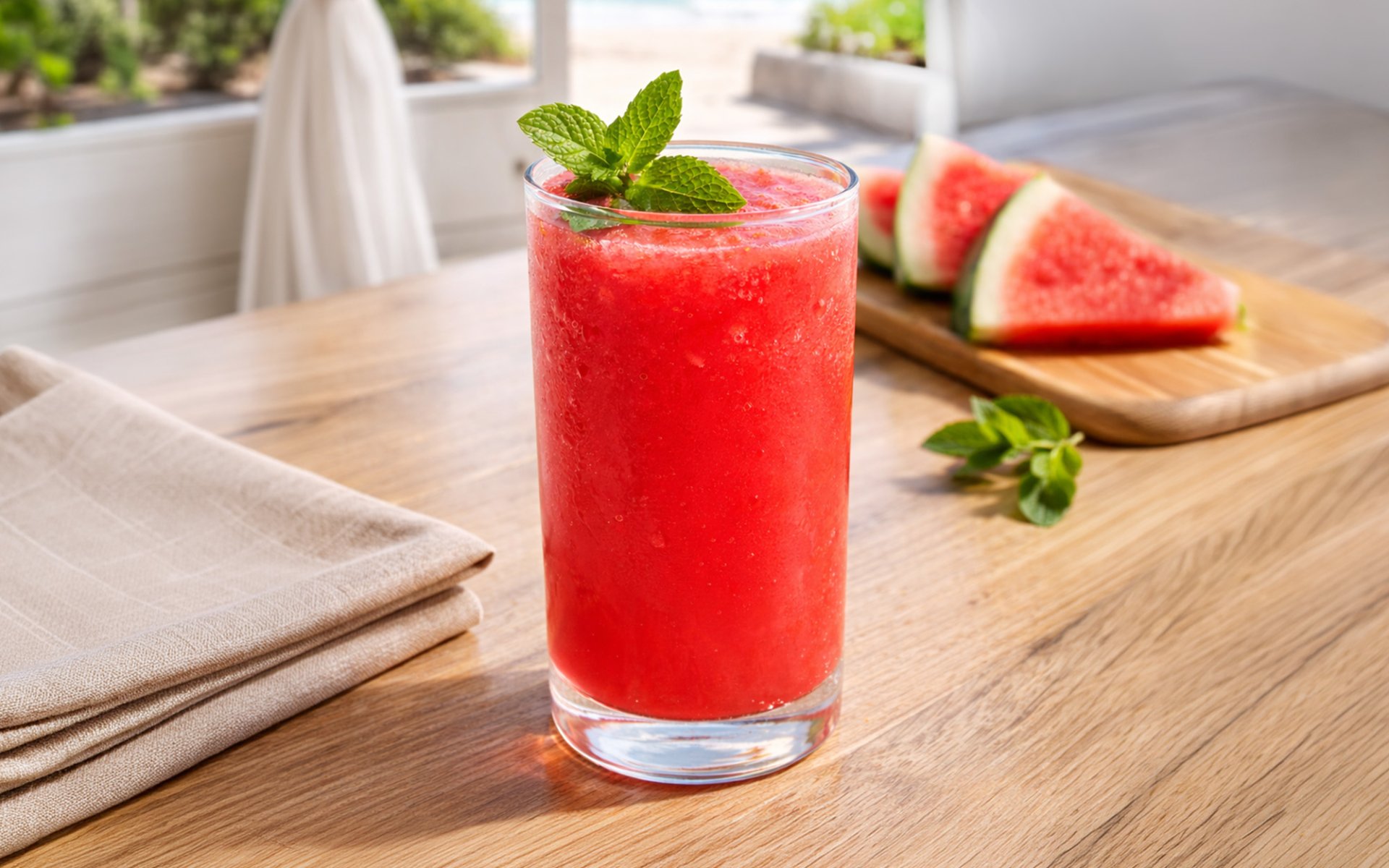
Watermelon Cooler is one of the most popular refreshing beverages enjoyed in many regions around the world, especially in countries with hot climates. Its key highlight lies in the natural freshness of watermelon—a fruit with high water content—making it ideal for quenching thirst and cooling the body in hot weather.
In ancient times, watermelon was a wild fruit with firm flesh and a bitter taste, quite different from the sweet varieties we enjoy today. However, its most remarkable characteristic was its ability to store water. Over 4,000 years ago, ancient Egyptians did not cultivate watermelon primarily as a fruit, but as a portable water source for long journeys across arid deserts.
Archaeological findings from ancient Egypt highlight the importance of watermelon in daily life. Wall paintings in pharaohs’ tombs depict its use as both food and a water source. Additionally, watermelon seeds have been discovered in the tombs of several pharaohs, including Tutankhamun, indicating its significance not only in daily sustenance but also in beliefs about the afterlife.
Long before Watermelon Cooler was formally recognized, various cultures had already developed fruit-based drinks with similar concepts, such as Sharbat, Agua Fresca, and Fruit Punch. These beverages share the idea of combining fruits with other ingredients to create refreshing drinks.
In the late 1880s, William Remsen developed a new type of Cooler called the Remsen Cooler, marking a significant milestone in the evolution of this beverage category. His recipe combined gin, soda, and lemon juice—introducing alcohol as a component in Cooler-style drinks for the first time.
Later, in 1901, bartender Jimmy O’Brien created the Florodora Cooler in New York City, which quickly gained popularity and became one of the foundational recipes influencing modern cocktail culture.
Non-alcoholic Watermelon Cooler closely resembles Mexico’s Agua de Sandía, made by blending watermelon with water, sugar, and lime juice. Some variations include mint leaves or soda to enhance freshness and flavor complexity.
Alcoholic versions have also been widely developed across regions, such as:
The Origins of Watermelon
The history of the Watermelon Cooler begins with its main ingredient: watermelon. Archaeological evidence suggests that watermelon originated in Africa, particularly in East Africa and northern regions (modern-day Sudan and Egypt).In ancient times, watermelon was a wild fruit with firm flesh and a bitter taste, quite different from the sweet varieties we enjoy today. However, its most remarkable characteristic was its ability to store water. Over 4,000 years ago, ancient Egyptians did not cultivate watermelon primarily as a fruit, but as a portable water source for long journeys across arid deserts.
Archaeological findings from ancient Egypt highlight the importance of watermelon in daily life. Wall paintings in pharaohs’ tombs depict its use as both food and a water source. Additionally, watermelon seeds have been discovered in the tombs of several pharaohs, including Tutankhamun, indicating its significance not only in daily sustenance but also in beliefs about the afterlife.
The Spread and Evolution of Watermelon-Based Drinks
By the 1st century, watermelon began spreading along Mediterranean trade routes. During this period, it was gradually cultivated and improved through selective breeding, leading to sweeter varieties and wider culinary uses—including fresh consumption and refreshing beverages.Long before Watermelon Cooler was formally recognized, various cultures had already developed fruit-based drinks with similar concepts, such as Sharbat, Agua Fresca, and Fruit Punch. These beverages share the idea of combining fruits with other ingredients to create refreshing drinks.
The Birth of the “Cooler” and Watermelon Cooler
Watermelon Cooler evolved from a broader category of beverages known as “Coolers.” These drinks are typically light, refreshing, and easy to drink, often served in tall glasses with soda or ginger ale to add a sparkling effect.In the late 1880s, William Remsen developed a new type of Cooler called the Remsen Cooler, marking a significant milestone in the evolution of this beverage category. His recipe combined gin, soda, and lemon juice—introducing alcohol as a component in Cooler-style drinks for the first time.
Later, in 1901, bartender Jimmy O’Brien created the Florodora Cooler in New York City, which quickly gained popularity and became one of the foundational recipes influencing modern cocktail culture.
Modern Development of Watermelon Cooler
During the 19th and 20th centuries, Watermelon Cooler evolved into a distinctive beverage with both alcoholic and non-alcoholic variations, adapting to different tastes and cultures.Non-alcoholic Watermelon Cooler closely resembles Mexico’s Agua de Sandía, made by blending watermelon with water, sugar, and lime juice. Some variations include mint leaves or soda to enhance freshness and flavor complexity.
Alcoholic versions have also been widely developed across regions, such as:
- Vodka-based versions popular in the United States and Europe
- Tequila-based versions inspired by Mexican style
- Rum-based variations or even Irish whiskey combinations such as Jameson
Watermelon Cooler in Today’s Lifestyle
According to EverydayMaven, Watermelon Cooler has become one of the most searched drink recipes on the internet during summer since the early 2010s, reflecting its growing popularity as a go-to refreshing beverage. Tags :
Related Content

Why Cold-Pressed Juice Retains More Vitamins Than Regular Blended Juice

Get to Know Ice Tea with Peach (Iced Peach Tea): A Refreshing Beverage with a Long History of Tea