Hollandaise sauce
Last updated: 17 Apr 2026
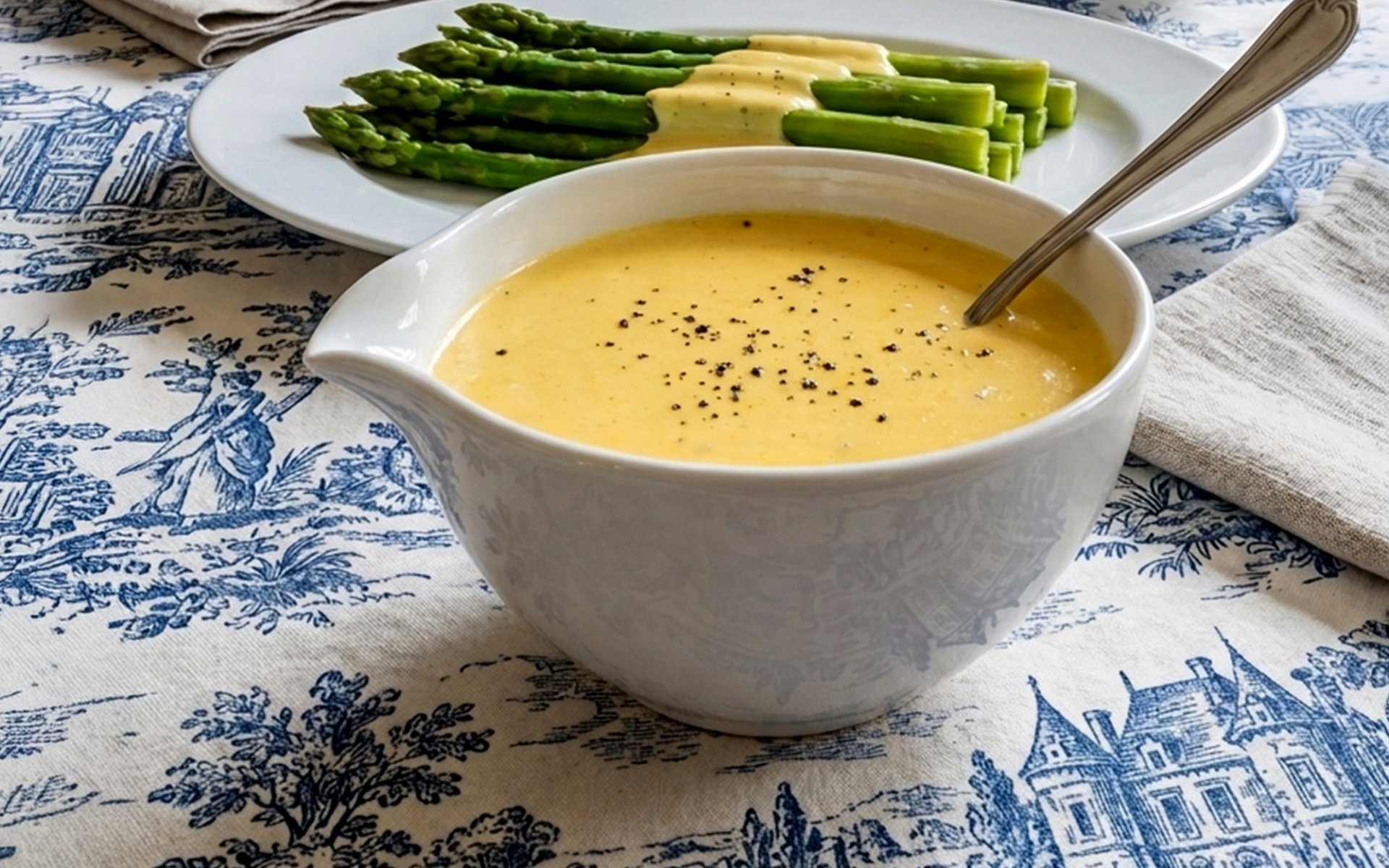
Hollandaise sauce is one of the five classic French mother sauces. It is known for its smooth, creamy texture and golden-yellow color, with a rich, buttery flavor balanced by the slight acidity of lemon juice. The sauce is made by carefully emulsifying egg yolks and butter over controlled heat, creating a silky consistency. It is most famously served with Eggs Benedict, asparagus, or as an elegant accompaniment to seafood dishes such as grilled salmon.
Hollandaise sauce has a long history, although its exact origins remain unclear. The name “Hollandaise,” which means “from Holland” in French, has led to various theories regarding its true origin.
Food historians suggest that the sauce may be linked to the Dutch, particularly during the 16th–17th centuries, when French Huguenots (Protestants) were persecuted by the Catholic government. Following events such as the St. Bartholomew’s Day Massacre in 1572, many Huguenots fled to the Netherlands.
It is believed that when some of these refugees later returned to France, they may have brought back culinary techniques or sauce recipes influenced by Dutch traditions, eventually blending into what became Hollandaise sauce.
A sauce similar to modern Hollandaise was first recorded in 1651 in Le Cuisinier François by François Pierre de La Varenne, one of the pioneers of modern French cuisine. His recipe described a sauce served with asparagus:
“with good fresh butter, a little vinegar, salt, nutmeg, and an egg yolk to bind the sauce”
La Varenne is widely credited with moving French cuisine away from heavily spiced medieval dishes toward a more refined style that emphasized the natural richness of butter and eggs—hallmarks of modern French cooking.
The name “Hollandaise” may reflect the economic context of the time. One theory suggests that France experienced a shortage of butter and had to import it from Holland, leading to the association of the sauce with Dutch ingredients. However, this remains a historical hypothesis rather than a confirmed fact.
A major shift occurred in the early 20th century when Auguste Escoffier, a key figure in modern French cuisine, published Le Guide Culinaire in 1903. He revised the classification by removing Allemande (as a derivative of Velouté) and introducing Tomato sauce and Hollandaise sauce, establishing the five mother sauces recognized today.
Unlike sauces thickened with flour or roux, Hollandaise uses lecithin in egg yolks as a natural emulsifier. This allows butter—composed of both fat and water—to combine into a stable, smooth mixture without separating.
Temperature control is crucial. If the heat is too high, the egg yolks will overcook and curdle, causing the sauce to break. For this reason, professional chefs typically use indirect heat methods such as a double boiler or bain-marie to maintain precise temperature control.
Because of this complexity, Hollandaise is considered one of the most challenging mother sauces to master in French culinary arts.
Modern adaptations have also emerged to suit contemporary lifestyles, such as blender-based recipes and ready-made versions for convenience.
Today, Hollandaise sauce is best known as a key component of Eggs Benedict, a classic American-European breakfast dish consisting of an English muffin, ham or Canadian bacon, poached eggs, and Hollandaise sauce.
Origins and Historical Background
Hollandaise sauce has a long history, although its exact origins remain unclear. The name “Hollandaise,” which means “from Holland” in French, has led to various theories regarding its true origin.
Food historians suggest that the sauce may be linked to the Dutch, particularly during the 16th–17th centuries, when French Huguenots (Protestants) were persecuted by the Catholic government. Following events such as the St. Bartholomew’s Day Massacre in 1572, many Huguenots fled to the Netherlands.
It is believed that when some of these refugees later returned to France, they may have brought back culinary techniques or sauce recipes influenced by Dutch traditions, eventually blending into what became Hollandaise sauce.
Early Documentation
A sauce similar to modern Hollandaise was first recorded in 1651 in Le Cuisinier François by François Pierre de La Varenne, one of the pioneers of modern French cuisine. His recipe described a sauce served with asparagus:
“with good fresh butter, a little vinegar, salt, nutmeg, and an egg yolk to bind the sauce”
La Varenne is widely credited with moving French cuisine away from heavily spiced medieval dishes toward a more refined style that emphasized the natural richness of butter and eggs—hallmarks of modern French cooking.
Formal Recognition of Hollandaise
By 1758, a more developed version of the sauce appeared under the name “Sauce à la Hollandaise”, documented by French chef François Marin in his cookbook Les Dons de Comus.The name “Hollandaise” may reflect the economic context of the time. One theory suggests that France experienced a shortage of butter and had to import it from Holland, leading to the association of the sauce with Dutch ingredients. However, this remains a historical hypothesis rather than a confirmed fact.
Elevation to a Mother Sauce
In the 19th century, renowned French chef Marie-Antoine Carême, often called the “King of Chefs,” established the first classification of French sauces in 1833. His system included four mother sauces: Espagnole, Velouté, Béchamel, and Allemande—without Hollandaise.A major shift occurred in the early 20th century when Auguste Escoffier, a key figure in modern French cuisine, published Le Guide Culinaire in 1903. He revised the classification by removing Allemande (as a derivative of Velouté) and introducing Tomato sauce and Hollandaise sauce, establishing the five mother sauces recognized today.
The Science Behind Hollandaise
Hollandaise stands out from other mother sauces due to its reliance on emulsification, a delicate and technically demanding process.Unlike sauces thickened with flour or roux, Hollandaise uses lecithin in egg yolks as a natural emulsifier. This allows butter—composed of both fat and water—to combine into a stable, smooth mixture without separating.
Temperature control is crucial. If the heat is too high, the egg yolks will overcook and curdle, causing the sauce to break. For this reason, professional chefs typically use indirect heat methods such as a double boiler or bain-marie to maintain precise temperature control.
Because of this complexity, Hollandaise is considered one of the most challenging mother sauces to master in French culinary arts.
Derivative Sauces
As a mother sauce, Hollandaise serves as the foundation for many other sauces, including:- Béarnaise sauce – the most famous derivative, with tarragon and wine vinegar, often served with steak
- Mousseline sauce – enriched with whipped cream for a lighter, airy texture, ideal for fish
- Maltaise sauce – made with blood orange juice instead of lemon, offering a delicate sweet-tart flavor
- Choron sauce – similar to Béarnaise but without tarragon, with added tomato purée
- Dijon sauce – incorporates Dijon mustard
- Foyot sauce – enriched with meat glaze for deeper savory flavor
Hollandaise in Modern Cuisine
In the 20th and 21st centuries, Hollandaise sauce has spread worldwide alongside the global influence of French cuisine. It is now commonly used with a variety of dishes, including fish (especially salmon), asparagus, steamed vegetables, and seafood.Modern adaptations have also emerged to suit contemporary lifestyles, such as blender-based recipes and ready-made versions for convenience.
Today, Hollandaise sauce is best known as a key component of Eggs Benedict, a classic American-European breakfast dish consisting of an English muffin, ham or Canadian bacon, poached eggs, and Hollandaise sauce.
Tags :
Related Content



Getting to Know Pigs in Blankets One of the Most Popular Christmas Dishes in the United Kingdom