Green Veggies Done Right
Last updated: 11 May 2026
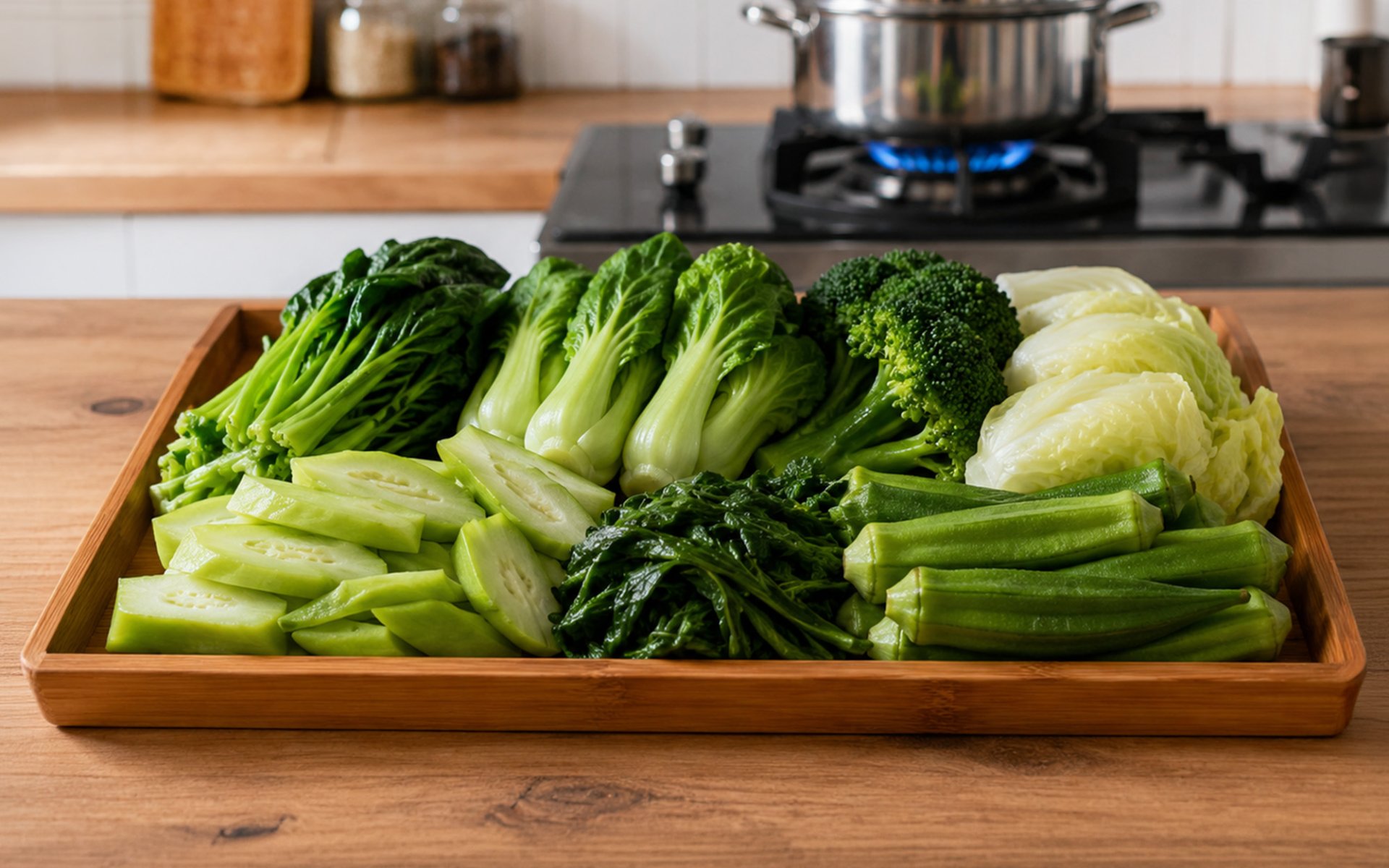
Green vegetables are considered one of the most important sources of nutrition in a healthy diet. Whether it’s broccoli, green beans, kale, spinach, or bok choy, these vegetables are rich in vitamins, minerals, dietary fiber, and antioxidants that are essential for the body.
However, the nutritional value of green vegetables can easily be diminished by improper cooking methods. Many people may have experienced steaming or blanching green vegetables only to find that their vibrant green color turns dull or yellowish, the texture becomes overly soft, and valuable nutrients are lost. These issues are often caused by unsuitable cooking techniques, including excessive heat, prolonged cooking time, and improper handling after cooking.
In this article, Rimping will guide you through the science behind the green color in vegetables, along with proper steaming and blanching techniques to help preserve their color, texture, and nutritional value as much as possible.
At the center of the chlorophyll molecule is a Magnesium atom. When vegetables are exposed to heat for too long, natural acids within the plant cells are released. These acids replace the magnesium atom with hydrogen, transforming chlorophyll into a compound called Pheophytin, which has a dull olive-green or brownish color. This is the main reason why overcooked green vegetables lose their bright appearance and become less appetizing.
Additionally, vitamin C and many antioxidants found in green vegetables are water-soluble and highly sensitive to heat. Therefore, the two key principles for cooking green vegetables while preserving their nutrients and appearance are:
One of the biggest advantages of steaming is its ability to maintain the vibrant green color of vegetables while preserving vitamins, minerals, and their natural sweetness. The texture also remains pleasantly crisp. However, oversteaming can still cause vegetables to become soft, dull in color, and lose their fresh aroma.
Broccoli : 4–5 minutes
Bok choy : 2–3 minutes
Kale : 3–4 minutes
Snow peas : 2–3 minutes
Spinach : 1–2 minutes
Thinly sliced pumpkin : 5–7 minutes
Proper blanching also slows down enzyme activity that causes vegetables to deteriorate, making it ideal for preparing vegetables before stir-frying, freezing, or using in salads and cold dishes.
The main benefits of blanching include vibrant color retention, crisp texture, and maintaining overall vegetable quality before further cooking. However, sufficient water volume and consistently high temperature are essential. If too little water is used, the temperature drops quickly when vegetables are added, resulting in uneven cooking and poor color retention. Overblanching can also lead to greater nutrient loss into the water.
Broccoli : 2–3 minutes
Bok choy : 30–60 seconds
Kale : 1–2 minutes
Snow peas : 1–2 minutes
Asparagus : 2–4 minutes
Spinach : 30–45 seconds
Avoid Cutting Before Washing : Cutting vegetables before washing can cause vitamins to leach into the rinse water. Wash first, then cut.
Save the Blanching Water : The water used for blanching contains dissolved vitamins and minerals. It can be reused for soups or vegetable stock to reduce nutrient waste.
Consume Immediately After Cooking : Vitamin C breaks down easily when exposed to air and light. For maximum nutritional benefits, vegetables should be consumed shortly after steaming or blanching.
However, the nutritional value of green vegetables can easily be diminished by improper cooking methods. Many people may have experienced steaming or blanching green vegetables only to find that their vibrant green color turns dull or yellowish, the texture becomes overly soft, and valuable nutrients are lost. These issues are often caused by unsuitable cooking techniques, including excessive heat, prolonged cooking time, and improper handling after cooking.
In this article, Rimping will guide you through the science behind the green color in vegetables, along with proper steaming and blanching techniques to help preserve their color, texture, and nutritional value as much as possible.
Why Do Green Vegetables Change Color When Heated?
The green color in vegetables comes from a pigment called Chlorophyll, which exists in two main forms: Chlorophyll A, which produces a bluish-green hue, and Chlorophyll B, which gives a yellowish-green tone. These pigments play a key role in photosynthesis and are one of the reasons fresh vegetables appear vibrant and appealing.At the center of the chlorophyll molecule is a Magnesium atom. When vegetables are exposed to heat for too long, natural acids within the plant cells are released. These acids replace the magnesium atom with hydrogen, transforming chlorophyll into a compound called Pheophytin, which has a dull olive-green or brownish color. This is the main reason why overcooked green vegetables lose their bright appearance and become less appetizing.
Additionally, vitamin C and many antioxidants found in green vegetables are water-soluble and highly sensitive to heat. Therefore, the two key principles for cooking green vegetables while preserving their nutrients and appearance are:
- Minimize cooking time
- Reduce nutrient loss into the cooking water
Steaming Green Vegetables
Steaming is a cooking method that uses hot steam, allowing vegetables to cook without direct contact with water. This helps reduce the loss of water-soluble vitamins compared to boiling. Several studies have shown that steaming can preserve significantly more vitamin C, with some vegetables losing only around 8–14%, whereas boiling may result in losses of over 40–50%.One of the biggest advantages of steaming is its ability to maintain the vibrant green color of vegetables while preserving vitamins, minerals, and their natural sweetness. The texture also remains pleasantly crisp. However, oversteaming can still cause vegetables to become soft, dull in color, and lose their fresh aroma.
Proper Steaming Techniques
- Add about 2–3 centimeters of water to the pot, ensuring the water level stays below the steaming basket.
- Bring the water to a full boil before placing the vegetables into the steamer. Never start steaming while the water is still cold, as this prolongs exposure to heat.
- Wash vegetables thoroughly and cut them into uniform sizes for even cooking.
- For vegetables with thick stems, such as broccoli, cut the stems smaller than the florets because they require more time to cook.
- Arrange vegetables in a single layer rather than stacking them to allow steam to circulate evenly.
- Cover the pot tightly to prevent steam from escaping.
- Once cooked, remove the vegetables immediately.
- If serving cold or storing for later, transfer the vegetables directly into ice water to stop the cooking process and preserve their bright green color.
Recommended Steaming Times
Green beans : 3–4 minutesBroccoli : 4–5 minutes
Bok choy : 2–3 minutes
Kale : 3–4 minutes
Snow peas : 2–3 minutes
Spinach : 1–2 minutes
Thinly sliced pumpkin : 5–7 minutes
Blanching Green Vegetables
Blanching involves briefly cooking vegetables in rapidly boiling water, then immediately transferring them into cold or ice water. This technique is widely used in both home kitchens and the food industry because it helps vegetables retain their bright green color and crisp texture.Proper blanching also slows down enzyme activity that causes vegetables to deteriorate, making it ideal for preparing vegetables before stir-frying, freezing, or using in salads and cold dishes.
The main benefits of blanching include vibrant color retention, crisp texture, and maintaining overall vegetable quality before further cooking. However, sufficient water volume and consistently high temperature are essential. If too little water is used, the temperature drops quickly when vegetables are added, resulting in uneven cooking and poor color retention. Overblanching can also lead to greater nutrient loss into the water.
Proper Blanching Techniques
- Use a large pot with plenty of water. The recommended ratio is 4–6 liters of water per 500 grams of vegetables.
- Bring the water to a vigorous boil before adding vegetables.
- Add salt at a ratio of approximately 1 tablespoon per 1 liter of water.Salt plays several important roles:
- It slightly raises the boiling point of water, helping maintain temperature when vegetables are added.
- Most importantly, it helps preserve the chlorophyll, allowing vegetables to remain bright green.
- It also enhances flavor and improves the vegetables’ overall appearance.
Steps for Blanching Vegetables
- Bring a large pot of water to a full boil.
- Add salt to the boiling water.
- Add vegetables in small batches to avoid lowering the water temperature too much.
- Time the blanching process carefully.
- Once done, immediately remove the vegetables using a strainer or skimmer.
- Transfer them directly into ice water to stop the cooking process.
Recommended Blanching Times
Green beans : 2–3 minutesBroccoli : 2–3 minutes
Bok choy : 30–60 seconds
Kale : 1–2 minutes
Snow peas : 1–2 minutes
Asparagus : 2–4 minutes
Spinach : 30–45 seconds
Additional Tips for the Best Results
Choose Fresh Vegetables : The nutritional value of vegetables decreases over time after harvest. Even with proper cooking techniques, older vegetables contain fewer nutrients than freshly harvested ones.Avoid Cutting Before Washing : Cutting vegetables before washing can cause vitamins to leach into the rinse water. Wash first, then cut.
Save the Blanching Water : The water used for blanching contains dissolved vitamins and minerals. It can be reused for soups or vegetable stock to reduce nutrient waste.
Consume Immediately After Cooking : Vitamin C breaks down easily when exposed to air and light. For maximum nutritional benefits, vegetables should be consumed shortly after steaming or blanching.
Tags :
Related Content